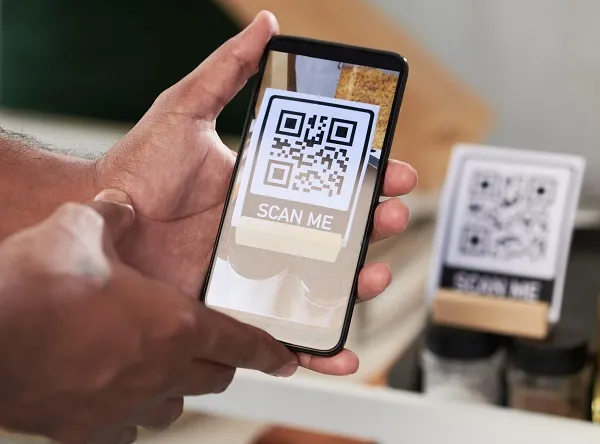
Online training for mobile workforce teams
Induct workers before they reach the worksite.
A mobile workforce does not always sit in one office, attend one training room or start from the same location each day.
Workers may travel between client sites, work in the field, attend jobs from home, move between regions, visit remote locations, support multiple branches or complete short-term contractor work. Some may use a phone as their main work device. Others may rely on tablets, laptops or shared devices while moving between jobs.
That is why online training for a mobile workforce needs to be clear, accessible and easy to complete before work begins.
A mobile workforce generally refers to workers who stay connected through digital devices such as laptops, smartphones and tablets and may operate from different locations while performing their duties.
INDUCT FOR WORK helps businesses deliver online induction, mobile workforce training, contractor onboarding, forms, acknowledgements, certificates, pre-qualification, incident reporting and records in one platform.
Instead of waiting for workers to arrive at a head office or site office, businesses can send induction links directly to mobile workers before the first shift, site visit or project start.
For broader training management, INDUCT FOR WORK can also support an LMS for workplace training structure where induction, refresher training, quizzes, certificates and records sit together.
A structured mobile training process also supports a stronger safety culture because workers receive consistent information before they begin. In addition, rapid induction setup can help businesses turn existing policies, videos, checklists and forms into online training sooner.
What is mobile workforce training?
Mobile workforce training is online training designed for people who do not always work from one fixed location.
It may apply to:
- field technicians
- mobile cleaners
- drivers
- tradespeople
- service contractors
- delivery workers
- labour hire workers
- support workers
- sales representatives
- inspectors
- maintenance teams
- event workers
- agricultural workers
- construction contractors
- health and care workers
- traffic controllers
- remote staff
- multi-site employees
The training may cover role expectations, workplace rules, site access, safety procedures, device use, privacy, reporting, forms, certificates and records.
The goal is practical.
A mobile worker should understand what they need to do before they arrive at the job, enter a client site or start a task.
Why mobile workforce training needs a different approach
Mobile workers often miss the normal office-based training rhythm.
They may not attend one central workplace. Managers may not see them every day. Contractors may come and go. Worksites may change. Mobile staff may complete jobs after hours, across regions or directly at client locations.
That creates common problems:
- workers start before completing induction
- contractors arrive without required documents
- policies are explained differently by each supervisor
- training records sit across email, paper and spreadsheets
- licences or certificates are hard to track
- field teams miss updates
- managers cannot confirm completion quickly
- forms are collected too late
- site access depends on verbal checks
- refresher training gets forgotten
Online training helps solve these problems by giving workers a clear process before they arrive.
A good system does not only deliver videos or slides. It should also collect information, confirm understanding, record completion and help managers see who is ready.
How Induct For Work can be used to induct mobile workers
Induct For Work can help businesses induct mobile workers before they physically attend a workplace.
A typical process may look like this:
- The administrator creates a worker or contractor profile.
- The correct induction pathway is assigned.
- The worker receives an invitation link.
- Training is completed on a phone, tablet, laptop or desktop.
- Forms, documents and acknowledgements are submitted online.
- A quiz confirms understanding where required.
- The system records completion.
- Certificates can be issued.
- Managers can review completion and follow up missing items.
This gives businesses a repeatable way to induct mobile workers without relying on in-person sessions.
For broader workplace-readiness guidance, see work induction.
A mobile worker can complete induction from home, from a depot, between jobs or before travelling to site.
Start with sample inductions
Many businesses know they need online training, but they are not sure where to begin.
That is where induction samples by INDUCT FOR WORK can help.
Sample inductions give administrators a clearer idea of what an induction course can look like. They can also help managers think through structure, wording, topics, quiz questions and the order in which information should appear.
For mobile workforce training, sample inductions can help with:
- worker welcome modules
- site access instructions
- safety expectations
- emergency procedures
- contractor rules
- PPE requirements
- mobile device rules
- privacy expectations
- incident reporting
- form collection
- completion certificates
- refresher training
Sample content should still be adjusted to suit the business.
A cleaning contractor, field technician, support worker, driver and event crew member may all need different content. However, samples can make the setup process easier by showing what is possible before the business builds its own pathway.

Use different inductions for different mobile roles
A mobile workforce is rarely one group.
Different roles carry different risks, tasks and access requirements.
For example, a field technician may need equipment safety and vehicle rules. A mobile cleaner may need chemical safety and after-hours access. A driver may need fatigue, delivery and traffic information. A contractor may need site access and document uploads. A support worker may need privacy, reporting and client interaction expectations.
Separate pathways may include:
- employee mobile induction
- contractor mobile induction
- field technician induction
- driver induction
- mobile cleaner induction
- support worker induction
- regional worker induction
- site-specific induction
- refresher training
- supervisor pathway
For broader role-based planning, see role-specific work induction.
Relevant pathways keep training shorter and more useful.
They also reduce the risk of burying important information inside a long course that tries to cover every possible worker.
Pre-qualification before work starts
Mobile workers and contractors may need to prove certain details before they can begin work.
That is where user pre-qualification becomes valuable.
Pre-qualification helps businesses collect and review information before allowing the person to proceed.
This may include:
- worker details
- company information
- role type
- site access request
- insurance evidence
- licences
- certificates
- training records
- declarations
- emergency contacts
- work rights information where relevant
- contractor documents
- policy acknowledgements
- risk-related questions
Pre-qualification is especially useful for contractors and mobile workers because they may arrive directly at a client site without visiting head office first.
The business can collect key information before the worker starts.
That means managers can check whether a worker has submitted required documents, completed the right training and acknowledged relevant site rules before work begins.
For contractor-specific readiness, see contractor induction.
E-signatures for mobile workforce records
Paper sign-off sheets are awkward for mobile teams.
A worker may be on the road. A contractor may be at another site. A supervisor may need a signed acknowledgement before access is granted. A policy may need sign-off from people in several locations.
With e-signatures, businesses can capture acknowledgements online.
This can help with:
- policy sign-offs
- site rule acknowledgements
- contractor declarations
- safety procedure acknowledgements
- PPE confirmations
- privacy acknowledgements
- equipment use declarations
- mobile device policy acknowledgements
- working alone acknowledgements
- induction completion confirmations
E-signatures help keep acknowledgement records linked to the worker profile.
That is more reliable than collecting signatures on paper forms, scanning them later and trying to match them to the right person.
For mobile workers, the benefit is simple: they can complete required sign-offs from wherever they are working.
Forms and document uploads
Mobile workforce training often needs more than learning content.
Businesses may also need to collect forms and documents before work begins.
Useful forms may include:
- emergency contact form
- worker declaration
- contractor declaration
- site access request
- licence upload
- certificate upload
- vehicle declaration
- equipment declaration
- PPE acknowledgement
- policy acknowledgement
- incident reporting acknowledgement
- privacy acknowledgement
With custom forms, businesses can collect this information online as part of the training process.
That keeps records together.
A worker should not complete induction in one system, send a licence by email, sign a policy on paper and provide emergency contacts through a spreadsheet.
One joined process is easier to manage.
Certificates and proof of completion
Mobile workers often need proof that they are ready before entering a site.
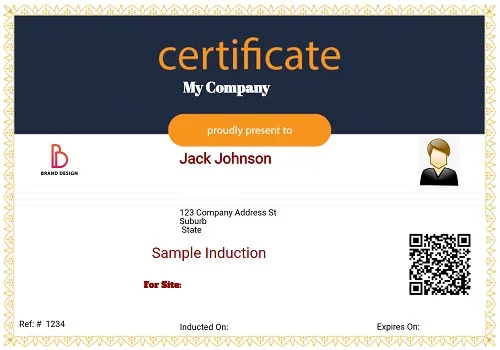
A certificate can show:
- worker name
- course completed
- date of completion
- site or pathway
- quiz result where relevant
- expiry date if used
- certificate number
- refresher requirement
Certificates are useful for employees, contractors, temporary workers, event staff, site workers and field teams.
They help supervisors confirm who has completed induction and who still needs follow-up.
For broader evidence management, see record keeping.
Proof of completion matters more when workers are spread across locations because managers cannot rely on memory or face-to-face confirmation.
Mobile access and worker convenience
A mobile workforce needs training that works on real devices.
Workers may complete induction on:
- mobile phones
- tablets
- laptops
- desktop computers
- shared workplace devices
A good training process should be simple to access, easy to follow and clear about what needs to be completed.
Mobile workers are often time-poor.
Training should avoid unnecessary complexity. Short modules, clear wording, practical examples and simple navigation usually work better than long documents copied into a course.
For many mobile workers, the phone is the training room.
That means the course should be designed for quick access, readable text, clear images and straightforward completion.
SMS invitations for workers on the move
Email is not always the fastest way to reach mobile workers.
Contractors, cleaners, drivers, field technicians, seasonal workers and event staff may not check email regularly.
SMS invitations can help send induction links directly to users.
This is useful when:
- workers need to complete training quickly
- contractors are heading to site
- field teams are rarely at a desk
- casual workers need a simple link
- seasonal workers are being onboarded
- event workers need instructions before arrival
- supervisors need faster completion
SMS invitations can reduce delays because the worker receives the link on the device they are already carrying.
Self-registration for contractors and field teams
Some mobile workforce processes work better when users can register themselves.
Self-registration portals can help workers, contractors or visitors enter their details and begin the correct pathway.
This may suit:
- contractors
- suppliers
- site visitors
- volunteers
- casual workers
- event workers
- cleaning teams
- seasonal staff
- labour hire workers
- regional users
Self-registration can reduce administrator workload.
It can also help make sure users are sorted into the correct pathway from the start.
However, the process should still be controlled. The business should decide which pathways are available, which information must be collected and what needs approval before work begins.
Incident reporting for mobile teams
Mobile workers often see hazards before office staff do.
They may notice damaged equipment, unsafe access, client site risks, vehicle issues, aggressive behaviour, weather hazards, missing PPE or near misses while away from the office.
A mobile workforce training pathway should explain how to report:
- injuries
- near misses
- hazards
- vehicle incidents
- equipment faults
- client site concerns
- missing PPE
- working alone concerns
- aggressive behaviour
- unsafe access
- chemical exposure
- property damage
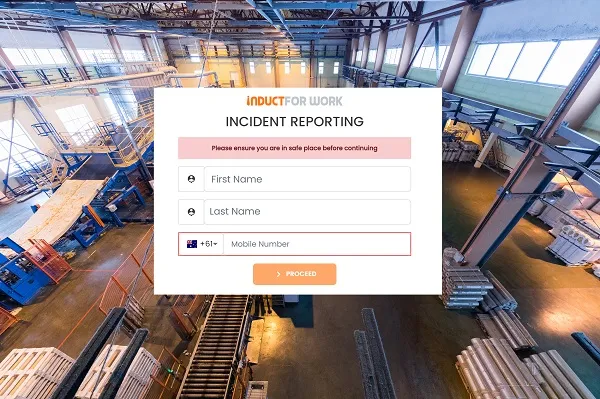
INDUCT FOR WORK supports incident reporting so hazards, near misses and incidents can be captured online.
For practical reporting examples, see incident report examples.
A worker in the field should not need to wait until returning to the office before reporting something serious.
Reporting and administrator visibility
Mobile workforce training becomes difficult when managers cannot see who has completed what.
Administrators may need to know:
- who has been invited
- which users have started
- who has completed induction
- what forms are missing
- whose documents need review
- which certificates were issued
- what acknowledgements were signed
- who failed a quiz
- which refreshers are overdue
- which workers are assigned to each site or role
With reporting, managers can review completion status and follow up more easily.
This is especially useful where workers are spread across several sites, regions or client locations.
Without clear reporting, administrators often fall back to spreadsheets, email searches and phone calls.
Refresher training for mobile workers
Mobile workforce training should not stop after the first induction.
Refresher training may be needed when:
- site rules change
- roles change
- procedures are updated
- equipment changes
- licences expire
- contractors return after time away
- incident patterns reveal a gap
- workers move to a new region
- mobile device rules are updated
- client requirements change
- safety procedures are revised
Auto reinvite can help businesses assign repeat training, updated acknowledgements and refresher modules.
Refresher training keeps information current.
It also helps managers prove that updates were communicated.
Mobile workforce training for different industries
Online training for mobile teams can suit many industries.
Construction and trades
Workers and contractors may need site rules, PPE, SWMS-related acknowledgements, document uploads and safety procedures.
Cleaning services
Mobile cleaning teams may need chemical safety, site access, after-hours instructions, waste handling and incident reporting.
Transport and logistics
Drivers and field teams may need fatigue awareness, vehicle checks, site access, customer rules and reporting steps.
Health and aged care
Support workers may need privacy, infection control, manual handling, incident reporting and role-specific instructions.
Agriculture
Seasonal and field workers may need machinery awareness, chemical rules, heat exposure guidance and emergency contacts.
Events
Event staff, suppliers and volunteers may need site maps, emergency procedures, traffic routes, public interaction rules and incident reporting.
Each industry has different risks.
That is why mobile workforce training should be flexible rather than one-size-fits-all.
From manual mobile training to online workforce readiness
| Manual mobile workforce process | Online training process |
|---|---|
| Workers wait for face-to-face sessions | Training can be completed before arrival |
| Forms are sent by email | Forms can be collected during induction |
| Documents sit in different folders | Uploads stay linked to the user record |
| Contractors arrive without checks | Pre-qualification can happen before work starts |
| Signatures are collected on paper | E-signatures can be captured online |
| Supervisors repeat the same briefing | Core instructions stay consistent |
| Completion is tracked manually | Reports show who needs follow-up |
| Certificates are hard to locate | Completion evidence stays easier to find |
| Updates are missed | Refresher training can be scheduled |
| Workers use different instructions | Pathways can match role, site or contractor type |
This approach helps businesses prepare mobile workers without slowing down the job.
Common mistakes with mobile workforce training
Treating mobile workers like office workers
Field teams need training they can complete wherever they are.
Relying only on verbal briefings
Verbal instructions vary and are hard to prove later.
Forgetting pre-qualification
Contractors and mobile workers may need documents checked before work begins.
Making courses too long
Short, practical modules usually work better for mobile users.
Separating forms from induction
Training, forms, uploads and acknowledgements should stay together.
Ignoring e-signatures
Paper sign-offs are difficult when workers are spread across locations.
Missing refresher training
Mobile teams still need updates when procedures or site rules change.
Losing visibility
Managers need reports showing completion, missing documents and follow-up items.
Best practice tips for mobile workforce training
Build for phones first
Assume many users will complete training on a mobile device.
Keep pathways role-based
Assign different content to employees, contractors, drivers, cleaners and field workers.
Use samples to speed up setup
Review induction samples before building your own course.
Add pre-qualification where needed
Use user pre-qualification to collect and review important details before work begins.
Capture e-signatures
Use e-signatures for policy acknowledgements, declarations and site rule sign-offs.
Collect documents online
Licences, certificates and declarations should stay linked to the worker record.
Send links by SMS
Mobile workers are more likely to see training links quickly on their phone.
Track completion
Use reports to follow up users before the first shift, site visit or project start.
Start training your mobile workforce online
A mobile workforce needs a training process that moves with the worker.
Induct For Work helps businesses induct employees, contractors and field teams online before they arrive onsite. It can also support induction samples, user pre-qualification, e-signatures, custom forms, certificates, incident reporting and records.
This gives managers a clearer way to prepare workers, collect required information and confirm completion across multiple locations.
For wider training management, see LMS for workplace training. For contractor readiness, see contractor induction. For broader onboarding guidance, see onboarding.
Give mobile workers clear instructions before the job begins.
Frequently asked questions
Online training for a mobile workforce is digital training that workers can complete from different locations using phones, tablets, laptops or desktops. It may include induction, forms, acknowledgements, quizzes, certificates and records.
Yes. Induct For Work can help businesses invite mobile workers, assign induction pathways, collect forms, capture acknowledgements, issue certificates and keep completion records online.
Induction samples are example induction courses or layouts that help businesses understand how to structure their own induction content. They can help with topics, wording, module order and quiz ideas.
User pre-qualification is a process for collecting and reviewing information before a worker or contractor starts. It may include licences, certificates, company details, declarations, insurance evidence or other required documents.
E-signatures allow workers to acknowledge policies, site rules, declarations and procedures online without printing, scanning or returning paper forms.
Yes. Mobile workforce training should be suitable for phones, tablets, laptops and desktop computers so workers can complete it before arriving onsite.
Yes. Contractors should usually complete relevant induction, pre-qualification and document uploads before arriving so managers can review readiness before work begins.
Yes. Refresher training can be assigned when procedures, roles, site rules, documents, client requirements or safety information change.
Do you have any questions or great tips to share?
Induct for Work – the only online induction system you would need to run online inductions.
Start a free trial or book a demo to see how INDUCT FOR WORK can support your workplace processes.
Author: Anna Milova
Published: 15/07/2018
Updated: 09/06/2026