
Power Up Your Business
The right software can change how a business operates.
It can remove repeated admin, reduce errors, speed up onboarding, improve visibility and help managers make better decisions. It can also give workers, contractors and visitors a clearer experience before they start work.
However, not every system delivers real value.
Some software looks impressive during a demo but becomes hard to manage later. Other tools solve one small problem while leaving the rest of the workflow sitting in spreadsheets, email threads and paper forms. A few platforms work well for large enterprises but feel too heavy for small and medium businesses that need practical results quickly.
The best business software should make daily work easier.
For workplace induction, training and compliance, Induct For Work is a top choice because it helps businesses manage the full process from invitation to completion. Teams can create online inductions, collect documents, request e-signatures, use quizzes, issue certificates, record incidents and review reports from one platform.
A structured online induction process gives people the information they need before they enter a workplace, start a job or attend a site. Just as importantly, it gives the organisation a record that the process was completed.
Why the right software matters
Many organisations still rely on manual systems for important workplace processes.
Supervisors may run inductions in person. Contractors might send licences by email. Administrators then update spreadsheets, while signed forms and certificates end up in folders.
This may work for a small group for a short time.
Problems appear when the business becomes busier. More workers arrive. Contractors change. New sites open. Policies are updated. Clients ask for evidence. Audits require proof. Incidents need records. Managers then spend time searching for information instead of running the operation.
The right software creates structure.
It makes the process repeatable, visible and easier to control. Instead of asking several people whether something was done, managers can check the system and see the record.
Start with the problem, not the product
Before choosing business software, organisations should start with the problem they are trying to solve.
A business may need better accounting, customer management, payroll, rostering, inventory control, project management or workforce training. Each category has a different purpose.
For induction and compliance, the problem is usually clear.
People need to receive the right information. Documents must be collected. Policies require acknowledgement. Licences and certificates need to be tracked. Incidents should be reported. Managers need proof of completion when clients, auditors, insurers or internal leaders ask for it.
Induct For Work is designed for this part of the business software stack.
It does not try to replace every system in your organisation. Instead, it gives you a focused platform for induction, onboarding, online training and compliance records.
That focus is one reason it works well for busy teams.
What makes Induct For Work a top choice?
Induct For Work is a top choice because it connects the steps that often sit apart.
Many businesses already have training material, policy documents, safety rules, site maps, contractor forms and manual checklists. The problem is that these items are scattered. One file sits in a folder. Another is sent by email. Supervisors may keep printed copies onsite. Contractors may sign one form but forget to upload another document.
Induct For Work brings the workflow together.
A business can create induction pathways, invite users, collect documents, capture digital signatures, check understanding with quizzes, issue certificates and review completion status.
The platform supports employees, contractors, subcontractors, visitors, volunteers, seasonal workers, labour hire workers and other user groups.
This is especially valuable for workplaces where people need to be ready before they arrive onsite.
Online inductions that save time
Traditional inductions can be slow.
Managers may repeat the same information several times each week. Workers may sit through long sessions that include content they already know. Contractors may arrive onsite before completing the required paperwork. Visitors may receive rushed instructions at reception.
Online inductions help solve this.
Induct For Work allows organisations to deliver induction content before the person starts. Users can complete assigned training online, answer questions, upload documents and acknowledge policies.
This gives supervisors more time to focus on practical instruction.
A site walk-through, equipment demonstration or role-specific coaching may still be needed. The difference is that the general information has already been delivered and recorded.
Better onboarding for employees
Employee onboarding should feel organised.
A new starter needs to understand the workplace, role, safety expectations, conduct standards, policies, systems, reporting lines and practical instructions. When onboarding is informal, the experience can vary from one person to another.
Induct For Work helps businesses create a more consistent onboarding pathway.
New employees can complete modules covering workplace rules, health and safety, privacy, code of conduct, incident reporting, emergency procedures and role-specific requirements. Managers can see whether the employee has completed the assigned steps before or during their first days.
For broader guidance, onboarding can support the people side of the process, while online training helps organise learning content and completion records.
This creates a smoother start for the worker and a clearer record for the business.
Contractor onboarding without the chasing
Contractors often create the biggest admin load.
A business may need licences, insurance certificates, permits, tickets, safe work documents, signed declarations and site induction records before work can begin. When this happens by email, the process quickly becomes hard to track.
Induct For Work supports contractor pre-qualification so organisations can collect and review required documents before contractors attend site.
That means the business can confirm readiness earlier.
Instead of chasing files after a contractor arrives, administrators can see what has been submitted, what still needs review and which items may need follow-up.
This is useful for construction, facilities management, cleaning, transport, agriculture, events, manufacturing, mining services, local government suppliers and any workplace that relies on external providers.
A practical LMS for workplace learning
Training does not stop after the first induction.
Workers may need refresher courses, policy updates, role-specific learning, safety modules, compliance checks or new instructions after a procedure changes.
An LMS helps organise that learning in a structured way.
Induct For Work supports online training pathways that can be assigned to different users and groups. A cleaner, supervisor, driver, contractor, visitor, volunteer or office employee may each need a different pathway.
This avoids one of the biggest problems in workplace training: forcing everyone through the same generic content.
A role-based approach gives people what they need without creating unnecessary friction.
E-signatures and policy acknowledgements
Many workplace processes depend on sign-off.
A person may need to acknowledge a policy, accept site rules, sign a declaration, confirm they have read a procedure or complete a digital form.
Paper sign-off creates predictable problems.
Forms can be misplaced. Handwriting may be unclear. Scanned copies may be saved in the wrong place. Updated policies may not be acknowledged by everyone who needs to see them.
Induct For Work supports e-signatures so acknowledgements can be completed online and stored with the user record.
This gives managers a cleaner way to prove who signed what and when.
Documents, licences and certificates in one place
Important documents are easy to lose when they are stored across inboxes and folders.
Workers may upload licences. Contractors may send insurance details. Volunteers may provide declarations. Employees may complete certificates. If those records sit in different places, managers may not know whether the person is ready.
A central document registry helps keep these files organised.
Induct For Work can support document uploads as part of the induction or onboarding process. Administrators can review submissions, keep records linked to users and reduce the need for manual chasing.
This is especially useful when documents expire or need to be checked before site access is allowed.
Quizzes that check understanding
Training should not only be delivered. It should be understood.
Induct For Work allows organisations to include quizzes in online inductions and training modules. Questions can test understanding of safety rules, emergency procedures, PPE, privacy, site access, conduct requirements or role-specific instructions.
A short quiz can reveal whether the message was clear.
If many users answer the same question incorrectly, the training content may need improvement. When someone does not understand a critical rule, managers can follow up before that person starts work.
This makes training more useful than a simple click-through document.
Certificates that support compliance evidence
Certificates help users and managers confirm completion.
After a user completes assigned training or induction requirements, a certificate can show that the process was completed. The business can then keep the certificate with the training record.
This is useful when clients ask for evidence, workers need proof of completion or site managers need to check readiness.
Certificates also support a more professional induction process.
People can see that the organisation treats training seriously, while managers gain a clearer record for reviews and audits.

Incident reporting that closes the loop
The right software should not only handle onboarding.
It should also help manage what happens after work begins.
Induct For Work supports incident reporting so hazards, injuries, near misses, property damage, customer aggression, equipment issues and other concerns can be reported and reviewed.
A structured reporting process helps organisations respond faster.
Rather than leaving issues in notebooks, emails or informal conversations, the business can record what happened and decide what action is needed.
This supports stronger workplace visibility and better follow-up.
Reporting for managers who need answers quickly
Good software should make information easier to find.
Managers need to know who completed induction, which contractors are ready, what documents are missing, which certificates were issued and which users need follow-up.
Induct For Work provides reporting that helps administrators and managers review completion status, user activity and compliance records.
This saves time because information is not scattered across several systems.
When a client, auditor, insurer, project manager or internal leader asks for evidence, the business has a clearer place to start.
Why Induct For Work suits growing businesses
A growing business needs software that can start simple and expand.
A business may begin with a general employee induction. Later, it may add contractor pre-qualification, visitor management, incident reporting, role-based training, document tracking, e-signatures and refresher modules.
Induct For Work supports this staged approach.
The platform can suit small teams that need a cleaner process, as well as larger organisations that need multiple pathways, sites and user groups.
This flexibility makes Induct For Work a strong choice for businesses that want practical software now without outgrowing the system too quickly.
Useful across industries
The right business software should adapt to different work environments.
Induct For Work can support many sectors, including construction, cleaning, logistics, agriculture, manufacturing, hospitality, healthcare, aged care, education, events, mining services, local government, charities and professional services.
The common need is similar across these industries.
People need clear instructions. Managers need records. Contractors need document checks. Policies need acknowledgement. Incidents need reporting. Refresher training may need to be assigned.
The content changes by industry, but the workflow remains important.
Induct For Work gives organisations a way to manage that workflow more consistently.
Government, councils and public-facing organisations
Software choices also matter in government and public-facing settings.
City councils, public agencies, schools, universities, healthcare providers and community organisations often need stronger records because they serve the public and manage sensitive information.
A temp, contractor, volunteer, employee or visitor may need to understand privacy, conduct, site access, document requirements, public interaction, safety and reporting pathways.
Induct For Work can support this through role-based inductions, e-signatures, document uploads and reporting.
For councils, city council inductions can help organise induction pathways for council staff, contractors, visitors and volunteers. For conduct-related requirements, codes of conduct can support policy communication and acknowledgement.
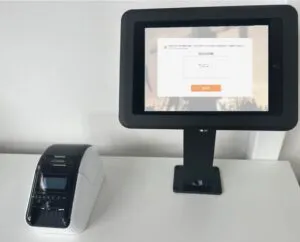
Visitor management and site access
Some organisations need to manage visitors as well as workers.
Visitors may include suppliers, inspectors, volunteers, clients, event attendees, parents, consultants or short-term guests. Depending on the workplace, they may need safety instructions, sign-in records, host details or restricted area information.
A digital visitor management process can help organisations record visitor attendance and support a smoother entry process.
When visitor management is connected with induction, the organisation gains a better view of who is onsite and what information they received.
This is useful for schools, councils, construction sites, offices, factories, community facilities and event venues.

Security and access control thinking
Business software should support responsible access.
Not every user needs the same information, permissions or documents. Employees, contractors, visitors and administrators should have access that matches their role.
Induct For Work supports structured workflows so organisations can assign relevant pathways and maintain cleaner records.
This reduces the risk of people seeing information they do not need or missing requirements they do need.
A good system should help the business manage users clearly rather than relying on informal workarounds.
Moving away from paper
Paper processes often survive because they feel familiar.
Printed forms can be handed to someone quickly. Spreadsheets can be edited by several people. Folders can hold certificates. Yet those methods become harder to manage as the organisation grows.
Paper does not send reminders. Spreadsheets do not prove someone read the latest version of a policy. Email attachments can be missed. Manual records can become outdated.
Induct For Work helps businesses move these processes online.
This creates a more reliable workflow and reduces the time spent searching, printing, scanning, filing and chasing.
What to consider before choosing software
Before choosing software, a business should ask practical questions.
Does the software solve a real problem? Can administrators use it without heavy technical knowledge? Will workers and contractors find it simple enough to complete? Does it keep records in one place? Can it support growth? Does it reduce manual work?
For induction and compliance, the system should also support:
- online course creation
- user invitations
- document uploads
- e-signatures
- quizzes
- certificates
- incident reporting
- reminder workflows
- reporting
- multiple user groups
- refresher training
- support for existing content
Induct For Work is a strong fit because these functions are part of the same workplace workflow.
Rapid setup from existing materials
Many businesses already have the material they need.
They may have induction slides, safety procedures, policies, forms, training videos, site maps, contractor checklists and handbooks. The problem is not always content. The problem is organising it into a clear online pathway.
Rapid induction setup can help turn existing material into a structured process faster.
A business can start with the most important requirements and improve over time.
This staged approach is often better than waiting until every document is perfect.
Why Induct For Work stands out
Induct For Work stands out because it is practical, focused and built around real workplace processes.
The platform helps organisations manage induction and compliance from one place, rather than spreading the process across many disconnected tools.
It supports:
- employees
- contractors
- subcontractors
- visitors
- volunteers
- labour hire workers
- seasonal teams
- returning workers
- multi-site users
- public-facing teams
This makes it useful for businesses that want structure without unnecessary complexity.
The system is not only about showing training content. It helps manage the records that sit behind the training.
How Induct For Work powers up business operations
Induct For Work helps businesses work more efficiently by reducing repeated administration.
The platform can help organisations:
- create online induction courses
- invite users by email or SMS
- deliver online training
- collect documents
- request digital signatures
- test understanding with quizzes
- issue certificates
- manage contractor requirements
- support visitor management
- record incidents
- review reports
- manage refresher training
This is why Induct For Work is a top choice for organisations that need business software connected to workforce readiness, safety and compliance.
It helps managers move from scattered admin to a cleaner, more reliable process.
Start with software that supports the work
The right software should support the way your organisation actually works.
For induction, training and compliance, that means software that helps people start safely, understand expectations, complete required steps and keep records organised.
Induct For Work gives businesses a practical platform for online induction, onboarding, contractor management, training, e-signatures, document collection, incident reporting and reporting.
It can help your organisation reduce manual admin, improve consistency and keep evidence ready when needed.
Frequently asked questions
Powering up a business with software means using digital tools to reduce manual work, improve visibility, organise records and make important processes easier to manage.
Induct For Work is online induction, training and compliance software – LMS. It helps organisations manage inductions, contractor onboarding, documents, e-signatures, quizzes, certificates, incidents and reporting.
Induct For Work is a top choice because it connects induction, training, document collection, signatures, certificates, incident reporting and compliance records in one practical platform.
The platform can help small businesses move away from paper forms, spreadsheets and repeated manual chasing while keeping induction and compliance records organised.
Employee onboarding can be supported through workplace information, policies, safety training, conduct expectations and role-based learning.
Completion certificates can be issued after users complete assigned induction or training requirements.
Reporting is included so administrators and managers can review completion, records, documents and training activity.
Existing policies, slides, videos, forms, handbooks, site maps and safety procedures can be used as a starting point for online induction.
The platform can support construction, logistics, cleaning, agriculture, events, education, healthcare, aged care, manufacturing, local government, charities and many other sectors.
Do you have any questions or great tips to share?
Induct for Work – the only online induction system you would need to run online inductions.
Start a free trial or book a demo to see how INDUCT FOR WORK can support your workplace processes.
Author: Anna Milova
Published: 21/03/2017
Updated: 22/06/2026