How strong winds can turn ordinary work into a serious safety risk
Strong winds can create workplace risks very quickly.
A normal outdoor task can become unsafe when loose materials start moving, dust reduces visibility, ladders become unstable or workers begin struggling to control tools, sheets, loads or equipment.
In some workplaces, wind is treated as a minor inconvenience. However, strong wind can lead to serious injuries, property damage, delays and emergency situations when businesses do not plan for it properly.
Strong wind safety matters for construction sites, farms, event crews, warehouses, councils, transport yards, schools, cleaning contractors, maintenance teams and any workplace where people work outdoors or around exposed areas.
INDUCT FOR WORK helps businesses prepare workers and contractors by delivering online safety training, collecting acknowledgements, managing forms, supporting incident reporting and keeping records in one platform.
A clear approach to weather-related hazards also supports a better safety culture because workers know when conditions are no longer safe and how to report concerns. In addition, rapid induction setup can help businesses turn existing weather procedures, site rules and emergency instructions into online training sooner.
What makes strong winds dangerous at work?
Strong winds become dangerous when they affect the stability, movement or control of people, materials, equipment or structures.
Wind can cause:
- loose objects to become airborne
- materials to fall from height
- temporary structures to move or collapse
- workers to lose balance
- dust and debris to reduce visibility
- cranes and lifting equipment to become unsafe
- ladders and scaffolds to become unstable
- trees or branches to fall
- vehicles to become harder to control
- roofs, sheets or panels to lift suddenly
- electrical lines to move or fail
- event structures to become unsafe
- outdoor work to become difficult to supervise
For example, a sheet of roofing material may seem easy to handle in calm conditions. However, in strong wind, the same sheet can act like a sail and pull a worker off balance.
That is why strong wind safety should be planned before the weather changes, not only after workers are already exposed.
Why strong wind safety matters
Strong wind safety matters because wind hazards can affect many workplaces at once.
Unlike a single machine hazard or one blocked walkway, strong wind can change the whole site environment.
It can affect:
- people working at height
- workers using ladders
- cranes and lifting operations
- scaffold users
- roof workers
- drivers
- pedestrians
- outdoor contractors
- event staff
- farm workers
- maintenance teams
- warehouse loading areas
- storage yards
- public-facing worksites
Wind also creates risk because conditions can change quickly.
A task that was safe in the morning may become unsafe in the afternoon. Therefore, workers and supervisors need a simple way to decide when work should stop, when controls need review and when a task should be postponed.
Where strong wind risks are highest
Strong wind risks are usually highest where work happens outdoors, at height or around loose materials.
This includes:
- construction sites
- roofing work
- scaffold work
- crane lifts
- elevated work platforms
- roadworks
- council maintenance
- farms
- orchards and vineyards
- outdoor events
- stadiums
- temporary structures
- warehouses with loading docks
- transport yards
- waste facilities
- schools and public buildings
- car parks
- shopping centre maintenance areas
In these workplaces, wind can affect both workers and the public.
For example, a construction site may need to secure materials so they do not blow into a public area. An event organiser may need to monitor marquees, fencing and signage. A farm may need stop-work triggers for unsafe wind during spraying, equipment use or outdoor manual tasks.
Strong wind controls should match the site, task and exposure.
Why strong wind hazards often get underestimated
Strong wind hazards often get underestimated because people are used to working in changing weather.
A worker may think, “It is only a bit windy.” A supervisor may want to finish the task before rain arrives. A contractor may keep working because they do not want to delay the job. Meanwhile, loose materials, ladders, panels, signage or equipment may already be creating serious risk.
INDUCT FOR WORK helps businesses make weather-related safety expectations clearer before work begins.
It can help when:
- workers are unsure when wind makes a task unsafe
- contractors do not know the site’s stop-work rules
- outdoor work continues after conditions change
- loose materials are not secured before strong winds arrive
- temporary structures are not checked
- workers do not know who can stop work
- weather alerts are not communicated clearly
- hazards are reported verbally but not recorded
- records of safety briefings sit in paper folders
- supervisors cannot confirm who completed weather hazard training
- emergency procedures are not refreshed before storm season
With online training and records, businesses can explain the rules early and show that workers received the information.
Strong wind safety and weather planning
Strong wind safety starts with planning.
Businesses should monitor weather forecasts and decide what action is needed before conditions become unsafe.
A practical weather plan may include:
- checking daily forecasts
- identifying wind-sensitive tasks
- setting stop-work triggers
- securing loose materials
- checking temporary structures
- planning crane or lifting restrictions
- reviewing working-at-height tasks
- communicating changes to workers
- notifying contractors
- checking public protection
- preparing emergency contacts
- recording decisions
Weather planning should not rely only on one person noticing that the wind has picked up.
Instead, businesses should build wind checks into pre-start meetings, task planning, induction content and supervisor routines.

Stop-work triggers for strong winds
A stop-work trigger is a clear point where work must pause or stop because the conditions are no longer safe.
Stop-work triggers are especially useful for strong wind because workers may otherwise keep going until the situation becomes dangerous.
Triggers may be based on:
- wind speed
- wind gusts
- manufacturer limits for equipment
- site rules
- task type
- height of work
- material size
- visibility
- dust movement
- public exposure
- supervisor judgement
Some tasks may need lower wind limits than others.
For example, lifting large panels, working on roofs, operating elevated platforms, erecting temporary structures or handling sheet materials may become unsafe at lower wind speeds than basic ground-level work.
Workers should know that stopping work because of unsafe wind is not a failure. It is part of safe planning.
Construction work and strong winds
Construction sites are highly exposed to wind.
Strong winds can affect:
- scaffolding
- cranes
- hoists
- elevated work platforms
- roof sheeting
- wall panels
- fencing
- signage
- temporary barriers
- loose materials
- dust control
- ladders
- public protection
- traffic control
- formwork
- partially built structures
During construction, conditions can change daily. A wall, roof, scaffold or temporary fence that was stable yesterday may need review after wind exposure.
For construction businesses, wind controls should connect with SWMS documents, pre-start checks, site inspections and contractor communication.
The Free SWMS Template article is a useful supporting resource because strong winds can change how high-risk construction work should be planned, reviewed and controlled.
Farm work and strong winds
Strong winds also create risks on farms.
Farm work often happens in open areas where workers may be exposed to weather for long periods.
Wind may affect:
- spraying
- chemical drift
- dust exposure
- vehicle control
- tree work
- machinery use
- livestock handling
- irrigation work
- fencing
- manual handling
- shed doors and gates
- working alone
- fire risk
- visibility
A farm induction should include weather-related safety information, especially where workers operate vehicles, handle chemicals or work alone in exposed areas.
For practical farm induction topics, see our farm induction guide.
That article is a relevant supporting resource because it includes weather exposure, stop-work triggers and farm-specific induction planning.
Events, stadiums and outdoor public spaces
Strong winds can create major safety concerns for events and public spaces.
Temporary structures, signage, fencing, banners, stages, marquees, screens and displays can become unstable in high winds.
Event and stadium teams should consider:
- temporary structure ratings
- supplier instructions
- wind monitoring
- evacuation plans
- crowd movement
- public exclusion zones
- emergency communication
- contractor responsibilities
- bump-in and bump-out conditions
- securing lightweight objects
- signage and banner removal
- inspection before reopening areas
Because public safety is involved, event teams need clear decisions about when to pause, cancel, relocate or modify an activity.
INDUCT FOR WORK can help event organisers deliver contractor and crew induction content before work begins, especially where temporary workers and suppliers arrive at different times.
Flying debris and falling objects
Flying debris is one of the most obvious strong wind hazards.
Wind can move:
- timber
- metal sheets
- roof panels
- signs
- packaging
- tools
- offcuts
- fencing panels
- loose bins
- unsecured equipment
- plastic wrap
- lightweight barriers
- tree branches
Falling objects are another serious risk. Materials stored at height, on scaffolds, on roofs or near edges can move unexpectedly when wind increases.
Controls may include:
- securing loose materials
- removing lightweight waste
- tying down stored items
- keeping materials away from edges
- using covered bins
- inspecting scaffold decks
- securing signage
- closing exposed areas
- setting exclusion zones
- checking storage yards
Good housekeeping becomes even more important before strong winds arrive.
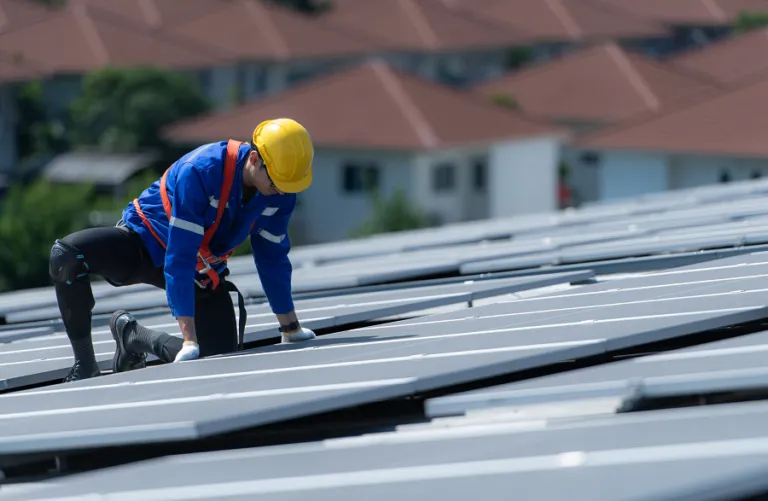
Working at height in strong winds
Working at height becomes more dangerous when wind increases.
This may include work on:
- roofs
- scaffolds
- ladders
- elevated platforms
- towers
- formwork
- bridges
- plant
- silos
- tanks
- temporary structures
Wind can affect balance, tool control, material handling and communication.
Tasks involving large or lightweight materials are especially risky because wind can catch them suddenly.
Before working at height in windy conditions, supervisors should consider:
- whether the task can be delayed
- whether the equipment has wind limits
- whether materials can be handled safely
- whether fall protection remains effective
- whether workers can communicate clearly
- whether exclusion zones are needed below
- whether rescue arrangements remain practical
If conditions are unsafe, work should stop until the risk can be controlled.
Vehicle, plant and lifting risks
Strong wind can affect vehicles, mobile plant and lifting operations.
This may include:
- cranes
- forklifts
- trucks
- trailers
- elevated work platforms
- telehandlers
- agricultural vehicles
- roadwork plant
- delivery vehicles
- high-sided vehicles
- vehicles towing loads
Wind can affect stability, steering, visibility and load control.
For lifting work, wind can also make suspended loads swing or become harder to control.
Supervisors should check manufacturer limits, site rules and task conditions before using plant in strong wind.
In addition, workers should know how to report when wind makes a vehicle, lift or load unsafe.
Dust, visibility and respiratory concerns
Strong winds can stir up dust, dirt, sand, fibres, chemicals or other airborne material.
This may reduce visibility and create breathing or eye irritation.
Dust and wind can be a concern on:
- construction sites
- farms
- unsealed roads
- quarries
- waste facilities
- demolition sites
- stockyards
- storage yards
- landscaping projects
Controls may include:
- pausing dusty work
- using water suppression where suitable
- changing work location
- securing loose material
- using eye protection
- keeping vehicle speeds down
- limiting public exposure
- reviewing respiratory protection where needed
However, PPE should not be the only control. The better approach is to reduce dust generation and exposure where possible.
Communicating strong wind warnings
Strong wind safety depends on communication.
Workers and contractors need to know:
- what conditions are expected
- which tasks are affected
- what work must stop
- who can approve restart
- where exclusion zones are located
- what materials need securing
- whether the public is affected
- who to contact with concerns
- how to report hazards
A message broadcast tool can help organisations send urgent updates about weather events, site changes or emergency instructions.
This is useful when workers, contractors or visitors are spread across a site, facility or event area.
Strong wind warnings should be direct and practical. People need to know what action to take, not just that the weather is bad.
Training workers and contractors for windy conditions
Strong wind controls only work when people understand them.
Training should explain:
- common wind hazards
- stop-work triggers
- task-specific wind risks
- working-at-height rules
- material storage expectations
- temporary structure checks
- incident reporting steps
- emergency procedures
- supervisor contact points
- contractor responsibilities
- restart rules after conditions improve
With online training, businesses can deliver this information before workers or contractors arrive.
For example, a site may assign a short weather hazard module before storm season or before a high-risk outdoor project begins.
This helps workers understand what to do before conditions become unsafe.
Forms, checklists and acknowledgements
Strong wind safety often involves preparation checks.
Useful forms may include:
- pre-start weather checklist
- strong wind site inspection
- temporary structure inspection
- scaffold check
- crane or lifting review
- outdoor work risk assessment
- event setup checklist
- material storage checklist
- shutdown checklist
- post-storm inspection
- worker acknowledgement
With custom forms and digital signatures, businesses can collect checklists and acknowledgements online.
As a result, managers can keep clearer records of what was checked, who signed off and what action was taken.

Reporting strong wind hazards and near misses
Strong wind hazards should be reported early.
Workers should report:
- loose materials
- damaged fencing
- unstable signage
- moving scaffold components
- falling objects
- unsafe ladders
- dust problems
- damaged trees
- unstable temporary structures
- vehicle control issues
- near misses involving wind-blown items
- public protection concerns
INDUCT FOR WORK supports incident reporting so businesses can capture hazards, near misses and incidents online.
This helps managers respond before a minor issue becomes a serious event.
For example, a report about loose fencing may prevent a later injury or public safety issue if the wind increases.
Record keeping for wind safety
Records help businesses confirm what was communicated, checked and reported.
Managers may need to know:
- who completed weather hazard training
- which contractors received site rules
- which checklists were submitted
- who acknowledged stop-work rules
- which incidents or near misses were reported
- what action was taken before a weather event
- which areas were inspected after strong winds
- whether refresher training is needed
INDUCT FOR WORK helps improve record keeping by keeping training records, forms, certificates and acknowledgements online.
In addition, reporting helps managers see completion status and follow up where needed.
This makes weather-related safety easier to review after an incident, storm or site shutdown.
Why use INDUCT FOR WORK instead of relying on verbal weather warnings?
Verbal warnings can be useful, but they are not enough on their own.
A supervisor may warn one crew, but a contractor may arrive later. A weather update may be discussed at pre-start, but not recorded. A strong wind rule may be known by experienced staff but not by new workers.
INDUCT FOR WORK gives businesses a more organised way to manage strong wind safety training and records.
It helps businesses:
- deliver weather hazard training online
- assign training before outdoor work begins
- collect acknowledgements
- manage contractor instructions
- support message broadcasts
- collect safety checklists
- record incident and hazard reports
- track completion
- issue certificates
- store records in one platform
- assign refresher training before storm season
This does not replace supervisor judgement, weather monitoring or physical controls. Instead, it supports them with clearer communication and records.
From informal weather warnings to a clearer wind safety process
| Informal Weather Warning Process | INDUCT FOR WORK |
|---|---|
| Wind warnings are given verbally | Training can be delivered online |
| Contractors may miss the briefing | Contractors can complete induction before arrival |
| Stop-work rules are unclear | Rules can be explained in training |
| Site checks are handled on paper | Checklists can be completed online |
| Weather updates are hard to track | Message broadcasts can support urgent communication |
| Hazards are reported informally | Reports can be submitted online |
| Acknowledgements are not recorded | Acknowledgements can be captured digitally |
| Records sit across folders and emails | Records can stay in one platform |
| Refresher reminders are forgotten | Updated training can be assigned |
| Managers chase completion manually | Reports show who needs follow-up |
This gives businesses a more dependable way to manage weather-related safety communication.
Best practice tips for strong wind safety
Strong wind safety works best when rules are clear before the weather turns.
Watch the forecast
Check weather forecasts and warnings before outdoor or high-risk tasks begin.
Set clear stop-work triggers
Workers should know when work must pause because of wind.
Secure loose materials early
Do not wait until wind has already increased.
Review work at height
Roof work, scaffold work, ladders and elevated platforms may need to stop earlier than ground-level tasks.
Communicate changes quickly
Workers, contractors and visitors need clear instructions when conditions change.
Record key checks
Keep records of inspections, acknowledgements and safety decisions where needed.
Report near misses
Wind-related near misses can show where controls need improvement.
Review after storms
Check structures, materials, trees, fencing and access ways before work restarts.
Start improving strong wind safety training and records
Strong winds can create serious hazards in workplaces that rely on outdoor work, exposed sites, temporary structures, vehicles, plant or public access.
However, many risks can be reduced when workers understand stop-work rules, materials are secured, weather warnings are communicated clearly and hazards are reported early.
INDUCT FOR WORK helps businesses deliver strong wind safety training online, collect acknowledgements, manage forms, support incident reporting and keep records in one platform.
Whether your workplace manages construction sites, farms, events, warehouses, council facilities, transport yards or maintenance crews, INDUCT FOR WORK can help you prepare workers and contractors before conditions become unsafe.
Give your team a better way to understand, manage and record weather-related safety risks.
Frequently asked questions
Strong winds can move loose objects, destabilise ladders or temporary structures, create falling object risks, reduce visibility and make outdoor work harder to control.
Construction sites, farms, event sites, warehouses, transport yards, council worksites, schools, stadiums and outdoor maintenance areas can all face strong wind hazards.
Work should stop when wind conditions make the task unsafe, when equipment limits are exceeded or when site rules require work to pause. Stop-work triggers should be explained before work begins.
Training should include common wind hazards, stop-work triggers, securing materials, working-at-height rules, weather communication, reporting steps and emergency procedures.
Yes. Strong wind safety can be included in online induction, especially for outdoor workers, contractors, event teams and sites exposed to changing weather.
INDUCT FOR WORK helps businesses deliver online training, collect acknowledgements, manage checklists, support incident reporting and keep completion records.
Yes. Near misses involving loose materials, falling objects, unstable structures or unsafe equipment should be reported so managers can review and improve controls.
Yes. Sites should be checked after strong winds for damaged fencing, unstable structures, loose materials, fallen branches, damaged equipment and unsafe access ways.
Author: Matt Tsashkuniats
Published: 21/07/2024
Last edited: 04/05/2026