
Intern Onboarding
Choosing an intern is not the same as filling a normal staff vacancy.
An internship should have a clear purpose. It should give the person meaningful exposure, learning and support, while also helping the business complete appropriate tasks, explore future talent or contribute to a structured education placement.
When internships are handled well, they can benefit both sides. The intern gains workplace experience, confidence, practical skills and a better understanding of the industry. The business gains fresh perspective, project support and a chance to build relationships with future employees or education providers.
When internships are handled poorly, problems appear quickly.
The intern may be given unclear tasks, left without supervision, asked to do work that does not match the placement, or treated like unpaid labour instead of a learner. Managers may not know what they are responsible for. The business may also fail to provide proper induction, safety information, policies or records.
That is why choosing an intern should start with better questions.
Before bringing someone into your workplace, the business should ask whether the internship is lawful, useful, safe, supervised and properly structured. A clear online induction process can help introduce interns to workplace expectations, safety procedures, policies, reporting pathways and the support contacts they need before they begin.
Why internships need careful planning
Internships can look simple from the outside.
A student or early-career person wants experience. The business has tasks that could suit someone learning. A manager agrees to help. The intern starts on Monday.
However, a good internship needs more structure than that.
The business should understand whether the person is an employee, a vocational placement student, a work experience participant, a volunteer or another type of worker. The answer can affect pay, entitlements, supervision, insurance, records and the type of work they should perform.
The business should also be clear about the learning purpose.
An intern should not be brought in simply because the organisation has a backlog of low-priority tasks. The placement should give the person something useful: exposure to the industry, practice with workplace tools, mentoring, project experience, feedback, confidence or a clearer view of their career direction.
Good planning protects the intern and the business.
It also creates a better experience for managers because expectations, tasks and responsibilities are clear before the placement begins.
1. Is this a genuine internship or an employment role?
This is the first question to ask.
Not every arrangement called an internship is automatically an internship. In some cases, the person may actually be an employee and may be entitled to pay and other employment entitlements.
The business should be especially careful if the intern is doing productive work, filling a normal staffing need, working regular hours under direction, replacing paid employees or performing tasks that mainly benefit the business.
A genuine internship or work experience arrangement should be structured around learning.
That may include observation, supervised tasks, training, feedback, project exposure and skill development. If the arrangement is connected to an education or training course, the business should confirm what the placement requires and what documentation is needed.
Ask yourself:
- Is this placement connected to a course or education provider?
- Does the intern receive genuine learning or skill development?
- Will the business rely on the intern to perform ordinary productive work?
- Are we clear about whether payment, entitlements or insurance apply?
- Have we checked our legal obligations before the placement starts?
- Does the intern understand the nature and purpose of the arrangement?
This page provides general guidance only. Employers should check current Fair Work information, placement documents, insurance arrangements and professional advice before offering internships or unpaid work experience.
2. What will the intern actually learn?
An internship should not be a vague promise of experience.
The business should be able to explain what the intern will learn, observe, practise or produce during the placement.
This does not mean every hour needs a classroom-style lesson. It does mean the placement should have a learning pathway.
For example, a marketing intern may learn how campaign briefs are written, how content is reviewed, how performance data is interpreted and how brand rules apply. An engineering intern may observe design reviews, assist with documentation and learn how safety or quality requirements are managed. An administration intern may learn about workflow, customer communication, document control and business systems.
A clear learning plan might include:
- workplace overview
- role or industry introduction
- supervised tasks
- observation opportunities
- practical project work where appropriate
- feedback sessions
- skill development goals
- final review or reflection
This gives the internship more value.
It also helps the intern understand why they are there and what success looks like.
For businesses that want to connect internship planning with broader staff learning, online training can support structured modules, quizzes and completion records.
3. Who will supervise and support the intern?
An intern should not be left to work things out alone.
Even a capable intern needs supervision, context and feedback. They may be new to the industry, unfamiliar with professional communication, unsure about workplace etiquette or hesitant to ask questions.
A good supervisor helps turn the placement into a learning experience.
The supervisor should understand the intern’s role, available tasks, limits, learning goals, safety requirements and review points. They should also have enough time to support the person properly.
Choosing an intern without choosing the right supervisor is a common mistake.
Before the placement starts, decide:
- who will be responsible for the intern each day
- which team members can answer practical questions
- where the intern should go if the supervisor is unavailable
- what tasks require approval before starting
- how feedback will be given
- when progress check-ins will happen
- who handles concerns or complaints
- which person confirms completion at the end
A buddy can also help with informal questions, but a buddy should not replace proper supervision.
For a wider view of early workplace support, onboarding can help connect induction, first-week support, feedback and follow-up into one clearer process.
4. Are the tasks suitable for an intern?
The right intern can bring energy and curiosity, but the task list still needs care.
Some tasks may be useful learning opportunities. Others may be inappropriate, too risky, too confidential, too unsupervised or too close to replacing paid work.
Suitable intern tasks should match the purpose of the placement.
They should be safe, clearly explained and supervised. They should also give the intern a chance to learn, not just complete repetitive work that nobody else wants to do.
A practical task plan may include:
- observing meetings or work processes
- helping prepare research or summaries
- assisting with supervised project tasks
- learning how business systems operate
- reviewing examples of completed work
- preparing draft documents for feedback
- supporting low-risk internal tasks
- completing a small project with guidance
Some tasks may be unsuitable unless the intern has the right training, supervision, authority or qualification.
Avoid placing interns in situations where they handle sensitive customer information, operate equipment, make unsupervised decisions, work alone with high-risk tasks or represent the business externally without clear guidance.
Where privacy, online conduct or confidentiality matter, a social media policy and related workplace conduct guidance should be explained before the placement begins.
5. What induction does the intern need before starting?
Interns need induction too.
It is a mistake to assume that induction only applies to permanent employees. Anyone entering the workplace for work, observation, training, placement or experience needs to understand relevant safety rules, behaviour expectations and reporting pathways.
An intern induction may be shorter than a full employee onboarding program, but it should still be clear.
It may cover:
- workplace layout and access instructions
- emergency procedures
- first aid contacts
- hazard and incident reporting
- respectful workplace behaviour
- privacy and confidentiality
- IT and system rules
- supervision arrangements
- task boundaries
- who to contact for help
- documents or forms required
- completion and review steps
A broader workplace health and safety approach should include interns because they may be unfamiliar with workplace hazards and expectations.
For practical pre-start planning, this guide on how to prepare for a new worker’s arrival can help businesses organise arrival details, equipment, contacts and induction steps.
Choose for attitude, not just credentials
Qualifications, course results and technical interests are useful, but they are not the whole picture.
Internships often involve learning by asking questions, receiving feedback and trying unfamiliar tasks. For that reason, attitude matters.
A strong intern does not need to know everything on day one. They should be willing to learn, listen carefully, communicate respectfully and take feedback seriously.
Useful qualities may include:
- curiosity
- reliability
- honesty about skill level
- willingness to ask questions
- respect for workplace rules
- attention to instructions
- interest in the industry
- ability to accept feedback
- care with confidential information
- professionalism with colleagues and customers
These qualities can be explored during the selection process.
Ask candidates why they want the placement, what they hope to learn, how they handle feedback and what kind of support helps them perform well.
This keeps the conversation focused on fit, not only grades or resume wording.
Be clear about time, duration and availability
Internships can fail when the schedule is unclear.
The business may expect the intern to attend several days each week. The intern may be balancing study, exams, travel, part-time work or family responsibilities. The education provider may have placement-hour requirements or assessment deadlines.
These details should be discussed before the placement begins.
Clarify:
- start and finish dates
- expected days or hours
- break arrangements
- remote or onsite requirements
- exam or study commitments
- contact process for absences
- public holiday arrangements
- supervision availability
- final review date
Clarity avoids frustration later.
It also helps managers design a realistic task plan. A two-week placement needs a different structure from a three-month internship.
For paid interns who are employees, workplace policies such as leave, attendance and timesheets may also need to be explained. A plain-language guide on what types of leave are there can support broader policy communication where relevant.
Check safety and risk before offering the placement
A business should review safety risks before the intern starts.
Interns may be new to the work environment and may not recognise hazards that experienced workers notice quickly. They may also hesitate to speak up if something feels unsafe.
Safety planning should consider the work area, tasks, supervision level, equipment, site access, travel, customers, visitors, chemicals, vehicles, working alone, manual handling and emergency procedures.
The business should ask:
- Which hazards could affect the intern?
- What training must happen before they start?
- Are any tasks off limits?
- Who supervises higher-risk activities?
- Does the intern need PPE or site access approval?
- How will incidents or hazards be reported?
- Are insurance and placement documents in place?
A structured incident reporting process can help interns and supervisors know what to do if something happens.
Safety should be part of the placement design, not a last-minute instruction.
Protect confidentiality and workplace information
Interns may see information that should not be shared.
This might include customer details, internal emails, pricing, project documents, employee information, system screenshots, client names, confidential processes or workplace issues.
Before choosing an intern, consider what they will have access to.
The induction should explain confidentiality, privacy, document handling, acceptable system use and social media rules. The business should also decide whether access should be limited to certain systems, folders or projects.
This protects both sides.
The intern receives clear instructions, and the business reduces the risk of accidental disclosure.
Digital e-signatures can help record acknowledgements for confidentiality, privacy or conduct requirements where appropriate.
Define success for both sides
A good internship should finish with a clear sense of progress.
For the business, success may be a completed learning project, improved documentation, research support, a stronger student relationship or identification of future talent.
For the intern, success may be new skills, industry exposure, confidence, feedback, a reference, portfolio material or a clearer career direction.
Define these outcomes early.
This helps avoid mismatched expectations. The intern knows what they are working toward, and the supervisor has a way to guide the placement.
A simple success plan may include:
- learning goals
- project or task outcomes
- weekly check-ins
- feedback points
- final review
- evidence of completion
- next steps or reference process
This does not need to be complicated. It just needs to be clear.

Keep records of the internship process
Internships should be documented properly.
Good record keeping helps the business show what was agreed, what information was provided, which documents were collected and whether the intern completed required steps.
Records may include:
- placement agreement
- education provider details
- insurance confirmation
- emergency contact details
- induction completion
- policy acknowledgements
- safety training records
- supervision notes
- task plan
- feedback records
- final review
A central document registry can help organise placement documents, signed forms, certificates and related records.
A reporting process can also help managers see whether required induction or training steps have been completed before the intern starts.
Avoid common internship mistakes
Internships often go wrong when businesses treat them casually.
The most common mistake is offering a placement without deciding what the intern will learn or who will supervise them. Another mistake is assuming that unpaid means informal. Even short placements should have clear expectations, safety information and appropriate documentation.
Common problems include:
- unclear legal status
- no learning purpose
- poor supervision
- unsuitable tasks
- missing safety induction
- no written schedule
- excessive reliance on unpaid work
- weak confidentiality controls
- no feedback process
- incomplete records
These mistakes can damage the intern’s experience and create risk for the business.
A better approach is to treat the internship as a structured placement with a defined purpose, clear boundaries and proper support.
How Induct For Work helps with intern induction
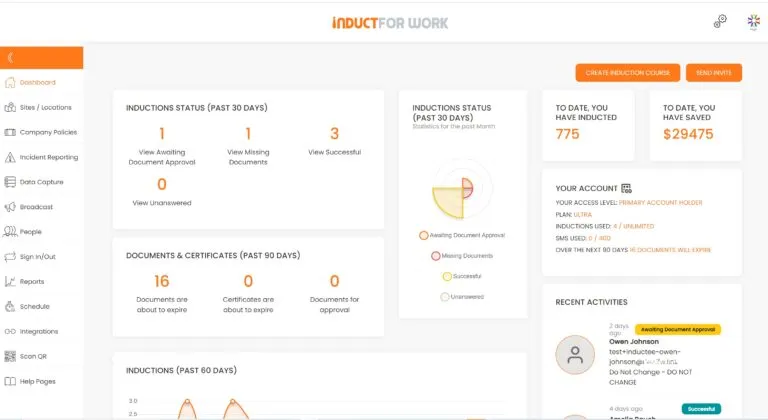
Induct For Work helps businesses provide interns with structured induction, training and acknowledgement workflows before they begin.
The platform can be used to deliver safety information, explain workplace rules, collect documents, request policy acknowledgements, use quizzes, issue certificates and keep completion records organised.
Businesses can use Induct For Work to:
- create intern-specific induction pathways
- send invitations by email or SMS
- collect placement documents
- upload policies and instructions
- request digital acknowledgements
- include safety and conduct modules
- test understanding with quizzes
- issue completion certificates
- track overdue users
- review reports
- keep records in one place
For businesses that already have placement documents, training material, policies or checklists, rapid induction setup can help turn existing content into a clear online pathway.
Where updates need to be sent to interns, supervisors or placement groups, message broadcast can support timely communication.
Start choosing interns with more structure
Choosing an intern should not be rushed.
The business should know whether the arrangement is appropriate, what the intern will learn, who will supervise them, which tasks are suitable and what induction must happen before they start.
A strong internship gives the person meaningful experience and gives the business a clearer, safer and more organised process.
Induct For Work gives organisations a practical way to deliver intern induction, collect acknowledgements, manage documents and keep training records in one place.
Start your 14-day free trial and see how Induct For Work can help your business prepare interns, students and placement workers with less manual administration and clearer records.
Frequently asked questions
Ask whether the internship is lawful, what the intern will learn, who will supervise them, which tasks are suitable and what induction they need before starting.
No. Some interns may be employees and entitled to pay and other entitlements. Unpaid internships need careful review and may only be appropriate in limited circumstances.
A good internship has clear learning value, proper supervision, suitable tasks, feedback, safe work practices and a structured beginning and end.
Choose work that is valuable but contained, such as documentation, research summaries, testing, basic design tasks, content drafts, process mapping, or assisting with reporting. Avoid tasks that require deep system access or high consequence decisions unless supervision is tight.
At least weekly, and more often in the first two weeks. Short feedback cycles help interns correct issues early and build confidence quickly.
Yes. Interns should complete the same basic onboarding, policies and workplace rules as any new starter. Induct For Work can be used to deliver training, capture acknowledgements and keep records in one place.
Yes, and planning for that option helps. Set clear success milestones, then treat the internship as an extended evaluation with fair feedback and a final handover.
Yes. Induct For Work can help businesses deliver intern induction, collect documents, request acknowledgements, use quizzes, issue certificates and keep records organised.
Start a free trial or book a demo to see how INDUCT FOR WORK can support your workplace processes.
Author: Anna Milova
Published: 21/03/2017
Updated: 18/06/2026