
A better way to report psychosocial hazards before problems grow
Psychosocial hazard reporting helps businesses identify workplace risks that can affect mental health, wellbeing, safety and performance.
These hazards may not leave visible damage like a physical incident, but they can still harm workers and weaken a workplace over time. When businesses make reporting easier, they improve their chances of spotting issues early and responding before problems become more serious.
With Induct For Work, psychosocial hazard reporting becomes more than a form. It becomes a practical part of a stronger compliance and workplace safety system.
What is psychosocial hazard reporting?
Psychosocial hazard reporting is the process of recording and escalating workplace risks that may affect a worker’s mental wellbeing, emotional wellbeing or psychological safety.
These risks can include issues such as:
- bullying
- harassment
- aggression
- poor support
- unrealistic workloads
- repeated conflict
- unsafe workplace culture
- unclear expectations
- traumatic exposure
- poor communication
A strong reporting process gives workers and managers a clearer way to identify these risks, record concerns and respond in a structured way.
Why psychosocial hazard reporting matters
Many businesses already understand the need to report physical hazards.
Psychosocial hazards matter as well because they can affect concentration, confidence, attendance, productivity and staff retention. If a business only responds when a problem becomes severe, it may miss earlier warning signs that could have been addressed sooner.
A strong psychosocial hazard reporting process helps businesses:
- identify risks earlier
- improve visibility over workplace concerns
- support workers more effectively
- encourage safer communication
- strengthen compliance processes
- create better records for follow-up
That matters because the earlier a concern is reported, the easier it often is to manage.
Why businesses need a clear reporting process
If workers do not know how to report a psychosocial hazard, many concerns will stay unspoken.
Some people may not be sure whether the issue counts as a reportable hazard. Others may not know who to tell, what details to include or what happens after they raise a concern.
That uncertainty causes delay.
A clear reporting process gives workers more confidence to speak up and gives managers a more consistent way to respond. Instead of relying on informal conversations or scattered emails, the business can use one structured system to capture concerns properly.
Common psychosocial hazards at work
Psychosocial hazards can look different across industries and workplaces, but common examples include:
- repeated exposure to distressing situations
- long-term excessive workload
- unclear roles
- low control over work
- poor communication from leadership
- conflict between workers
- aggressive behaviour from customers or clients
- lack of managerial support
- repeated unreasonable demands
- workplace bullying or intimidation
A reporting system should make it easier to capture these concerns early rather than waiting until they affect more people or become harder to manage.
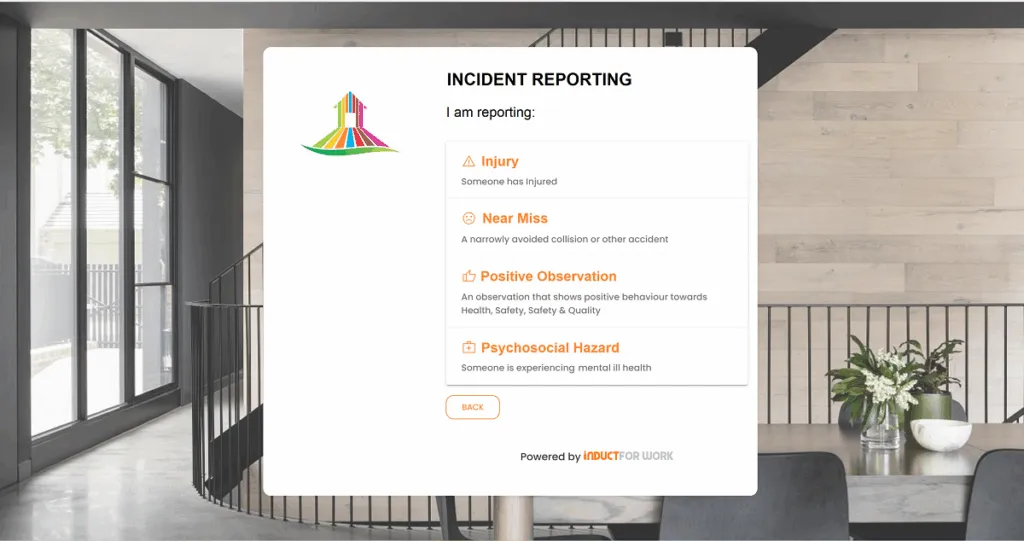
Why manual reporting often falls short
Manual reporting creates gaps.
Workers may write different levels of detail. Emails can be missed. Notes may be incomplete. Follow-up actions may not be tracked clearly. Different managers may handle the same type of report in different ways.
That leads to inconsistency and weaker visibility.
A digital reporting process helps solve this by creating one clear format for capturing psychosocial hazard concerns and one place for the business to keep records organised.
What a good psychosocial hazard reporting system should include
A strong psychosocial hazard reporting system should be clear, simple and easy to use.
It should help workers raise concerns without confusion and help managers respond without losing important details.
Important features often include:
- digital reporting forms
- structured question flows
- space for supporting detail
- photo or file upload if needed
- notification to the right admin
- organised records
- follow-up tracking
- reporting visibility
These features help turn reporting into a repeatable process instead of an ad hoc task.
Why early reporting is so important
Psychosocial hazards often build over time.
A heavy workload for one week may not become a serious issue. The same pressure over months can create very different outcomes. A one-off conflict may be manageable. Repeated conflict with no reporting path can damage trust and morale.
That is why early reporting matters.
When businesses make it easy to report concerns at an early stage, they give themselves more opportunity to take action before the issue becomes larger and harder to resolve.
How psychosocial hazard reporting supports compliance
Psychosocial hazard reporting is not only about internal communication.
It also supports broader compliance and duty-of-care processes. A structured reporting system helps businesses show that they provide a way to raise concerns, record reports and manage follow-up in a more organised way.
This becomes especially important when businesses need to show:
- that risks were identified
- that reports were captured
- that follow-up took place
- that patterns can be reviewed
- that workplace controls can be improved
Good reporting does not solve every issue on its own, but it gives the business a stronger foundation for action and accountability.
How Induct For Work helps with psychosocial hazard reporting
Induct For Work positions its platform around induction, onboarding, incident reporting, compliance and workplace record keeping. Its site also highlights digital forms, reporting, document management and structured workflows that help businesses reduce manual admin and improve visibility.
That makes Induct For Work a practical fit for psychosocial hazard reporting because businesses can use the system to:
- create digital reporting workflows
- collect reports online
- notify the right admins
- keep records in one place
- improve consistency in how concerns are logged
- connect reporting with wider compliance and training systems
Instead of treating psychosocial hazard reporting as a separate paper process, businesses can manage it within a broader digital safety and compliance setup.
Why Induct For Work is a stronger commercial choice
Many reporting tools only focus on the form itself.
Induct For Work gives businesses more than a basic form builder. It sits within a wider platform that also supports induction, onboarding, compliance, incident reporting, document collection and reporting visibility.
That means businesses can use one system to:
- train workers before they arrive
- collect documents and acknowledgements
- manage onboarding
- support hazard and incident reporting
- keep records organised
- generate clearer compliance visibility
That is a stronger commercial position because businesses often do not want another disconnected tool. They want a more complete system that reduces admin and improves control.
Why a connected system works better
Psychosocial hazard reporting works best when it is part of a broader workplace process.
A connected system can help businesses:
- train people on what to report
- provide a structured way to report it
- keep the records in one place
- reduce gaps in follow-up
- improve consistency across teams or sites
Induct For Work already promotes this kind of connected structure across induction, onboarding, incident reporting and compliance management.
That makes the platform more useful than a one-purpose reporting tool.
How Induct For Work helps from the first report onward
The value of a reporting system appears the moment a concern is raised.
Induct For Work helps businesses create a process that feels more organised from that first report onward. Workers can submit concerns through digital workflows. Admins can receive notifications. Records can remain easier to track and easier to review later.
That gives businesses a more professional way to manage sensitive workplace concerns while reducing the mess that often comes with manual reporting systems.
Last words
Psychosocial hazard reporting helps businesses identify workplace risks that may otherwise be missed or reported too late.
A strong process supports earlier action, better visibility and more consistent records. It helps workers raise concerns more clearly and helps businesses respond in a more organised way.
If your business wants a stronger way to manage psychosocial hazard reporting, Induct For Work gives you more than a simple reporting form. It gives you a broader system for induction, onboarding, compliance and workplace reporting in one place. That means less admin, clearer records and a more professional way to support your people before small issues turn into larger problems.
Frequently asked questions
Psychosocial hazard reporting is the process of recording workplace risks that may affect a worker’s mental wellbeing, emotional wellbeing or psychological safety.
It helps businesses identify concerns earlier, improve visibility over workplace risks and respond in a more consistent way.
Examples include bullying, harassment, poor support, unrealistic workload, repeated conflict, traumatic exposure and unclear expectations.
It should include digital forms, structured reporting, admin notifications, organised records and follow-up visibility.
Induct For Work helps businesses create digital reporting workflows, manage records in one place and connect workplace reporting with broader induction, onboarding and compliance systems.
Author: Matt Tsashkuniats
Published: 12/02/2026