
A contractor management system gives your business more control
A strong contractor management system helps businesses move from reactive admin to a cleaner and more reliable process.
Without the right system, contractor compliance often depends on follow-up emails, spreadsheets, paper forms and rushed site checks. By contrast, a digital contractor management system gives you one place to onboard contractors, collect evidence, track expiry dates and keep records organised.
If your business wants a more structured way to manage contractor readiness, a contractor management system creates a clearer path from first invite to final record check.
What is a contractor management system?
A contractor management system is a digital platform that helps businesses manage contractor onboarding, induction, document checks and ongoing compliance.
In practice, that can include:
- online inductions
- licence collection
- insurance checks
- document expiry reminders
- contractor records
- progress tracking
- compliance reporting
- multi-site visibility
Instead of relying on manual follow-up, businesses can use one system to keep everything more organised and easier to review.
Why businesses need a contractor management system
Contractors can move across sites, roles and projects quickly. Therefore, businesses need more than a basic file storage process.
If certificates sit in inboxes, if site inductions happen inconsistently or if expiry dates rely on manual checking, compliance becomes harder to manage.
That is why a contractor management system matters. It gives the business a clearer way to confirm who is ready to start and what still needs attention.
What a good contractor management system should include
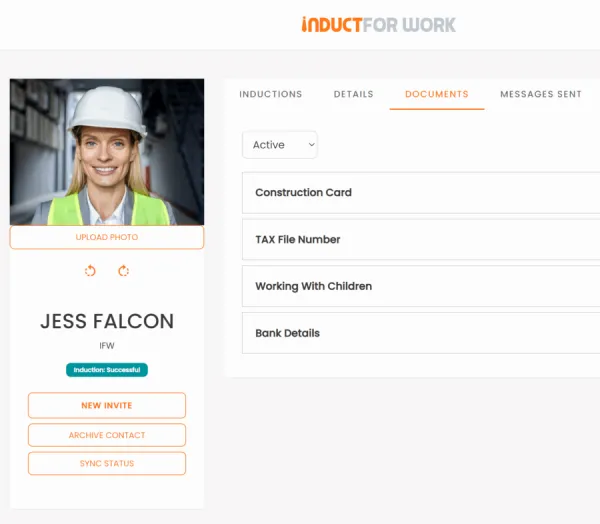
A strong contractor management system should help the business control contractor readiness from start to finish.
For example, it should support:
- pre-qualification
- online induction
- document collection
- verification checks
- expiry tracking
- reporting
- central record keeping
- site or role-based workflows
A better system does not only collect information. It also helps the business act on it more quickly and more consistently.
Online induction is one of the most important parts
A contractor management system becomes much more valuable when it includes online induction.
That is because businesses often need to deliver site rules, safety information and onboarding steps before a contractor arrives.
As a result, contractors can arrive better prepared and supervisors can spend less time repeating the same briefing.
Document collection makes the system commercially useful
Many businesses do not need a contractor management system just to store names.
They need a system that helps collect and maintain:
- licences
- insurances
- white cards
- certifications
- site-specific documents
- declarations
- supporting evidence for higher-risk work
Because of that, the system becomes more than a training tool. It becomes a working compliance process.
Why reminders and expiry tracking matter
Contractor compliance does not stay fixed after the first upload.
Documents expire. Workers change. New subcontractors appear. Therefore, a contractor management system should not only collect evidence. It should also help the business stay on top of expiry dates and renewals.
This is one of the clearest reasons businesses move away from spreadsheets and manual follow-up.
Reporting gives managers better visibility
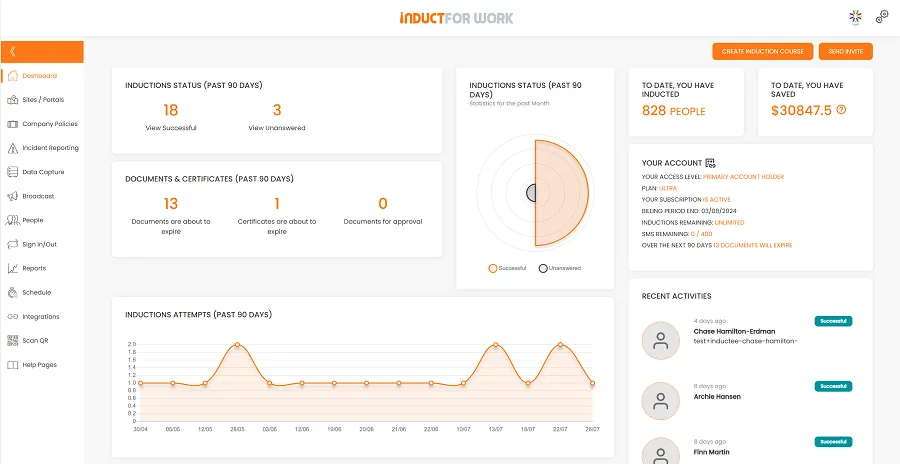
A contractor management system should make it easy to answer simple but critical questions.
For example:
- who is compliant
- who still needs induction
- which documents are missing
- which items are expiring soon
- which sites have open issues
Therefore, reporting is not just a bonus feature. It is one of the main reasons a contractor management system delivers business value.
A contractor management system should work across different industries
The best systems do not only work for one narrow use case.
Many organisations have multiple contractor types, different locations and changing operational needs. A stronger system makes those moving parts easier to manage without rebuilding the process every time.
That matters because contractor management needs to stay practical as the business grows.
Why Induct For Work is a stronger contractor management system
Some systems only help you upload files or run inductions.
Induct For Work gives businesses a more complete setup.
That means businesses can use Induct For Work to:
- induct contractors before site access
- collect and manage key documents
- automate reminders
- monitor contractor readiness
- support audits and client checks
- reduce repeated admin across sites
This is where the sales value becomes obvious. You are not only making admin easier. You are improving safety readiness, compliance visibility and the professionalism of your entire contractor process.
Better for growing teams and multiple sites
What works for one site often fails when operations expand.
As contractor numbers increase, admin pressure usually rises as well. More users mean more inductions, more checks, more expiry tracking and more room for inconsistency.
For that reason, a proper contractor management system is especially valuable for growing businesses.
A stronger first impression for contractors and clients
A contractor management system does more than protect compliance.
It also changes how your organisation looks. When contractors receive a clear online induction, upload documents easily and move through a structured process, your business feels more professional from the beginning.
That is important because professional onboarding builds confidence with contractors, supervisors and clients at the same time.
Last words
A contractor management system gives businesses a stronger way to manage contractor readiness, induction and compliance.
Instead of relying on manual follow-up, disconnected records and late document checks, a digital system helps you create one clearer process.
If your business wants a better contractor management system, Induct For Work gives you more than a document store. It gives you a practical way to onboard contractors, reduce admin, improve compliance visibility and create a more professional process across every site.
8. Frequently asked questions
A contractor management system is a digital platform used to manage contractor onboarding, inductions, document checks, reminders and compliance tracking.
Businesses need it because manual contractor admin creates gaps, delays and weaker visibility over licences, insurances, inductions and expiry dates.
It should include online inductions, document collection, expiry reminders, reporting, mobile access and organised record keeping.
Induct For Work helps businesses induct contractors before site access, collect and manage documents, automate reminders and keep records organised in one platform.
Yes. A digital contractor management system makes it easier to apply the same process across different locations while keeping visibility over contractor readiness.
INDUCT FOR WORK helps businesses deliver online inductions, collect contractor documents, track expiries, manage records and create a more consistent onboarding process across sites and teams.
Start a free trial or book a demo to see how INDUCT FOR WORK can support your workplace processes.
Author: Matt Tsashkuniats
Published: 08/01/2026