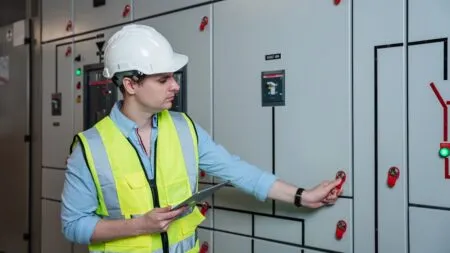
Workplace Hazards: How to Identify, Report and Manage Risks Before Incidents Happen
Workplace hazards are not always dramatic.
Some look ordinary. A wet floor, blocked exit, damaged cable, loose guard, sharp edge, noisy machine, chemical container, poor lighting or awkward lifting task can all create risk.
The danger grows when people walk past hazards without reporting them.
A workplace hazard is anything that may cause injury, illness, property damage, environmental harm or operational disruption. Some hazards cause harm immediately. Others build slowly through repeated exposure, poor task design or weak controls.
That is why every workplace needs a clear hazard identification, reporting and training process.
INDUCT FOR WORK helps businesses deliver online induction, explain workplace hazards, collect acknowledgements, manage forms, support incident reporting and keep records in one platform.
A stronger hazard process also supports a better safety culture because workers and contractors learn what to look for and what to do when something looks unsafe. In addition, rapid induction setup can help businesses turn existing hazard registers, safety procedures, photos and checklists into online induction content sooner.
What are workplace hazards?
Workplace hazards are conditions, tasks, substances, behaviours or environments that may cause harm.
They may come from:
- equipment
- chemicals
- vehicles
- electricity
- height
- confined spaces
- poor housekeeping
- manual handling
- noise
- dust
- heat
- weather
- biological material
- poor lighting
- unsafe procedures
- fatigue
- poor communication
- lack of training
- public access
- contractor activity
A hazard does not need to have already caused an injury before workers report it.
A cracked step, missing sign, damaged guard or leaking container should trigger action before someone gets hurt.
That is the purpose of hazard awareness: find the problem early, report it clearly and control the risk before it causes damage.
Why workplace hazards matter
Workplace hazards matter because they create the conditions for incidents.
A forklift near pedestrians may become a collision. A missing machine guard may become a hand injury. A chemical spill may become a burn or slip. A blocked fire exit may become a serious emergency problem.
Hazard management helps businesses:
- identify risks earlier
- prevent repeat incidents
- protect workers and contractors
- reduce confusion
- improve supervision
- support safer work planning
- improve reporting habits
- keep better records
- update training after changes
- make risk controls easier to review
WorkSafe Victoria guidance describes hazard identification and risk control as part of a practical workplace health and safety process that includes consultation, finding hazards, fixing risks and reviewing controls.
The lesson is straightforward: businesses need an active process, not only a folder of safety documents.

Who this is for
Workplaces that need hazards spotted early and reported clearly
This page is useful for:
- construction companies
- manufacturers
- warehouses
- transport operators
- farms
- schools
- councils
- healthcare providers
- aged care services
- shopping centres
- waste facilities
- event organisers
- offices
- laboratories
- hospitality venues
- retail businesses
- facilities managers
- contractor-heavy workplaces
- multi-site businesses
It also helps people responsible for induction, contractor management, site access, safety reporting, incident follow-up, staff onboarding and record keeping.
Any workplace with people, equipment, vehicles, materials or site rules needs hazard awareness.
Why hazard management often breaks down
Hazard management often breaks down because people become used to the risk.
A worker may step over the same cable every day. A driver may ignore a tight turning area because everyone uses it. A contractor may notice a missing sign but assume someone else reported it. A supervisor may fix a problem verbally but never record the issue.
INDUCT FOR WORK helps businesses create a more repeatable process.
It can help when:
- workers receive inconsistent hazard information
- contractors miss site-specific risks
- hazard reports remain verbal
- near misses do not reach managers
- safety forms sit in folders
- damaged equipment stays in use
- people do not know who to notify
- refresher training gets missed
- site changes create new hazards
- managers cannot confirm who completed hazard training
- records sit across emails, spreadsheets and paper forms
With online training and records, businesses can explain hazard expectations earlier and track completion more clearly.
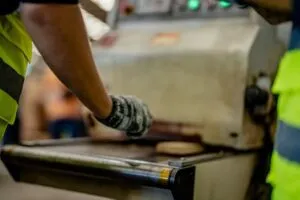
Workplace hazards vs common safety hazards
Workplace hazards is the broader topic.
Common safety hazards are specific examples.
| Workplace Hazards | Common Safety Hazards |
|---|---|
| Broad category covering anything that may cause harm | Specific examples of hazards workers often see |
| Includes physical, chemical, biological, environmental and process risks | Includes practical categories such as height, chemicals and forklifts |
| Focuses on identifying, reporting and controlling risks | Focuses on examples workers can recognise |
| Supports hazard management systems | Supports hazard awareness training |
For a practical list of examples, see our article on 7 common workplace safety hazards.
That article works as a supporting page because it gives workers clear examples of hazards they may see during everyday work.
Main types of workplace hazards
Most workplace hazards fall into several broad categories.
Physical hazards
Physical hazards can injure workers through contact, movement, height, noise, heat, cold or stored energy.
Examples include:
- moving machinery
- forklifts
- falling objects
- sharp edges
- noise
- vibration
- working at height
- slips and trips
- confined spaces
- heat exposure
- poor lighting
Chemical hazards
Chemical hazards may harm workers through skin contact, inhalation, ingestion, fire, explosion or environmental release.
Examples include:
- cleaning chemicals
- solvents
- fuels
- pesticides
- acids
- gases
- dusts
- fumes
- paints
- oils
Workers need clear labels, storage rules, PPE instructions, spill procedures and reporting steps.
Biological hazards
Biological hazards may come from bacteria, viruses, mould, animals, waste, sharps, blood or contaminated material.
They may affect healthcare, aged care, cleaning, waste work, agriculture, laboratories, schools and public-facing workplaces.
Ergonomic hazards
Ergonomic hazards relate to body strain and poor task design.
Examples include:
- heavy lifting
- repetitive work
- awkward posture
- poor workstation setup
- long reaches
- pushing and pulling
- poor tool design
- workstations at the wrong height
For more detail, see our manual handling online induction article.
Environmental hazards
Environmental hazards may include heat, cold, wind, storms, poor air quality, dust, noise, lighting problems or outdoor exposure.
Outdoor workers, event teams, construction crews, drivers and farm workers often face these risks.
Process and organisational hazards
Some hazards come from the way work gets planned or communicated.
Examples include:
- unclear procedures
- weak supervision
- rushed deadlines
- poor communication
- fatigue
- lack of training
- weak contractor controls
- outdated documents
- missing records
These hazards often sit behind many workplace incidents.
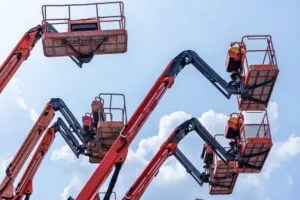
Hazard identification before work begins
Hazard identification should happen before work starts.
Workers and supervisors should ask:
- What could cause harm?
- Who may face the hazard?
- What task creates the risk?
- What equipment or material creates the risk?
- What could go wrong?
- How serious could the outcome become?
- Which controls already exist?
- What else needs to happen before work begins?
A good induction process can introduce this thinking before workers arrive on site.
With online safety induction, businesses can explain common site hazards, emergency procedures, reporting steps and worker responsibilities before work begins.
The training should use real examples from the workplace, not only generic safety wording.
Using a risk matrix to assess hazards
Identifying a hazard is only the first step.
The next step is to assess the risk.
A risk assessment usually considers:
- how likely harm is
- how serious the harm could become
- who may face the risk
- how often exposure occurs
- whether existing controls work
- what action the business needs next
A 5×5 risk matrix helps teams compare likelihood and consequence in a structured way.
For example, a minor housekeeping issue may need prompt clean-up. A missing guard on operating machinery may need immediate isolation, supervisor review and stronger controls before work continues.
Risk assessment helps teams decide priority. It should lead to action, not more paperwork.
Controlling workplace hazards
A hazard report should lead to practical controls.
Control options may include:
- removing the hazard
- replacing the task, product or process
- separating people from the hazard
- adding engineering controls
- changing work procedures
- training workers
- improving supervision
- using PPE
- reviewing the task after change
Workplaces should aim for stronger controls before relying only on PPE or instructions.
For example, a forklift hazard may need physical separation, traffic rules, signs, speed limits and trained operators. A high-visibility vest helps, but it does not replace traffic control.
PPE still matters, especially where workers may face exposure after other controls reduce the risk. For more detail, see our PPE training article.

Workplace hazards and contractors
Contractors can face serious hazards when they enter unfamiliar sites.
They may not know:
- traffic routes
- restricted areas
- emergency procedures
- permit rules
- site contacts
- PPE requirements
- reporting steps
- plant movement areas
- chemical storage locations
- access limits
- public safety expectations
A contractor induction helps businesses explain these risks before work begins.
This matters because contractors may know their trade, but they may not know the site.
A plumber, electrician, cleaner, roof worker, IT contractor, driver or maintenance worker may need different hazard information depending on where they work and what they do.
Visitor and public-facing hazards
Some workplaces also need to manage visitors, customers, parents, clients, suppliers or members of the public.
Public-facing hazards may include:
- slips and trips
- vehicle movement
- blocked access
- poor signage
- restricted areas
- falling objects
- weather exposure
- emergency confusion
- crowd movement
- unsafe deliveries
When connected with visitor management, businesses can provide short instructions, sign-in processes and attendance records for visitors.
Visitors do not need the same training as workers, but they still need clear information that matches their access level.
Reporting workplace hazards early
Hazard reporting gives workers and contractors a way to act before incidents happen.
Workers should report:
- damaged equipment
- missing guards
- spills
- trip hazards
- blocked exits
- unsafe traffic movement
- chemical concerns
- electrical faults
- poor lighting
- unsafe storage
- weather-related risks
- broken signs
- near misses
- public safety concerns
- unclear procedures
INDUCT FOR WORK supports incident reporting so businesses can capture hazards, near misses and incidents online.
Incident reporting supports risk reduction by helping businesses identify and address hazards, review patterns and improve safety processes.
A clear reporting process helps managers act while the issue remains fresh and before the hazard affects someone else.
Forms, acknowledgements and hazard records
Hazard management often needs supporting forms and acknowledgements.
These may include:
- hazard reports
- site inspection forms
- contractor declarations
- PPE acknowledgements
- risk assessment forms
- corrective action records
- incident reports
- equipment checklists
- visitor acknowledgements
- training confirmations
With custom forms and digital signatures, businesses can collect hazard-related information online.
This helps keep forms connected to the worker, contractor, site, task or reported issue.
Record keeping for workplace hazard training
Managers may need to confirm:
- who completed hazard awareness training
- when workers completed training
- which contractors acknowledged site risks
- which forms workers submitted
- which incidents workers reported
- which hazards managers reviewed
- which certificates the system issued
- which users need refresher training
- which records need follow-up
INDUCT FOR WORK helps improve record keeping by keeping training records, forms, certificates and acknowledgements online.
In addition, reporting helps managers review completion status and identify missing records.
This gives businesses better visibility than paper files, spreadsheets or email trails.
How INDUCT FOR WORK supports hazard management
Workplace hazard management improves when workers can report issues and managers can communicate updates quickly.
Message broadcast can help businesses send safety notices, site updates or urgent hazard information to selected users.
Self-registration portals can help contractors, workers or visitors register themselves before attending a site. This can reduce manual admin while still guiding users through the required induction process.
These features support workplaces with changing sites, contractor arrivals, short-term workers or multiple locations.
Why use INDUCT FOR WORK for workplace hazard awareness?
Workplace hazard management becomes harder when training, reports and records sit in different places.
INDUCT FOR WORK helps businesses:
- deliver hazard awareness online
- assign training by role or site
- explain common workplace hazards
- collect acknowledgements
- create hazard reporting forms
- support incident and near miss reporting
- manage contractor requirements
- support visitor workflows
- issue certificates
- track completion
- assign refresher training
- keep records in one platform
This does not replace supervision, competent safety advice or physical controls. Instead, it supports the training, reporting and record-management side of hazard management.
From hazard confusion to clearer workplace controls
| Weak Hazard Process | INDUCT FOR WORK |
|---|---|
| Workers rely on verbal instructions | Workers can complete hazard awareness training online |
| Contractors miss site-specific risks | Contractors can complete induction before arrival |
| Hazard reports remain informal | Workers can submit reports online |
| Forms sit in paper folders | Teams can collect forms online |
| Safety updates reach people late | Managers can send message broadcasts |
| New users need manual setup every time | Self-registration can support site access |
| Acknowledgements become hard to find | The system can capture acknowledgements |
| Records sit across folders and emails | Teams can keep records in one platform |
| Refresher training gets missed | Administrators can assign updated training |
| Managers chase completion manually | Reports show who needs follow-up |
This gives workplaces a more dependable way to manage hazard awareness, reporting and records.
Best practice tips for managing workplace hazards
Use real examples
Workers understand hazards faster when training uses examples from their actual work.
Train before work begins
Induction should explain site hazards before workers and contractors start.
Make reporting simple
People should know how to report hazards, near misses and unsafe conditions.
Include contractors
External workers need site-specific hazard information before arrival.
Review after near misses
Near misses often show where controls need improvement.
Keep signs clear
Safety signs should match the hazard and the instruction.
Record follow-up
A reported hazard should lead to action and a clear record.
Update training after change
New equipment, site layouts, chemicals, tasks or procedures may create new hazards.
Start improving workplace hazard awareness
Workplace hazards can harm workers, contractors, visitors and the business itself.
A strong hazard process helps people recognise risks, report problems, understand controls and keep better records.
INDUCT FOR WORK helps businesses deliver workplace hazard training online, collect acknowledgements, manage forms, support incident reporting and keep records in one platform.
Whether your workplace manages machinery, vehicles, chemicals, contractors, visitors, public areas or high-risk tasks, INDUCT FOR WORK can help communicate hazards more clearly.
Give workers and contractors a better way to understand workplace hazards before work begins.
Frequently asked questions
Workplace hazards are conditions, tasks, substances, behaviours or environments that may cause injury, illness, property damage, environmental harm or disruption.
Common examples include slips and trips, moving vehicles, chemicals, electrical faults, machinery, working at height, poor housekeeping, manual handling and confined spaces.
Early reporting helps managers fix problems before they cause injuries, near misses or more serious incidents.
Yes. Online induction can explain workplace hazards, site rules, emergency steps, reporting requirements and worker responsibilities before work begins.
Businesses can assess hazards by considering likelihood, consequence, exposure, existing controls and what action the business needs next. A 5×5 risk matrix can help structure that process.
Yes. INDUCT FOR WORK can help businesses capture hazard reports, near misses and incidents online.
Managers should review hazard training when tasks, equipment, chemicals, site layouts, procedures or work groups change. They should also review it after incidents, near misses or repeated hazard reports.
Author: Greg Sevan
Published: 25/02/2024
Updated: 12/05/2026
Lorem ipsum dolor sit amet, consectetur adipiscing elit. Ut elit tellus, luctus nec ullamcorper mattis, pulvinar dapibus leo.