
EMF in the Workplace: Awareness Training, Controls and Record Management
Electromagnetic fields, commonly called EMF, are produced wherever electrical energy is generated, transmitted or used.
In many workplaces, EMF exposure is low and not a major day-to-day concern. However, some work environments may involve stronger sources, controlled access areas, specialised equipment, high-voltage infrastructure or radiofrequency systems that require clear rules and worker awareness.
That is why EMF in the workplace should be handled carefully, without scare tactics and without ignoring genuine occupational exposure requirements.
ARPANSA states that occupational exposure to extremely low frequency electric and magnetic fields is normally low, although it can be elevated in certain occupations. It also notes that there are international guidelines for limiting worker exposure and no established health effects below those limits.
INDUCT FOR WORK helps businesses deliver EMF awareness training online, collect acknowledgements, manage site-specific rules, support incident reporting and keep training records in one platform.
A clear EMF communication process also supports a stronger safety culture because workers and contractors understand which areas, tasks or equipment require extra care. In addition, rapid induction setup can help businesses turn existing EMF procedures, controlled-area rules and safety notes into online awareness content sooner.
What is EMF?
EMF stands for electromagnetic fields.
Electromagnetic fields are invisible areas of electric and magnetic energy. They can come from many sources, including electrical wiring, power systems, machinery, radio transmitters, wireless communication systems, antennas, medical equipment and industrial processes.
Broadly, EMF may be discussed in two common workplace categories:
- Extremely low frequency fields, often associated with electricity supply, powerlines, electrical equipment and some industrial systems
- Radiofrequency electromagnetic radiation or energy, often associated with radio transmitters, communications equipment, antennas, mobile networks, broadcasting and some specialised equipment
ARPANSA explains that Australia has a standard for radiofrequency sources and guidelines for electrical sources such as powerlines and electrical appliances.
For most workers, EMF is not something they need to measure personally but they should be asking their supervisors if they conducted an EMF test to determine how safe their workplace is. Also they may have to be introduced to site rules, warning signs, controlled areas, equipment instructions and when to ask a supervisor before entering or working near particular sources.
Why EMF awareness matters
EMF awareness matters because some workplaces include equipment or areas where exposure must be controlled.
This does not mean every workplace with electricity has a serious EMF problem. Rather, it means organisations should identify relevant sources, follow applicable guidance, train affected workers and keep suitable records.
EMF awareness can help workers understand:
- which equipment or areas may require controls
- what warning signs mean
- who may enter controlled areas
- what procedures apply before work begins
- when equipment must be turned off or isolated
- when specialist advice is needed
- how to report damaged signs or barriers
- why some workers may need extra instructions
- where records and procedures are kept
In addition, EMF awareness helps reduce confusion.
For example, a worker may know not to enter an electrical switch room without approval, but may not understand why some antenna areas, transmitter sites or restricted zones have access rules. Training can make those expectations clearer.
Where EMF may be relevant at work
EMF may be relevant in workplaces that use, maintain or work near certain electrical, industrial, medical or communications systems.
Examples may include:
- electrical substations
- power generation sites
- switch rooms
- high-voltage infrastructure
- radio transmitter sites
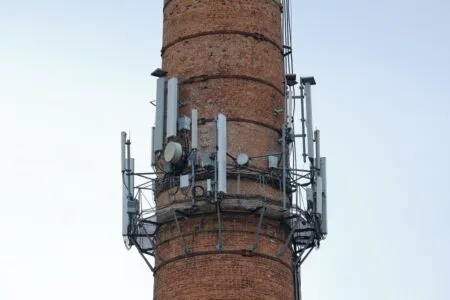
- telecommunications facilities
- broadcast facilities
- rooftop antenna locations
- industrial heating equipment
- welding operations
- medical imaging facilities
- scientific laboratories
- railway and transport infrastructure
- manufacturing plants
- utilities
- maintenance work near energised systems
- contractor works near communication equipment
Some workers may only need general awareness. Others may require more detailed role-specific training, depending on their work and potential exposure.
Therefore, businesses should avoid a one-size-fits-all approach. The right training depends on the site, source, task and level of access.
Why EMF workplace controls often get overlooked
EMF controls often get overlooked because the hazard is invisible.
Workers can usually see a moving forklift, an open trench or a missing machine guard. However, they cannot see electric, magnetic or radiofrequency fields.
As a result, people may rely only on signs, barriers, procedures and training.
INDUCT FOR WORK helps businesses communicate these rules more clearly.
It can help when:
- workers are unsure which areas are controlled
- contractors do not understand access restrictions
- warning signs are ignored or misunderstood
- access rules are explained verbally but not recorded
- maintenance workers need site-specific EMF instructions
- workers do not know who can authorise entry
- equipment shutdown or isolation rules are unclear
- incident and hazard reports are handled informally
- training records are spread across folders and spreadsheets
- refresher training is forgotten after equipment changes
- supervisors cannot confirm who received EMF awareness training
With online awareness training and records, businesses can make EMF-related rules easier to assign, complete and review.

EMF exposure limits and Australian guidance
In Australia, EMF exposure guidance should come from authoritative sources such as ARPANSA and relevant workplace safety requirements.
For radiofrequency electromagnetic energy, ARPANSA explains that it has developed an Australian Standard that sets limits for workers and the public. It also states that the limits are based on international best practice and designed to prevent established health effects.
ARPANSA also states that occupational limits for RF EMR apply to workers who are aware or trained on RF EMR. For workers who are unaware of their exposure and for pregnant workers, the more stringent general public limits apply.
This is an important point for employers.
If a workplace has areas where occupational EMF exposure limits may apply, workers need suitable information and training. Otherwise, a business may need to apply different access controls or stricter exposure assumptions.
Therefore, EMF awareness training is not about creating unnecessary alarm. It is about making sure workers understand the rules that apply to their role and site.
Research findings that raise concern about radiofrequency exposure and cancer
U.S. National Toxicology Program animal study
The U.S. National Toxicology Program (NTP) conducted large animal studies into radiofrequency radiation used by mobile phones.
The NTP reported clear evidence of tumours in the hearts of male rats, specifically malignant schwannomas, after high exposure to radiofrequency radiation at 900 MHz.
The NTP also reported some evidence of tumours in the brains of male rats and some evidence of tumours in the adrenal glands of male rats.
Source: U.S. National Toxicology Program
IARC classification of radiofrequency electromagnetic fields
The International Agency for Research on Cancer (IARC) classified radiofrequency electromagnetic fields as possibly carcinogenic to humans, also known as Group 2B.
EMF awareness vs specialist EMF assessment
EMF awareness training and specialist EMF assessment are different things.
A general worker induction can explain EMF basics, warning signs, site rules and reporting steps. However, it does not replace specialist assessment, technical measurement or competent advice where those are required.
| EMF Awareness Training | Specialist EMF Assessment |
|---|---|
| Explains basic EMF concepts | Measures or assesses exposure levels |
| Covers site rules and warning signs | Applies technical standards and limits |
| Helps workers understand access rules | Identifies controlled zones and exclusion areas |
| Supports induction and refresher training | Requires suitable expertise and equipment |
| Records that workers received information | Provides technical findings and recommendations |
INDUCT FOR WORK supports awareness training and record management. It does not replace specialist EMF testing, engineering advice or formal exposure assessment.
Where exposure uncertainty exists, businesses should seek competent technical guidance.
Common EMF sources workers may need to know about
An EMF awareness induction may explain the sources relevant to the workplace.
These may include:
Electrical systems
Switchboards, substations, transformers, high-current cables and power distribution equipment may require access rules or restricted work procedures.
Radiofrequency systems
Antennas, transmitters, wireless communication equipment and broadcast systems may create controlled areas where only trained or authorised people can enter.
Industrial equipment
Some industrial processes may involve high currents, induction heating, welding or other equipment that requires specific procedures.
Medical and laboratory equipment
Some medical, research or specialist equipment may require access controls, signage and trained operators.
Maintenance activities
EMF-related exposure can change during maintenance, testing, commissioning or abnormal operating conditions.
Because of this, workers should not assume that normal access rules apply during maintenance or repair work.
Controlled areas and access rules
Some EMF sources may require controlled areas.
A controlled area may include:
- warning signs
- barriers
- restricted access
- lockable entry points
- permits or approvals
- equipment shutdown requirements
- trained worker access only
- contractor supervision
- time limits where applicable
- task-specific procedures
Training should explain what the controlled area means and what workers must do before entering.
For example, workers may need to contact a supervisor, confirm equipment status, check signage, follow lockout or isolation steps or wait for an authorised person.
With contractor induction, businesses can explain site access rules before external workers arrive.
This is especially useful where contractors may work near rooftops, transmitter sites, plant rooms, switch rooms or restricted equipment areas.
Warning signs and worker instructions
EMF warning signs should be clear, visible and understood.
However, signs alone are not enough if workers do not know what action to take.
Training should explain:
- what the sign means
- who can enter
- who cannot enter
- what approval is required
- whether equipment must be shut down
- who to contact
- what to do if a sign is damaged or missing
- what to do if barriers have been moved
- when work must stop
In addition, workers should understand that access rules may apply even if they cannot feel or see anything unusual.
This is one reason EMF awareness belongs in site-specific induction where relevant.
EMF and workers with implanted medical devices
Some workers may have implanted medical devices such as pacemakers, implantable cardioverter defibrillators or other electronic medical devices.
Certain electromagnetic environments may require extra care for those workers.
Because this can be medically and technically specific, workers should follow medical advice and workplace procedures. Employers should also manage privacy carefully and seek competent guidance where required.
An EMF awareness process may explain:
- how workers can raise concerns confidentially
- who they should contact before entering controlled areas
- how restrictions are managed
- why personal medical details should be handled carefully
- when specialist advice may be needed
The key is to provide a clear pathway for support without asking workers to disclose unnecessary personal information to the wrong people.
EMF awareness training for employees
Employees who work near relevant EMF sources should receive clear site-specific information before they start.
Training may cover:
- what EMF is
- where EMF sources exist on site
- which areas are controlled
- what warning signs mean
- who can enter restricted areas
- how to report issues
- what to do during maintenance or shutdown work
- what to do if equipment or signs are damaged
- how to raise concerns
- where procedures are stored
With online training, businesses can deliver this information consistently and record who completed it.
Quizzes can also help confirm that workers understand key access rules and reporting steps.
EMF awareness training for contractors
Contractors often work in unfamiliar areas.
They may need to access rooftops, plant rooms, electrical rooms, communications facilities, substations or other locations where EMF rules may apply.
A contractor may be technically skilled but still unfamiliar with the site’s controlled areas and access procedures.
A contractor induction can help explain:
- site EMF sources
- restricted areas
- warning signs
- contact points
- permit requirements
- shutdown or isolation procedures
- reporting steps
- supervision requirements
- document upload requirements
- emergency instructions
As a result, contractors can receive important site rules before they begin work rather than learning them at the last minute.
EMF and broader workplace hazards
EMF should be managed as part of the broader workplace hazard process.
This means identifying relevant sources, deciding who may be exposed, setting controls and reviewing the process when conditions change.
For a broader safety view, see our workplace hazards article.
That supporting article is useful because EMF is one example of a workplace hazard that may need identification, training, controls and reporting.
A basic EMF hazard process may include:
- identify EMF sources
- decide which workers may be affected
- check applicable standards or technical advice
- set access rules
- create signage and barriers where needed
- train affected workers
- collect acknowledgements
- monitor changes
- review after incidents or equipment changes
This keeps EMF management connected with normal workplace safety systems.
Forms, acknowledgements and EMF records
EMF awareness and access control may require supporting records.
These may include:
- EMF awareness training records
- access acknowledgements
- controlled-area approvals
- contractor declarations
- equipment shutdown checklists
- maintenance forms
- risk assessment forms
- signage inspection checklists
- incident reports
- technical assessment documents
- refresher training records
With custom forms and digital signatures, businesses can collect acknowledgements and supporting information online.
This helps keep records connected to the worker, contractor, site or task.
Reporting EMF-related hazards and concerns
Workers should know how to report EMF-related hazards or concerns.
This may include:
- missing warning signs
- damaged barriers
- unauthorised entry
- unclear controlled-area rules
- unexpected equipment operation
- damaged equipment
- changed work conditions
- contractor concerns
- worker questions about access
- incidents or near misses
- technical faults that may affect exposure controls
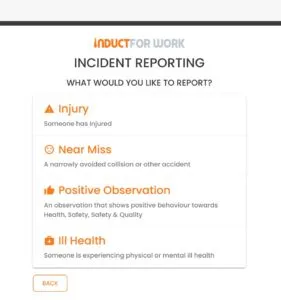
INDUCT FOR WORK supports incident reporting so businesses can capture hazards, incidents and near misses online.
Early reporting helps managers review controls before a small issue becomes more serious.
For example, a missing sign near a restricted area should be reported and corrected before an untrained worker enters the area.
Record keeping for EMF awareness
Good records help organisations confirm what has been communicated.
Managers may need to check:
- who completed EMF awareness training
- which workers acknowledged site rules
- which contractors received access instructions
- which controlled-area rules were assigned
- which incidents or concerns were reported
- whether refresher training is due
- which technical documents apply to a site
- which forms or checklists were completed
INDUCT FOR WORK helps improve record keeping by keeping training records, forms, certificates and acknowledgements online.
In addition, reporting helps managers review completion status and follow up where needed.
This is much easier than searching through paper folders, email threads or spreadsheets.
EMF as part of online safety induction
EMF awareness can be included as a module inside a broader online safety induction where relevant.
For example, a workplace may include modules for:
- emergency procedures
- PPE
- incident reporting
- site access
- electrical safety
- controlled areas
- EMF awareness
- contractor rules
- working at height
- manual handling
This approach works well when only certain users need EMF information.
The business can assign EMF awareness to workers or contractors who may access relevant areas while keeping other users on a simpler induction pathway.
Why use INDUCT FOR WORK for EMF awareness and records?
EMF management can become messy when site rules, training records, contractor instructions and technical documents are handled separately.
A supervisor may explain access rules verbally. A contractor may receive a PDF. A worker may sign a paper form. Later, the business may struggle to confirm who received the information.
INDUCT FOR WORK gives businesses a more organised way to manage EMF awareness and records.
It helps businesses:
- deliver EMF awareness training online
- assign content by role or site
- collect acknowledgements
- manage contractor instructions
- support controlled-area forms
- keep training records online
- record hazards and concerns
- issue certificates for awareness modules
- track completion
- assign refresher training
- review reports
- keep records in one platform
This does not replace technical EMF assessment, competent engineering advice or exposure measurement where required. Instead, it supports the communication, training and record keeping around those controls.
From verbal EMF instructions to clearer awareness records
| Verbal or Paper-Based EMF Process | INDUCT FOR WORK |
|---|---|
| EMF rules are explained verbally | Awareness training can be delivered online |
| Contractors receive instructions on arrival | Contractors can complete induction before work starts |
| Acknowledgements are signed manually | Acknowledgements can be captured digitally |
| Controlled-area rules sit in PDFs | Site rules can be assigned by role or location |
| Warning signs are not explained | Training can explain what signs mean |
| Concerns are reported informally | Reports can be submitted online |
| Records sit across folders and emails | Records can stay in one platform |
| Refresher training is forgotten | Updated training can be assigned |
| Managers chase completion manually | Reports show who needs follow-up |
| Technical documents are hard to connect to training | Supporting records can be kept with the process |
Best practice tips for EMF workplace awareness
A good EMF awareness process should be practical, site-specific and based on reliable guidance.
Use authoritative sources
Base EMF procedures on reputable guidance, applicable standards and competent technical advice.
Avoid scare-based messaging
Training should explain real site rules without making unsupported health claims.
Identify relevant areas
Workers need to know which equipment, rooms or zones require extra care.
Train affected workers
Not everyone needs the same level of detail. Assign EMF awareness to the people who need it.
Explain signage clearly
Warning signs should be supported by induction content that explains what action to take.
Include contractors
Contractors may access areas that normal staff do not, so they need site-specific instructions.
Keep records together
Training, acknowledgements, forms, reports and technical documents should be easy to locate.
Review after changes
Review EMF awareness content when equipment, access rules, site layout or technical advice changes.

Start improving EMF awareness and records
EMF is not a hazard that should be exaggerated, but it should not be ignored where relevant workplace sources, controlled areas or exposure rules apply.
A practical EMF awareness process helps workers and contractors understand site rules, warning signs, access controls and reporting steps.
INDUCT FOR WORK helps businesses deliver EMF awareness training online, collect acknowledgements, manage forms, support incident reporting and keep records in one platform.
Whether your workplace manages electrical rooms, communications equipment, industrial systems, antennas, maintenance contractors or controlled access areas, INDUCT FOR WORK can help communicate EMF-related rules more clearly.
Give your workers and contractors a better way to understand site-specific EMF requirements before work begins.
Frequently asked questions
EMF stands for electromagnetic fields. These are invisible electric and magnetic fields produced by electrical systems, communications equipment and other sources.
If EMF exposure is low then the answer is probably No. However, if the exposure is high, these occupations, equipment or controlled areas may require specific rules, training or access controls to minimise the danger.
Usually no. If you only have standard office equipment and Wi-Fi, the levels are typically low. But long term exposure may still inflict damage. Focus on sensible placement or talk to your local EMF specialist.
No. INDUCT FOR WORK does not measure EMF exposure or provide technical EMF assessment. It helps businesses manage awareness training, acknowledgements, forms, incident reporting and records.
Consider it if you operate transmitters, antennas, RF heating equipment or high current industrial plant where workers spend time close to the source.
Increase distance, reduce time near stronger sources, keep equipment maintained and use shielding or barriers where appropriate.
Keep an EMF source register, record any assessments, keep training records and store signed acknowledgements that workers understand the site rules.
Useful records may include training completion, acknowledgements, controlled-area access approvals, contractor declarations, incident reports, signage checks and refresher training records.
Author: Matt Tsashkuniats
Published: 03/06/2024
Last edited: 06/05/2026