Online induction software for hotel staff, contractors and hospitality teams
Hotels depend on consistency. Guests expect clean rooms, smooth check-ins, safe food handling, professional service and quick responses when something goes wrong.
Behind that experience is a busy team working across front office, housekeeping, food and beverage, maintenance, security, events, management and back-of-house operations. Many hotels also rely on casual workers, seasonal staff, labour hire and contractors.
That is why hotel worker inductions matter.
A proper hotel induction helps new workers understand your property, your standards, your safety procedures and their responsibilities before they begin work. It also helps managers reduce repeated explanations, keep better training records and make sure staff receive consistent information across shifts and departments.
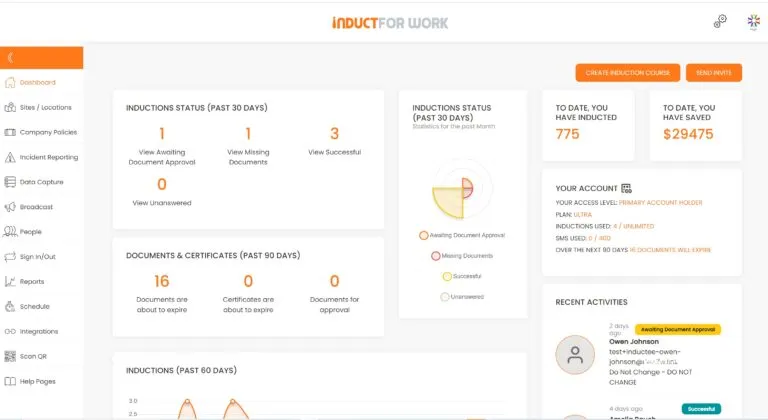
INDUCT FOR WORK helps hotels deliver inductions online. Staff, contractors and temporary workers can complete required training before their first shift. Administrators can track completion, collect forms, issue certificates, store records and follow up when training is incomplete.
For hotels, resorts, serviced apartments, event venues and hospitality groups, online inductions make onboarding cleaner, faster and easier to manage.
What are hotel worker inductions?
Hotel worker inductions are structured training and onboarding steps given to staff, contractors or temporary workers before they begin work in a hotel or hospitality environment.
A hotel induction may cover:
- property layout
- emergency procedures
- guest service standards
- workplace safety rules
- department expectations
- incident reporting
- food handling requirements where relevant
- privacy and guest information handling
- security procedures
- uniform and presentation standards
- restricted areas
- contractor access rules
- role-specific instructions
The goal is to make sure each person understands how the hotel operates and what is expected before they begin their shift.
Hotel inductions are not the same as full job training. A front office worker still needs system training. A housekeeper still needs task-based training. A maintenance worker still needs technical instruction.
The induction sets the foundation. It gives workers the essential information they need to work safely, act professionally and know where to get help.
Why hotels need a structured induction process
Hotels are fast-moving workplaces. Staff often work different shifts, managers may not see every new starter on day one and contractors may arrive outside normal office hours.
Without a structured induction process, important information can be missed.
Common problems include:
- new staff starting before reading hotel policies
- inconsistent training between departments
- casual workers missing key safety information
- contractors entering restricted areas without proper instructions
- no clear record of who completed induction
- managers repeating the same briefing many times
- paper forms being misplaced
- workers not knowing emergency procedures
- poor understanding of reporting steps
- records being hard to find during internal reviews
- seasonal staff being rushed through onboarding
- different hotel properties using different processes
A structured induction process helps hotels deliver the same core message every time.
When inductions are completed online, managers can assign training before the first shift and check completion without searching through paper files or email chains.
Who this is for
Hotel worker inductions are useful for any hospitality business that needs staff, contractors or visitors to understand site rules and safety procedures before work begins.
This page is especially relevant for:
- hotels
- resorts
- serviced apartments
- motels
- boutique accommodation providers
- conference centres
- event venues
- restaurants attached to hotels
- hospitality groups
- hotel management companies
- accommodation providers with multiple properties
- businesses using seasonal hospitality staff
- hotels using labour hire workers
- properties relying on regular contractors
If your hotel brings in new staff, casual workers, contractors or temporary teams, online hotel inductions can help create a more consistent onboarding process.
Common problems solved
INDUCT FOR WORK helps hotels solve many common induction and onboarding problems.
These include:
- too much time spent running repeated induction sessions
- staff starting before training is complete
- inconsistent information between shifts
- missing signed acknowledgements
- no central record of completed inductions
- paper forms stored in different folders
- contractors arriving without site information
- casual staff missing property-specific rules
- seasonal workers being onboarded too quickly
- managers chasing completion manually
- induction records being hard to find
- staff not knowing who to report incidents to
- training not being refreshed when needed
- poor visibility across multiple hotel locations
By moving hotel inductions online, businesses can reduce manual administration and give managers a clearer view of who is ready to work.
Hotel induction software vs general onboarding software
Hotel induction software has a more specific purpose than general onboarding software.
General onboarding software may help introduce a new employee to the business. Hotel induction software focuses on the practical information needed for hospitality work, site safety, guest service and shift-based operations.
A hotel induction may need to cover housekeeping hazards, food handling, guest privacy, emergency response, lone work, contractors, back-of-house access and incident reporting.
This page focuses on hotel and hospitality induction requirements.
For a broader staff onboarding process, the employee onboarding page may be more suitable. For businesses that need a wider system across many workplace types, the workplace induction system page may be the better match.
For hotels and accommodation businesses, this page keeps the focus on hospitality teams and the specific induction needs of hotel environments.
What should a hotel worker induction include?
A good hotel induction should be practical, easy to complete and relevant to the person’s role.
The following areas are commonly included.
Property overview
New workers should understand the basic layout of the hotel and how the property operates.
This may include:
- staff entrances
- reception and lobby areas
- back-of-house corridors
- housekeeping areas
- kitchens and food service areas
- laundry areas
- maintenance zones
- plant rooms
- car parks
- loading docks
- pool or gym areas where applicable
- emergency exits
- assembly points
- restricted guest areas
Clear property orientation helps staff move through the hotel safely and confidently.
Emergency procedures
Hotels need workers to understand what to do during emergencies.
A hotel induction should explain:
- alarm sounds and what they mean
- evacuation procedures
- assembly points
- fire warden instructions
- emergency contact details
- medical emergency steps
- how to assist guests during an evacuation
- how to report hazards or incidents
- who to contact during night shifts
Hotels operate around the clock, so emergency information must be clear for day staff, night staff and contractors.
Guest service expectations
Hotel staff have direct contact with guests, even when their main role is not customer service.
A hotel induction should explain:
- expected conduct around guests
- communication standards
- presentation standards
- handling guest questions
- escalation steps for complaints
- when to contact a supervisor
- how to act in guest rooms and public areas
- respectful handling of guest property
- privacy expectations
Clear expectations help protect the guest experience and support consistent service across the property.
Common hotel hazards
Hotels include many different work areas. Each area has its own risks.
A hotel induction may cover hazards such as:
- wet floors
- slips, trips and falls
- manual handling
- cleaning chemicals
- hot surfaces
- knives and kitchen equipment
- sharps found in rooms or waste
- lifting luggage
- laundry handling
- moving trolleys
- plant rooms
- ladders and access equipment
- car park risks
- lone work
- night shift risks
- aggressive or intoxicated guests
The induction should explain how workers report hazards and what controls are expected.
Food handling and hygiene
For food and beverage staff, kitchen workers, bar staff, room service teams and banquet staff, induction should include relevant food safety information.
This may include:
- hand hygiene
- cleaning and sanitising
- allergen awareness
- food storage basics
- temperature control where relevant
- cross-contamination prevention
- reporting illness
- waste handling
- uniform and personal hygiene standards
Hotels should adjust food-related content to suit the worker’s actual duties.
Privacy and guest information
Hotels handle guest information every day.
Workers may see booking details, payment information, room numbers, guest requests and private conversations. A hotel induction should explain how this information must be handled.
This may include:
- guest privacy expectations
- not discussing guests outside work
- protecting room numbers
- handling lost property information
- document handling
- system access rules
- photo and device rules in guest areas
Even casual staff and contractors may need basic privacy instructions if they work near guests or guest records.
Incident and hazard reporting
Workers need to know what to report and who to report it to.
A hotel induction should explain how to report:
- guest injuries
- staff injuries
- hazards
- near misses
- property damage
- aggressive behaviour
- security concerns
- maintenance faults
- food safety concerns
- chemical spills
- lost property issues
- unsafe work practices
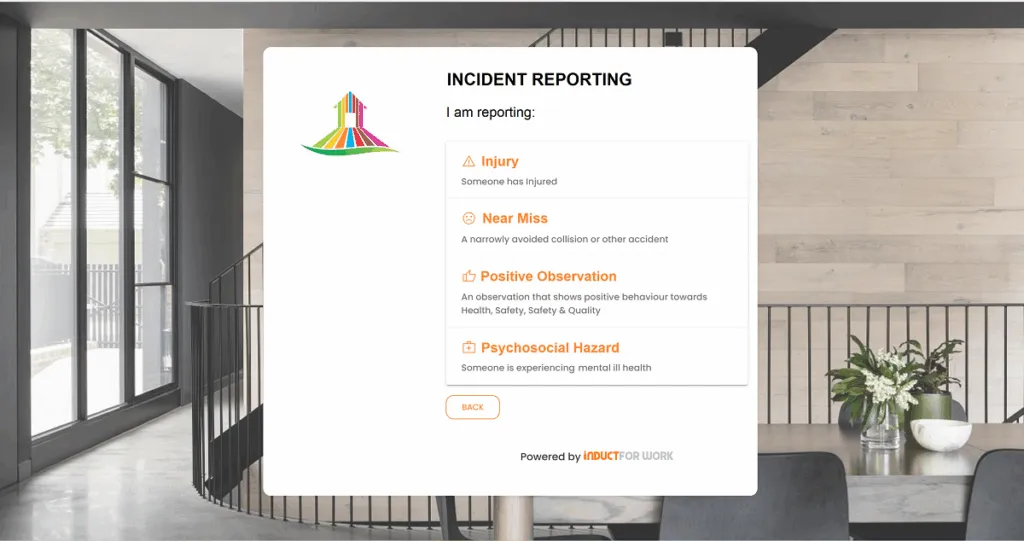
INDUCT FOR WORK supports incident reporting so hotels can capture important details and respond quickly.
Role-based hotel inductions
One induction should not try to cover every hotel role in the same level of detail.
A better approach is to create one core hotel induction and then add role-based modules.
Front office and guest services
Front office staff may need induction content covering:
- check-in and check-out conduct
- guest privacy
- booking system access rules
- payment handling expectations
- complaint escalation
- emergency procedures in lobby areas
- lost property process
- night audit basics where relevant
- personal safety during late shifts
Housekeeping
Housekeeping teams may need induction content covering:
- room entry procedures
- guest privacy
- safe trolley use
- manual handling
- chemical handling
- sharps awareness
- wet floor controls
- linen handling
- reporting maintenance issues
- lost property handling
- working alone or in pairs
Food and beverage
Food and beverage teams may need induction content covering:
- hygiene and food handling
- allergen escalation
- cleaning procedures
- safe use of equipment
- hot surfaces
- slips and spills
- responsible service requirements where relevant
- guest service standards
- incident reporting
Maintenance and engineering
Maintenance teams may need induction content covering:
- restricted areas
- plant rooms
- electrical safety basics
- lockout procedures where used
- working at heights controls where relevant
- contractor coordination
- hot works rules
- equipment isolation
- reporting hazards that may affect guests
Security and night staff
Security and night staff may need induction content covering:
- lone work procedures
- aggression response
- emergency escalation
- guest disturbance procedures
- after-hours access
- incident documentation
- communication with management
- car park and public area checks
Events and banquet staff
Events and banquet teams may need induction content covering:
- function room setup
- manual handling
- crowd movement
- temporary equipment
- food service standards
- emergency exits
- guest flow
- contractor coordination
- bump-in and bump-out procedures
Role-based pathways help workers receive the information that matters most to their role without making every induction too long.
Hotel contractor inductions
Hotels rely on contractors for many services.
This may include:
- electricians
- plumbers
- lift technicians
- pest control providers
- cleaning contractors
- pool maintenance providers
- HVAC contractors
- security contractors
- IT providers
- kitchen equipment technicians
- builders and refurbishment teams
- landscaping contractors
Contractors may be highly experienced, but they still need to understand the hotel’s site rules and guest-facing expectations.
A contractor induction for hotels may include:
- sign-in and access rules
- restricted areas
- guest interaction expectations
- noise and disruption controls
- after-hours access
- emergency procedures
- incident reporting
- permits and approvals
- insurance or licence requirements
- rubbish removal
- housekeeping expectations
- supervisor contact details
For contractor-heavy hotels, online induction helps make sure external workers receive site information before they arrive.
Why use INDUCT FOR WORK instead of managing hotel inductions manually?
Manual hotel inductions may seem simple at first. A manager can explain the rules, hand out paperwork and ask the worker to sign a form.
That process becomes harder when the hotel works across several shifts, departments, peak seasons and properties.
INDUCT FOR WORK gives hotels a more organised way to deliver inductions and manage records online.
Instead of repeating the same induction many times, managers can create the content once and assign it to the right staff, contractors or departments.
This helps hotels:
- reduce repeated induction sessions
- train staff before the first shift
- deliver consistent information
- collect forms online
- capture acknowledgements
- issue completion certificates
- store records in one place
- track who has completed training
- manage multiple departments
- support seasonal and casual workers
- provide role-based induction pathways
- retrieve records faster when needed
A hotel induction process should be simple for workers and practical for managers. INDUCT FOR WORK helps bring both together.
Manual Hotel Inductions vs INDUCT FOR WORK
| Manual Hotel Inductions | INDUCT FOR WORK |
|---|---|
| Managers repeat the same induction many times | Staff complete induction online |
| Paper forms are stored in folders | Records are stored in one platform |
| Casual workers may miss key information | Every assigned worker receives the same core content |
| Contractors are briefed on arrival | Contractors can complete site induction before arrival |
| Completion is tracked manually | Completion status can be checked online |
| Training differs between departments | Core content can be standardised with role modules |
| Records are hard to find later | Records can be retrieved more easily |
| Seasonal onboarding creates pressure | Inductions can be assigned before peak periods |
| Forms and acknowledgements are handled separately | Forms and acknowledgements can be part of the induction |
| Follow-up depends on managers remembering | Administrators can track incomplete training |
Online induction records for hotels
Hotel induction records are important because managers may need to confirm who completed training and when.
This is useful for:
- internal reviews
- insurance checks
- safety reviews
- incident follow-up
- management reporting
- contractor checks
- staff training history
- seasonal onboarding
- multi-property reporting
INDUCT FOR WORK helps improve record keeping by storing induction records online.
Administrators can check completion, review submitted forms and find records when they are needed.
This is far more practical than searching through paper folders or email attachments during a busy hotel day.
Digital forms and acknowledgements for hotel staff
Hotel inductions often require signed acknowledgements or completed forms.
These may include:
- code of conduct acknowledgements
- privacy acknowledgements
- uniform and presentation agreements
- safety declarations
- emergency procedure acknowledgements
- contractor declarations
- food handling declarations
- equipment use forms
- incident reporting acknowledgements
- policy confirmations
With digital signatures and custom forms, hotels can collect information and acknowledgements online.
This reduces paper handling and helps keep signed records connected to the person’s induction.
Hotel inductions for multiple properties
Hotel groups need consistency across locations, but each property may have its own layout, risks, contacts and procedures.
INDUCT FOR WORK can help hotels create a core induction for all workers and then add property-specific modules.
This is useful for:
- hotel groups
- resorts with multiple venues
- accommodation providers with several locations
- management companies
- event and hospitality groups
- operators with seasonal sites
A multi-property induction process helps businesses keep standards consistent while still allowing local details where needed.
Best practice tips for hotel worker inductions
A hotel induction should be clear, practical and easy to complete.
Keep the core induction short
Include only the information every worker needs. Add department modules for role-specific training.
Use role-based pathways
Front office, housekeeping, food and beverage, maintenance, security and events teams should receive content that matches their work.
Include emergency procedures
Hotels have guests on site day and night. Emergency procedures must be easy for workers to understand.
Cover guest privacy
Every worker should understand guest privacy expectations, even if they do not work at reception.
Make induction mobile-friendly
Casual and seasonal workers may complete induction on phones. Keep the process simple and easy to follow.
Track completion before the first shift
Where possible, assign induction before the worker starts. This reduces pressure on managers and helps staff arrive better prepared.
Review induction content regularly
Update induction content after incidents, renovations, operational changes, new equipment or seasonal changes.
Start managing hotel worker inductions online
Hotel inductions should not depend on rushed briefings, paper forms or repeated explanations from busy managers.
INDUCT FOR WORK gives hotels a practical way to move induction training online and keep better records across departments, shifts and properties.
You can deliver induction training, assign role-based modules, collect forms, capture acknowledgements, issue certificates, track completion and keep records in one platform.
Whether you manage a hotel, resort, serviced apartment, function venue or accommodation group, INDUCT FOR WORK helps you create a more consistent onboarding process for staff, contractors and temporary workers.
Give your hotel team a better way to start work prepared.
Frequently asked questions
Hotel worker inductions are training and onboarding steps that introduce staff, contractors or temporary workers to hotel rules, safety procedures, emergency information, guest service standards and role expectations.
Yes. Hotel inductions can be completed online before a worker’s first shift. This helps reduce delays and gives managers a clearer record of completion.
A hotel induction may include property orientation, emergency procedures, guest service standards, privacy rules, common hazards, incident reporting steps, food handling information where relevant and role-specific instructions.
Housekeeping staff should receive role-specific information covering room entry, guest privacy, chemicals, manual handling, sharps awareness, trolley use, wet floor controls and lost property procedures.
Yes. Hotel contractors should receive site access rules, emergency procedures, restricted area instructions, guest interaction expectations, incident reporting steps and any document requirements before work begins.
Yes. INDUCT FOR WORK helps hotels manage induction records, completion status, forms, acknowledgements, certificates and reporting online.
Yes. Hotels can collect online acknowledgements and digital signatures for policies, declarations, safety information and other required documents.
Start a free trial or book a demo to see how INDUCT FOR WORK can support your workplace processes.
Author: Anna Milova
Published: 29/04/2025
Last edited: 30/04/2026