
Visitor Sign-In Procedure: What Every Workplace Should Include
A visitor sign-in procedure is one of the simplest workplace processes, but it is also one of the easiest to overlook.
Many workplaces still treat visitor sign-in as a quick reception task. A person arrives, writes their name, says who they are meeting and walks through the door. That may seem fine on a quiet day, but it can create problems when records are incomplete, visitors do not understand site rules or nobody knows who is present during an emergency.
A proper visitor sign-in procedure gives the business a clear and consistent way to manage people who are not employees but still enter the workplace.
That may include clients, parents, suppliers, consultants, inspectors, interview candidates, delivery contacts, board members, auditors, volunteers or people attending meetings.
Induct For Work supports visitor management by helping workplaces move from informal visitor registers to a clearer digital process with visitor records, site instructions and reporting.
Why visitor sign-in matters
Visitors may only be onsite for a short time, but they still need to be managed.
A visitor may enter a reception area, meeting room, school office, depot, warehouse, site office, council facility, medical practice, farm office or aged care administration area. In some cases, they may only be there for five minutes. In other situations, they may attend for several hours.
The business should still know who arrived, why they came, who they met and whether they left.
A visitor sign-in procedure helps with:
- workplace security
- emergency evacuation checks
- reception and host accountability
- privacy and confidentiality
- visitor conduct expectations
- safety communication
- audit and record keeping
- professional first impressions
A sign-in book may collect a name, but a procedure explains what should happen from arrival to departure.
Who this is for
This page is for workplaces that receive visitors and need a more reliable entry process.
It may suit offices, schools, councils, depots, warehouses, aged care facilities, farms, construction site offices, hospitality venues, training centres, charities, community facilities and multi-tenant workplaces.
The process may be managed by reception staff, administration teams, security guards, site supervisors, office managers, safety managers or hosts.
The same principle applies in every case.
The workplace needs to know who is present and what information the visitor has received before they move through the site.
What a visitor sign-in procedure should capture
A visitor sign-in procedure should collect enough information to identify the visitor, connect them with a host and support the workplace if something goes wrong.
Useful details may include:
- visitor full name
- organisation or company
- phone number or email where appropriate
- person being visited
- purpose of visit
- arrival time
- site or location
- areas being accessed
- visitor badge issued
- site rules acknowledged
- emergency information provided
- departure time
Not every workplace needs every field.
A small office may only need basic visitor details, while a school, depot, council site or controlled facility may need stronger visitor records. The aim is to collect useful information without making the process unnecessarily slow.
Step 1: Identify the visitor
The first step is to confirm who the visitor is.
This does not always mean checking formal identification, although some workplaces may require it. At a minimum, the visitor should provide their name and reason for attending.
A workplace should avoid anonymous access.
If a person is entering a controlled workplace, the organisation should know who they are and why they are there. This protects staff, visitors and the business.
Step 2: Confirm the host
A visitor should normally be connected to a host.
The host may be an employee, manager, teacher, site supervisor, administrator or contractor contact. The host helps confirm that the visitor is expected and understands where they should go.
This step is important because visitors can otherwise drift through a workplace without clear responsibility.
When a visitor has a host, the business knows who is responsible for meeting them, escorting them where required and making sure they follow the site process.
Step 3: Explain site rules
Visitor rules should be short, clear and relevant.
Most visitors do not need a full employee induction. However, they may need basic instructions before entering the workplace.
These instructions may cover:
- restricted areas
- visitor badges
- photography or filming rules
- confidentiality
- emergency alarms
- evacuation points
- PPE requirements
- smoking rules
- parking and traffic movement
- behaviour expectations
- supervision or escort requirements
A structured online induction process can also be useful where visitors need to complete instructions before arrival or at sign-in.
Step 4: Provide emergency information
Emergency information should be part of the visitor process.
Visitors may not know where to go if an alarm sounds. They may not recognise assembly areas, emergency exits, site wardens or restricted routes. During an emergency, that confusion can create risk for the visitor and extra pressure for staff.
A visitor sign-in procedure should explain the basics.
At minimum, visitors should know who to follow, where to assemble and what to do if they are separated from their host.
This is especially important in schools, councils, warehouses, factories, aged care, large offices, farms and multi-building sites.
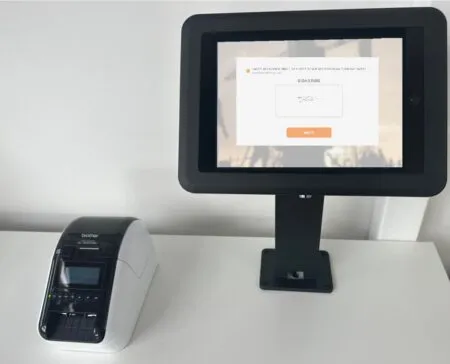
Step 5: Issue a badge or visitor pass
A visible badge helps staff identify who is authorised to be onsite.
Badges do not need to be complicated. They may be printed, handwritten or digital, depending on the workplace. The important point is that staff can distinguish visitors from employees, contractors and unauthorised people.
A badge can also remind the visitor that they are expected to follow the visitor process.
For workplaces with sensitive areas, child safety requirements, public access areas or multiple entry points, visitor identification becomes even more important.
Step 6: Make sign-out part of the process
Sign-out is just as important as sign-in.
A visitor record is incomplete if it only shows who arrived. During an emergency, the business also needs to know whether the person is still onsite.
Paper registers often fail at this point.
Visitors may forget to sign out. Reception may be busy. A person may leave through another door. A digital visitor management process can help create clearer sign-out records and reduce manual checking.
Paper sign-in books versus digital sign-in
Paper sign-in books are familiar and easy to understand, but they have limits.
Handwriting may be difficult to read. Sign-out may be missed. Records may be hard to search. Visitor information may be visible to the next person signing in. Emergency checks may take longer than they should.
A digital process can improve consistency.
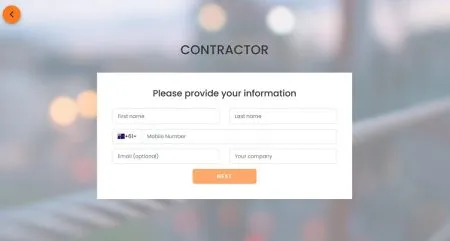
Digital visitor sign-in can capture required fields, record time stamps, provide site instructions, support reporting and make visitor records easier to review.
This does not remove the human part of reception. It gives reception and site teams a clearer system to work with.
How Induct For Work helps
Induct For Work helps workplaces manage visitor sign-in, visitor instructions and records through a more structured process.
The platform can support visitor entry workflows, digital records, site-specific information, reporting and visitor management across different workplace types.
For organisations that want a stronger visitor process, the main solution page is visitor management.
Induct For Work can help reduce reliance on paper registers, improve visitor visibility and give administrators a clearer record of who attended the workplace.
Build a better visitor sign-in procedure
A visitor sign-in procedure should be simple enough for everyday use and strong enough to support safety, security and record keeping.
The workplace should know who arrived, why they came, who they visited, what instructions they received and whether they left.
Induct For Work helps make that process easier to manage.
Visit visitor management to see how Induct For Work can help your organisation improve visitor entry, visitor records and site readiness.
Frequently asked questions
A visitor sign-in procedure is the process a workplace uses to identify visitors, record arrival details, connect visitors with hosts, provide site instructions and confirm departure.
It should include visitor details, host details, arrival time, purpose of visit, site rules, emergency information, badge requirements and sign-out.
Visitor sign-out helps the workplace know whether a visitor is still onsite, which is especially important during emergencies.
A paper visitor book may work for very simple sites, but it can create problems with privacy, missing fields, unreadable handwriting, reporting and emergency checks.
Yes. Induct For Work can support digital visitor sign-in, visitor instructions, records and reporting through its visitor management solution.
Start a free trial or book a demo to see how INDUCT FOR WORK can support your workplace processes.
Author: Matt Tsashkuniats
Published: 25/06/2026
Updated: 25/06/2026