PPE Training for Workers, Contractors and Site Visitors
PPE stands for personal protective equipment.
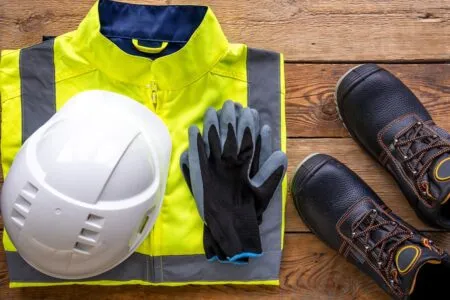
It includes equipment and clothing that workers use to reduce exposure to hazards. Common examples include safety glasses, gloves, hard hats, hearing protection, respirators, high-visibility clothing, safety boots and protective coveralls.
PPE can help protect workers from injuries and illness, but it only works when people choose the right equipment, wear it correctly and understand its limits.
That is why PPE training matters.
Workers and contractors should know which PPE applies to their role, where they must wear it, how to check it, when to replace it and how to report missing or damaged equipment.
INDUCT FOR WORK helps businesses deliver PPE training through online induction, collect acknowledgements, manage forms, support incident reporting and keep records in one platform.
A clear PPE process also supports a stronger safety culture because workers understand that protective equipment forms part of everyday work discipline. In addition, rapid induction setup can help businesses turn existing PPE procedures, site rules, photos and checklists into online induction content sooner.
What is PPE?
PPE means personal protective equipment.
It refers to clothing, devices or equipment that workers wear or use to reduce exposure to workplace hazards.
PPE may protect the:
- eyes
- face
- head
- ears
- lungs
- hands
- skin
- body
- feet
- legs
A workplace may require PPE because of hazards such as:
- flying particles
- chemicals
- dust
- fumes
- noise
- heat
- cold
- falling objects
- sharp edges
- biological hazards
- electrical risks
- moving plant
- low visibility
- splash risks
- manual handling tasks
PPE does not remove the hazard itself. It protects the person when other controls cannot fully remove the exposure.
The page currently explains PPE as equipment that protects workers from workplace hazards such as eye, hearing, respiratory, skin, body, foot and head risks. That core structure remains useful, but this rewrite expands it into a stronger workplace induction and records page.
Why PPE training matters
PPE training matters because equipment alone does not guarantee protection.
A worker may wear the wrong gloves for a chemical. A contractor may use a damaged respirator. Staff may remove hearing protection because it feels uncomfortable. A visitor may enter a high-visibility area without the correct clothing.
These problems can lead to injuries, exposure and confusion.
PPE training helps workers and contractors understand:
- which PPE applies to their task
- where PPE must be worn
- why the PPE matters
- how to fit and adjust equipment
- how to check for damage
- when to replace PPE
- how to store and maintain it
- what PPE cannot protect against
- how to report missing or faulty equipment
As a result, PPE becomes a practical control rather than a sign at the entrance.
Where PPE training has the biggest impact
PPE training helps many workplaces, especially where workers face physical, chemical, environmental or equipment-related hazards.
It is useful in:
- construction
- manufacturing
- warehouses
- logistics
- mining
- agriculture
- schools
- laboratories
- healthcare
- aged care
- cleaning
- waste facilities
- roadwork
- events
- hospitality
- workshops
- maintenance work
- transport yards
- commercial kitchens
- contractor-heavy sites
Each workplace needs PPE rules that match the real hazards.
A construction site may focus on hard hats, safety boots, high-visibility clothing and eye protection. A cleaning team may need gloves, eye protection and chemical handling instructions. A waste facility may need cut-resistant gloves, respiratory protection, safety boots and high-visibility clothing.
Generic PPE advice rarely works well. Workers need task-specific and site-specific instructions.
Why PPE processes often break down
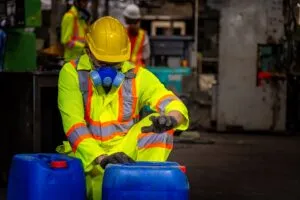
PPE processes often break down because businesses assume people already know what to wear.
A worker may copy someone else. A contractor may bring their own equipment, but it may not match the site requirement. A supervisor may explain PPE verbally, while no one records the acknowledgement. A visitor may receive different instructions from different people.
INDUCT FOR WORK helps businesses create a clearer PPE training and record process.
It can help when:
- PPE rules vary between sites
- contractors arrive without the right equipment
- workers do not know which gloves or respirator to use
- visitors enter areas without clear PPE instructions
- damaged PPE goes unreported
- PPE acknowledgements sit on paper
- training records sit across emails and spreadsheets
- refresher training gets missed after procedure changes
- managers cannot confirm who received PPE instructions
With online training and records, businesses can explain PPE requirements before people arrive and keep proof that users received the information.
Eye and face protection
Eye and face protection helps protect workers from flying particles, splashes, dust, sparks, chemicals and light radiation.
Examples include:
- safety glasses
- goggles
- face shields
- welding helmets
- splash shields
Workers may need eye or face protection when using tools, handling chemicals, grinding, cutting, welding, cleaning, spraying or working near flying debris.
Training should explain:
- which protection suits the task
- how to check lenses or shields
- when face shields need safety glasses underneath
- how to clean and store equipment
- when scratched or damaged items need replacement
The current page correctly notes that safety glasses and face shields protect against objects and splashes and that some workers may need protection from ultraviolet or infrared radiation.
Hearing protection
Hearing protection helps reduce exposure to harmful noise.
Common types include:
- earplugs
- earmuffs
- custom-fitted earplugs
- helmet-mounted hearing protection
Workers may need hearing protection near machinery, power tools, plant, traffic, compressed air, manufacturing lines, construction work or entertainment equipment.
Training should explain:
- where hearing protection must be worn
- how to fit earplugs correctly
- how to check earmuff seals
- when to replace damaged protection
- why short exposure periods can still matter
- how to communicate safely in noisy areas
Workers should not guess whether an area is too loud. Sites should use clear signs, instructions and training.
Respiratory protection
Respiratory protection helps reduce exposure to airborne hazards.
These may include:
- dust
- fumes
- mists
- gases
- vapours
- smoke
- fibres
- biological particles
- chemical sprays
Respirators must suit the hazard. A dust mask does not protect against every gas or vapour. A respirator also needs correct fit, correct filters and proper care.
Training should explain:
- which respirator applies to the task
- how to fit it correctly
- when fit testing may be required
- which filters or cartridges apply
- how long filters may last
- how to store the respirator
- when to stop work and ask for help
Respiratory protection requires extra care because poor fit or wrong selection can leave workers exposed.
Hand and skin protection
Gloves and protective skin equipment help reduce exposure to cuts, burns, chemicals, heat, cold, biological hazards and sharp materials.
Common examples include:
- disposable gloves
- chemical-resistant gloves
- cut-resistant gloves
- heat-resistant gloves
- electrical gloves
- welding gloves
- barrier creams
- sleeve protection
Glove choice matters.
A glove that protects against one chemical may fail against another. Cut-resistant gloves may not protect against heat. Disposable gloves may tear during rough work.
Training should explain:
- which glove suits each task
- how to check gloves for damage
- when workers need to replace gloves
- how to avoid cross-contamination
- which substances need extra protection
- where workers can find replacement PPE
The current page notes that different glove materials suit different chemicals or temperatures, making correct selection essential.
Body protection
Body protection helps protect workers from chemicals, heat, cold, dust, biological hazards, sparks, splashes and contamination.
Examples include:
- coveralls
- aprons
- lab coats
- high-visibility clothing
- flame-resistant clothing
- disposable suits
- chemical suits
- weather protection
Training should explain when body protection applies and how workers should remove contaminated clothing.
This matters because incorrect removal can spread contamination from clothing to skin, vehicles, tools or clean areas.
Workers also need to know where to dispose of single-use protective clothing and how to report damaged or unsuitable gear.
Foot and leg protection
Foot and leg protection helps reduce injuries from falling objects, slips, punctures, crushing, chemicals, heat and electrical hazards.
Examples include:
- safety boots
- steel cap boots
- composite toe boots
- slip-resistant footwear
- puncture-resistant soles
- gumboots
- chemical-resistant boots
- metatarsal guards
- leg guards
Training should explain which footwear applies to each area.
For example, an office visitor may not need safety boots, but a contractor entering a workshop, construction site, warehouse or waste facility usually will.
Poor footwear also increases slip, trip and fall risk.
Head protection
Head protection helps reduce injuries from falling objects, impacts, low clearances and some electrical hazards.
Examples include:
- hard hats
- bump caps
- helmets with chin straps
- electrically rated helmets
- helmets with mounted face or hearing protection
Training should explain:
- where head protection must be worn
- how to inspect helmets
- when to replace damaged helmets
- how to adjust the harness
- what stickers or paint may do to helmet performance
- when chin straps may apply
Head protection matters on construction sites, warehouses, maintenance areas, loading zones, tree work, mining, industrial sites and other areas where falling or striking hazards exist.
High-visibility clothing
High-visibility clothing helps workers remain visible around vehicles, plant, traffic and low-light environments.
It may include:
- vests
- shirts
- jackets
- rainwear
- trousers
- reflective strips
Workers may need high-visibility clothing on construction sites, roadwork, warehouses, waste facilities, transport yards, farms, loading docks and event sites.
Training should explain:
- which colour or class applies
- when reflective clothing matters
- how to keep garments visible
- when dirty or faded clothing needs replacement
- which areas require high-visibility clothing
High-visibility clothing does not replace traffic management, exclusion zones or good supervision. It supports those controls by helping people see each other.
PPE for contractors and visitors
Contractors and visitors need clear PPE rules before they arrive.
A contractor induction can explain PPE requirements for external workers, including:
- minimum site PPE
- task-specific PPE
- restricted areas
- who supplies PPE
- how to report missing or unsuitable PPE
- document upload requirements
- site rule acknowledgements
Visitors may need a shorter pathway that explains basic requirements such as high-visibility clothing, enclosed footwear, eye protection or escort rules.
When businesses connect induction with visitor management, they can provide short and practical PPE instructions before or during arrival.
PPE, safety symbols and site signs
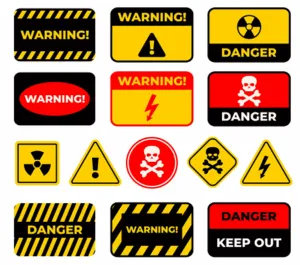
Signs help people understand PPE requirements quickly.
Common PPE signs include:
- eye protection must be worn
- hearing protection must be worn
- safety boots required
- hard hats must be worn
- gloves required
- respirator required
- high-visibility clothing required
For a broader guide to signs, see our safety symbols article.
Signs work best when workers understand what they mean. Therefore, induction should show real site signs and explain what action each sign requires.
Reporting damaged, missing or unsuitable PPE
Workers and contractors should know how to report PPE problems.
Reports may involve:
- cracked safety glasses
- damaged gloves
- missing respirator filters
- broken hard hats
- worn safety boots
- dirty high-visibility clothing
- poor earmuff seals
- incorrect PPE for a task
- missing PPE stock
- uncomfortable or badly fitting equipment
INDUCT FOR WORK supports incident reporting so businesses can capture hazards, near misses and PPE concerns online.
This helps managers fix small issues before someone suffers an injury or exposure.
For example, repeated reports about torn gloves may show that the business needs a stronger glove type for that task.
Forms, acknowledgements and PPE records
PPE training often needs supporting forms and acknowledgements.
These may include:
- PPE acknowledgements
- site rule declarations
- contractor declarations
- respirator fit check records
- PPE issue records
- damaged PPE reports
- visitor acknowledgements
- task-specific PPE confirmations
- training records
- refresher training confirmations
With custom forms and digital signatures, businesses can collect PPE information and acknowledgements online.
This helps keep records connected to the worker, contractor, site or task.
Record keeping for PPE training
Managers may need to confirm:
- who completed PPE training
- when workers completed it
- which contractors acknowledged PPE rules
- which forms workers submitted
- which PPE issues workers reported
- which visitors received PPE instructions
- which certificates the system issued
- which users need refresher training
INDUCT FOR WORK helps improve record keeping by keeping training records, forms, certificates and acknowledgements online.
In addition, reporting helps managers review completion status and identify missing records.
This gives businesses better visibility than paper sign-off sheets, emails or spreadsheets.
Why use INDUCT FOR WORK for PPE training?
PPE rules can become difficult to manage when businesses rely on signs, verbal instructions and paper forms.
Different sites may have different requirements. Contractors may arrive without the right gear. New workers may not understand task-specific PPE. Managers may struggle to prove who received instructions.
INDUCT FOR WORK helps businesses:
- deliver PPE training online
- assign training by role or site
- explain PPE requirements clearly
- include photos and examples
- collect acknowledgements
- manage contractor PPE rules
- create PPE forms
- support incident reporting
- issue certificates
- track completion
- assign refresher training
- keep records in one platform
This does not replace hazard controls, supervision or competent safety advice. Instead, it helps businesses communicate PPE requirements and keep clearer records.
From unclear PPE rules to better training records
| Unclear PPE Process | INDUCT FOR WORK |
|---|---|
| Workers copy what others wear | Workers can complete PPE training online |
| Contractors receive PPE rules verbally | Contractors can complete induction before arrival |
| Signs do not explain task-specific PPE | Training can explain real site requirements |
| PPE acknowledgements sit on paper | The system can capture acknowledgements |
| Damaged PPE goes unreported | Workers can submit PPE concerns online |
| Records sit across folders and emails | Teams can keep records in one platform |
| Refresher training gets missed | Administrators can assign updated training |
| Managers chase sign-offs manually | Reports show who needs follow-up |
| Visitors receive inconsistent instructions | Short visitor pathways can explain PPE |
| Site changes create confusion | Administrators can update PPE modules |
This gives businesses a more dependable way to manage PPE communication and records.
Best practice tips for PPE training
Start with the hazard
Explain which hazard the PPE protects against before naming the equipment.
Use real examples
Show photos of the PPE workers need on the actual site or task.
Explain limits
Workers should understand that PPE reduces exposure but does not remove the hazard.
Include contractors
External workers need site-specific PPE rules before they arrive.
Make reporting easy
Workers should report damaged, missing or unsuitable PPE quickly.
Keep signs clear
PPE signs should match the training and the site requirements.
Review after incidents
PPE-related incidents and near misses should trigger review.
Keep records together
Training, acknowledgements, forms and reports should stay easy to find.
Start improving PPE training and records
PPE helps protect workers and contractors from workplace hazards, but it only works when people understand what to use, when to use it and how to look after it.
INDUCT FOR WORK helps businesses deliver PPE training online, collect acknowledgements, manage forms, support incident reporting and keep records in one platform.
Whether your workplace manages construction work, warehouses, schools, farms, waste facilities, manufacturing, healthcare, events or contractor-heavy sites, INDUCT FOR WORK can help communicate PPE rules more clearly.
Give workers, contractors and visitors a better way to understand PPE requirements before work begins.
Frequently asked questions
PPE stands for personal protective equipment. It includes equipment and clothing workers use to reduce exposure to workplace hazards.
Common PPE includes safety glasses, gloves, hard hats, hearing protection, respirators, high-visibility clothing, safety boots, face shields and protective coveralls.
PPE training should form part of induction because workers and contractors need to understand what PPE applies, when to wear it, how to check it and how to report problems.
Yes. INDUCT FOR WORK helps businesses deliver PPE training, collect acknowledgements, manage forms, support incident reporting and keep records online.
Yes. Contractors should understand minimum site PPE, task-specific PPE and reporting requirements before they begin work.
Workers should stop using damaged PPE and report it so the business can replace it or review the task.
Managers should review PPE training when tasks, hazards, equipment, sites or procedures change. They should also review it after incidents, near misses or repeated PPE problems.
Start a free trial or book a demo to see how INDUCT FOR WORK can support your workplace processes.
Author: Matt Tsashkuniats
Published: 03/03/2024
Last updated: 11/05/2026