
Workplace Visitor Checklist
A visitor induction checklist helps your workplace explain the essential information a visitor needs before they enter, move around or attend a meeting onsite.
Visitors are not employees. They are also not always contractors. Some visitors may only attend reception for a few minutes, while others may enter meeting rooms, school offices, council facilities, depots, warehouses, workshops, care facilities, event areas or operational sites.
That difference matters.
A good visitor induction gives people the information they need to enter safely, follow site rules, understand emergency procedures and leave a clear visitor record behind.
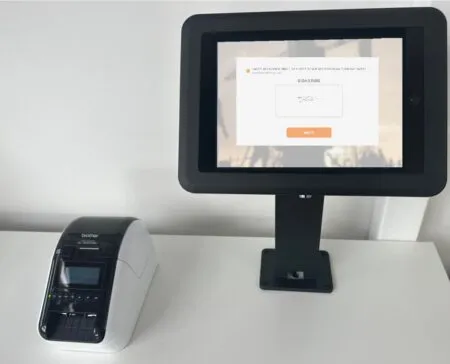
Induct For Work supports visitor management by helping workplaces manage visitor sign-in, site instructions, visitor records and reporting through one practical platform.
What is a visitor induction checklist?
A visitor induction checklist is a simple list of information a workplace gives to visitors before or during entry.
The checklist may be delivered at reception, by a host, through a QR code, on a kiosk, from a tablet or as part of a digital visitor sign-in process. Its purpose is to make sure visitors understand the basic rules that apply while they are onsite.
The checklist may cover:
- who the visitor is meeting
- where the visitor is allowed to go
- whether the visitor must be escorted
- what to do during an emergency
- which areas are restricted
- whether PPE is required
- how privacy and confidentiality apply
- whether photos or filming are allowed
- how hazards or incidents should be reported
- when and how the visitor must sign out
The checklist should answer the visitor’s immediate questions without turning a short visit into a long training session.
Why visitor induction is not the same as contractor induction
A visitor induction and a contractor induction are related, but they are not the same process.
Visitors usually attend temporarily. They may be there for a meeting, inspection, interview, appointment, delivery, school visit, council enquiry, community activity or guided tour.
A contractor usually performs work.
That means contractors may need a more detailed contractor induction, document upload, licence checks, insurance records, SWMS review, site approvals or contractor pre-qualification before work starts.
Visitors usually need a shorter process.
They may need to sign in, identify their host, receive emergency instructions, understand restricted areas, wear a visitor badge and sign out before leaving.
The risk increases when a visitor starts doing work, enters operational areas, attends regularly or accesses restricted locations. In those situations, the business should review whether the person should be treated as a contractor, worker or supervised visitor.
A clear visitor induction checklist helps make that decision easier.
Who this is for
This article is especially usefull for organisations that receive visitors and want a more consistent way to manage their visitor entry.
It may assist:
- offices that welcome clients, suppliers and interview candidates
- schools that manage parents, volunteers, maintenance providers and guests
- councils that operate public buildings, depots and community facilities
- warehouses that receive drivers, auditors and supplier representatives
- farms that receive seasonal visitors, inspectors and service providers
- aged care sites that manage families, service workers and external visitors
- construction site offices that receive clients, consultants and inspectors
- event venues that manage temporary visitors and support personnel
The checklist can be used by reception teams, administrators, site supervisors, facility managers, safety officers, school office staff, council staff and hosts.
Every workplace should adapt the checklist to its own risks, layout and visitor types.
Core visitor induction checklist
A strong visitor induction checklist should begin with the basics.
The visitor should be identified, connected with a host and given enough information to move safely and appropriately through the workplace.
A practical checklist may include:
- visitor name and organisation recorded
- purpose of visit confirmed
- host or contact person identified
- arrival time recorded
- visitor badge or pass issued
- areas of access confirmed
- escort requirement explained
- emergency procedure provided
- assembly area identified
- restricted areas explained
- PPE requirements confirmed
- site hazards explained where relevant
- photography and filming rules stated
- confidentiality expectations acknowledged
- incident or hazard reporting contact provided
- sign-out process explained
- departure time recorded
This checklist is not meant to be heavy.
Its value comes from consistency. Visitors should not receive different information depending on who happens to be at reception that day.
Confirm who the visitor is
The first step is to identify the visitor.
For some workplaces, this may simply mean collecting the person’s name, organisation and contact details. In more controlled environments, identity checks, appointment confirmation or host approval may be required.
The level of checking should match the environment.
A small office may not need the same process as a school, aged care facility, secure depot or operational site. Still, every workplace should know who has entered and why they are there.
Visitor records also help later if questions arise about attendance, access, incidents, deliveries or emergency response.
For a detailed entry-process guide, see visitor sign-in procedure.

Identify the host and level of supervision
A visitor should not be left without a clear point of contact.
The host may be an employee, teacher, council officer, facility manager, site supervisor, administrator, project lead or other authorised person.
The checklist should confirm:
- who the visitor is meeting
- whether the visitor is expected
- who is responsible for the visitor while onsite
- whether the visitor must be escorted
- which areas the visitor may access
This is especially important in schools, healthcare, aged care, warehouses, depots, factories and construction-related environments.
A visitor may not understand site boundaries. Clear host responsibility reduces the risk of a visitor entering the wrong area or missing important instructions.
Explain emergency procedures clearly
Emergency information should be part of every visitor induction.
Visitors may not know where exits are located, where the assembly area is, what an alarm sounds like or who to follow during an evacuation.
The checklist should explain:
- what to do if an alarm sounds
- where to assemble
- who the visitor should follow
- whether lifts can be used
- what to do if separated from the host
- how to report an emergency or incident
In some workplaces, this instruction can be brief. In others, it may need more detail.
Clear emergency information supports visitor safety and helps staff account for visitors if something goes wrong. For broader emergency and incident follow-up, see incident reporting.
Mark restricted areas
Visitors should know where they are not allowed to go.
Restricted areas may include plant rooms, workshops, classrooms, student areas, resident rooms, loading docks, kitchens, laboratories, chemical storage areas, server rooms, records rooms, construction zones, traffic areas or staff-only sections.
The visitor induction checklist should explain these areas in simple language.
A map, sign, badge colour or host instruction may help.
The aim is not to make the workplace unfriendly. It is to prevent accidental access to areas where safety, privacy, security or operational risks are higher.
Confirm PPE and site hazards
Some visitors may need PPE.
That may include a high-visibility vest, closed footwear, hard hat, eye protection, hearing protection or other site-specific equipment.
The checklist should confirm when PPE is required, where it is collected, how it should be worn and when it can be removed.
Site hazards may also need to be explained.
Examples include vehicle movement, uneven ground, wet floors, forklifts, animals, machinery, chemicals, public traffic, construction activity, food preparation areas, infection control zones or noisy work.
Visitor information should be practical, not frightening.
A short explanation helps visitors understand how to behave safely while onsite.
Set privacy, photography and confidentiality expectations
Many visitors can see or hear information that should not be shared.
Offices may have client files or screen content. Schools may have children present. Councils may handle resident information. Aged care sites may involve private health or family matters. Operational sites may have commercial information, equipment layouts or restricted procedures.
The checklist should state whether photos, videos or recordings are allowed.
It should also explain confidentiality expectations where relevant.
This does not need to be a long legal document. A clear instruction such as “no photos or videos without approval” can prevent confusion.
For policies that require formal acknowledgement, Induct For Work can also support digital acknowledgements and e-signatures.
Explain sign-out
A visitor induction should always explain sign-out.
Sign-in shows that a person arrived. Sign-out helps confirm whether the person has left.
This matters during emergencies, building closures, security checks and end-of-day reviews.
Paper visitor books often fail because visitors forget to sign out. A digital visitor management process can help make the sign-out step clearer and improve visitor records.
The visitor should know where and how to sign out before they leave.
Office visitor induction checklist
Office visitors usually need a simple, professional process.
A practical office checklist may include:
- reception sign-in
- host confirmation
- visitor badge
- meeting room instructions
- staff-only area rules
- privacy and confidentiality note
- emergency exit information
- assembly area
- Wi-Fi or device rules if applicable
- sign-out before departure
Office visitors may include clients, job candidates, suppliers, consultants, board members or training attendees.
The main risks are usually unauthorised access, privacy exposure, emergency confusion and incomplete visitor records.
A short visitor induction can manage these issues without slowing down the visit.
School visitor induction checklist
Schools need stronger visitor controls because students and children may be present.
A school visitor checklist may include:
- reception sign-in before entering
- host or staff contact confirmed
- visitor badge worn visibly
- child safety expectations explained
- restricted classroom and playground access noted
- supervision requirements confirmed
- photography and filming rules stated
- toilet and staff-only area rules explained
- emergency procedure provided
- sign-out completed before leaving
Visitors may include parents, guardians, volunteers, service providers, presenters, interview candidates, inspectors or community members.
The process should be clear and respectful.
For education-related workplace training, see online induction for schools.
Council visitor induction checklist
Councils often manage many different visitor environments.
People may attend a customer service centre, depot, library, community facility, transfer station, workshop, administration building or public meeting space.
Council visitor checklist items may include:
- location or facility confirmed
- council contact identified
- purpose of visit recorded
- public and staff-only areas explained
- depot or workshop hazards noted
- vehicle movement rules explained where relevant
- PPE requirements confirmed
- emergency assembly area provided
- incident reporting contact identified
- sign-out recorded
Council visitor management can become difficult when each facility uses a different process.
Digital visitor workflows can help create a shared core process while still allowing site-specific instructions.
Site visitor induction checklist
Operational sites usually need a more detailed visitor induction.
This may include warehouses, depots, farms, manufacturing sites, construction site offices, maintenance yards, logistics facilities, event areas and service locations.
A site visitor checklist may include:
- arrival point confirmed
- site contact identified
- visitor badge issued
- escort requirement explained
- PPE checked
- vehicle and pedestrian routes explained
- restricted zones marked
- plant, machinery or traffic hazards noted
- emergency alarms explained
- assembly area identified
- hazard or incident reporting process stated
- photography restrictions confirmed
- sign-out completed
A visitor to an operational site may not understand the risks that workers see every day.
The checklist should make the most important instructions obvious.
Short visit or detailed induction?
Not every visitor needs the same level of instruction.
A visitor attending a reception counter may need a very short process. A visitor entering a workshop, school, depot or aged care area may need more information. Someone accessing operational areas repeatedly may need a different pathway altogether.
Use the checklist to decide what is reasonable.
The question is simple: what does this person need to know to enter, behave appropriately, stay safe and leave with a proper record?
If the visitor performs work, accesses restricted areas without close supervision or returns regularly, the organisation should consider whether a contractor or worker pathway is more suitable.
Paper checklist versus digital visitor induction
A paper checklist can work in a small workplace, but it often becomes harder to manage as visitor numbers grow.
Paper processes may create unreadable records, missed sign-outs, privacy issues and inconsistent briefings. Verbal instructions can also change depending on who delivers them.
A digital visitor induction can provide a more consistent experience.
Visitors can receive the right instructions, confirm acknowledgements and create a clearer record. Administrators can review completion, site activity and visitor history more easily.
Technology does not remove the human welcome.
It helps the workplace make sure the essential information is not missed.
How Induct For Work helps
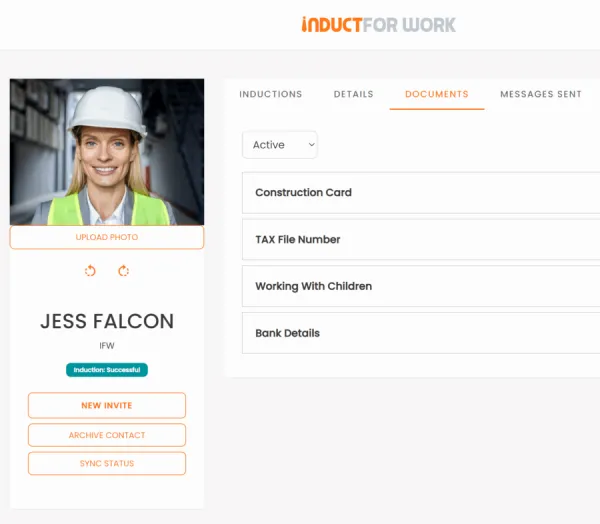
Induct For Work helps workplaces manage visitors with digital sign-in, visitor instructions, records and reporting.
Your organisation can use the platform to support:
- visitor sign-in and sign-out
- site-specific visitor instructions
- host details
- visitor records
- emergency information
- digital acknowledgements
- reporting
- multi-site visitor processes
- integration with broader induction workflows
For workplaces already using Induct For Work for online induction, visitor management can sit naturally beside employee, contractor and site induction processes.
The main solution page is visitor management.
Build a safer visitor experience
A visitor induction checklist should make entry clearer for visitors and easier for the workplace to manage.
It should identify the visitor, connect them with a host, explain emergency procedures, mark restricted areas, confirm PPE where required, set privacy expectations and record sign-out.
Offices, schools, councils and operational sites all need different levels of visitor instruction, but the goal is the same: a safe, respectful and well-recorded visit.
Induct For Work helps workplaces move from inconsistent visitor briefings to a clearer visitor management process with digital records and reporting.
Visit visitor management to see how your organisation can improve visitor entry, site readiness and record keeping.
Frequently asked questions
A visitor induction checklist is a simple list of entry, safety, conduct and emergency information that a workplace provides to visitors before or during their visit.
Most visitors need at least basic instructions. The level of induction should depend on the site, visit purpose, access level, supervision and risk.
No. Visitor induction is usually shorter. Contractor induction is more detailed because contractors often perform work and may need document checks, licences or approvals.
A school visitor induction should include reception sign-in, host details, child safety expectations, restricted areas, supervision requirements, photography rules, emergency instructions and sign-out.
A council visitor induction should reflect the facility being visited. It may include public-area rules, depot hazards, staff-only areas, vehicle movement, PPE, emergency details and sign-out.
Site visitors should be told where they can go, whether they need an escort, what PPE is required, which hazards apply, where to assemble in an emergency and how to report concerns.
Induct For Work helps workplaces manage visitor sign-in, visitor instructions, records, reporting and site-specific visitor management workflows.
Many workplaces should issue visitor badges so staff can identify who is onsite and whether the person is authorised to be in a particular area.
Start a free trial or book a demo to see how INDUCT FOR WORK can support your workplace processes.
Author: Anna Milova
Published: 04/07/2026
Updated: 06/07/2026