Visitor Records
Visitor records can feel like a small administration task on an ordinary day.
A person arrives, signs in, meets a staff member, attends a meeting, completes a delivery, visits reception or walks through a facility with a host. Everything may seem simple while the workplace is calm.
During an emergency, that small record becomes much more important.
If an alarm sounds, a building is evacuated, a site is locked down, a medical incident occurs or a hazard affects part of the workplace, managers need to know who is onsite. Employees may be visible through rosters, payroll systems or team structures. Contractors may be visible through induction records or job bookings. Visitors can be harder to track unless the visitor record is accurate.
That is why visitor records matter.
They help the workplace understand who entered, who they were visiting, where they may have gone and whether they signed out before the emergency started. Strong visitor records support emergency checks, communication, incident review and general site accountability.
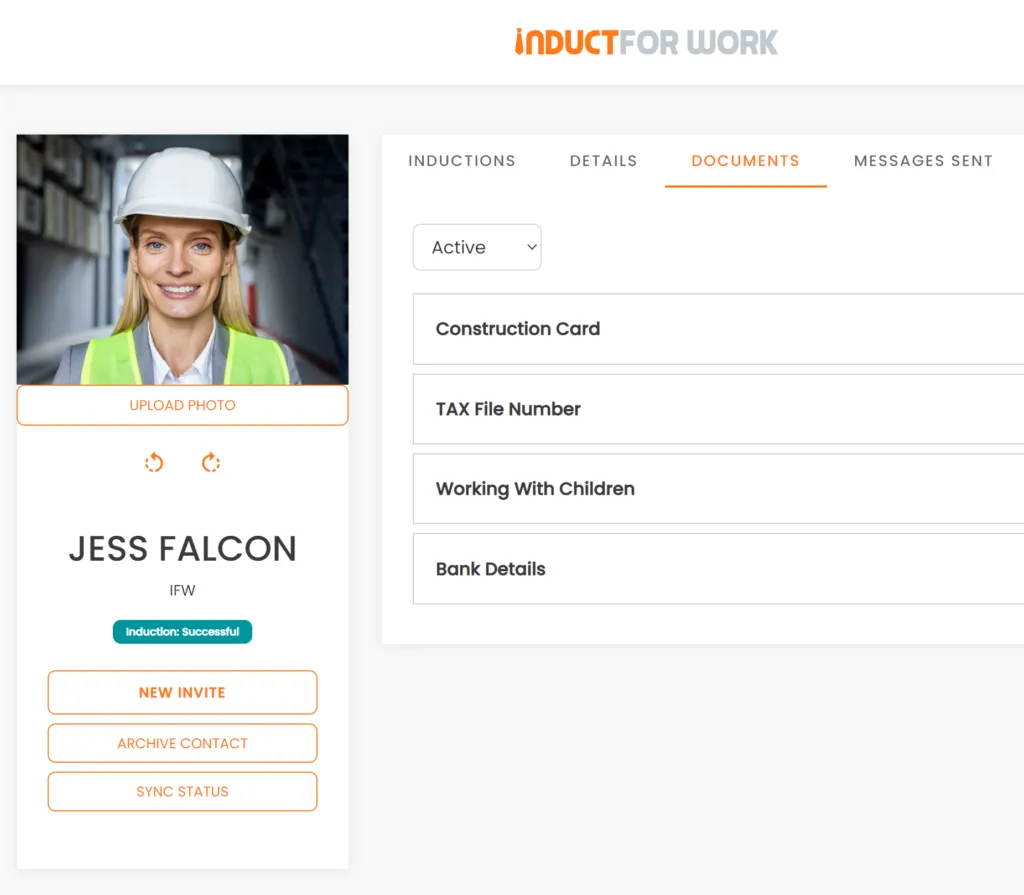
Induct For Work supports visitor management by helping organisations manage visitor sign-in, site instructions, records and reporting in one practical platform.
Visitor records are part of emergency readiness
Emergency readiness is not only about alarms, exits and evacuation diagrams.
Those things matter, but a workplace also needs reliable information. During an emergency, people make decisions quickly. Wardens, supervisors, reception staff, managers and hosts may need to confirm who is present and who still needs to be accounted for.
Visitor records help answer that question.
A good visitor record can show that a supplier arrived at 9:15 am, a parent entered the school office at 10:00 am, a consultant attended a council depot, a client entered a meeting room or an inspector visited a site office.
Without that record, staff may rely on memory.
Memory is not a reliable emergency system. People may be stressed, distracted or focused on their own team. A visitor sitting in a meeting room, waiting at reception or walking with a host can easily be overlooked.
Who this is for
This page is created for workplaces that get visitors through their doors and want better emergency visibility.
It may help:
- offices with clients, suppliers and interview candidates
- schools managing parents, volunteers, visitors and service providers
- councils operating depots, public buildings and community facilities
- aged care sites with families, health providers and support visitors
- warehouses and logistics sites with drivers, auditors and supplier representatives
- farms receiving inspectors, contractors, seasonal support and delivery contacts
- event venues with temporary staff, vendors, guests and support personnel
- construction site offices visited by clients, consultants and project stakeholders
The principle is the same across each workplace.
If a person enters your site, your organisation should know enough to account for them if conditions change suddenly.
Visitors can be missed during emergencies
Visitors are different from employees because they are not part of the usual workplace pattern.
Staff may know where their own team members usually work. Supervisors may know which contractors are expected. Reception may know who arrived earlier, but that information can disappear if it only sits in someone’s memory or a paper book left inside the building.
A visitor may be in a meeting room, bathroom, car park, reception area, classroom office, depot yard, warehouse walkway, waiting area or another part of the site when an emergency begins.
The visitor may not know the alarm tone.
They may not know the evacuation route. They may not know the assembly point. They may not know whether to stay with their host or follow the nearest warden.
Visitor records do not solve every emergency problem, but they give staff a clearer starting point. They help the workplace identify who may need to be checked, contacted, guided or accounted for.
For visitor-specific entry guidance, see visitor sign-in procedure.
What visitor records should show during an emergency
Visitor records should be useful when time is limited.
A record that only shows a first name is usually not enough. A stronger record helps the workplace identify the person, connect them to a host and understand whether they may still be onsite.
Useful visitor record details may include:
- full name
- organisation or company
- arrival time
- sign-out time
- site or location visited
- host or contact person
- purpose of visit
- mobile number where appropriate
- visitor category
- instructions acknowledged
- areas being accessed
- badge or pass issued
- emergency information provided
Not every workplace needs every field.
A low-risk office visit may require fewer details than a school, depot, aged care site, warehouse, event space or operational area. The goal is to collect information that supports safety and accountability without making sign-in unnecessarily difficult.
Sign-in without sign-out creates confusion
A visitor sign-in record is incomplete if the visitor never signs out.
During an emergency, staff may check the register and see that someone arrived earlier. If there is no sign-out record, they may not know whether the person is still onsite, has left through another exit or forgot to complete the final step.
That creates confusion.
Staff may spend time looking for a visitor who already left. A host may be asked to confirm whether the person is still present. Emergency coordinators may receive incomplete information.
Sign-out should be part of the visitor process from the start.
Visitors should know how to leave a clear departure record before they go. Reception teams and hosts should also understand why sign-out matters. It is not only a tidy administration step. It helps the workplace avoid uncertainty when records are needed quickly.
Host responsibility matters
Most visitors attend a workplace to meet someone.
That person is the host. The host may be an employee, manager, teacher, council officer, site supervisor, facility manager, project lead or administrator.
Host details matter during emergencies because they create a link between the visitor and the organisation.
If a visitor cannot be found during a check, the host may know where the person was last seen. The host may know whether the visitor left early, moved to another room, entered a restricted area with permission or was waiting at reception.
A clear host record helps staff ask the right person sooner.
Visitor management should not rely on reception alone. Hosts should understand their role in welcoming, supervising and accounting for visitors where required.
For a broader checklist of visitor instructions, see visitor induction checklist.
Multiple entry points increase risk
Many workplaces do not have one simple front door.
A council may have a customer service counter, depot gate, library desk, workshop entrance and community facility. A school may have administration, delivery areas, after-hours event access and contractor gates. A warehouse may have reception, loading docks and driver entrances. An event venue may have staff gates, supplier gates and public-facing areas.
Different entry points can create different visitor records.
That is where risk increases.
If one location uses a paper book, another uses a spreadsheet and a third relies on verbal confirmation, emergency visibility becomes fragmented. Staff may need to check several sources before they understand who is onsite.
A consistent visitor management process helps reduce this problem.
Site-specific instructions can still apply, but the core record should be clear enough for authorised staff to review when needed.
Visitor records help wardens and emergency coordinators
Emergency roles depend on clear information.
Wardens, floor coordinators, site supervisors and managers may need to check areas, guide people, report to emergency services, support evacuation points and help identify anyone who may still be inside.
Visitor records can assist those roles.
They may show who was expected, who arrived, who signed out and which host was responsible. This information helps emergency teams focus their checks and reduce guesswork.
The record should be easy to access.
A paper visitor book may be sitting at reception when the building has already been evacuated. A digital record may be easier for authorised users to review from another device, depending on the workplace setup.
For wider emergency communication, message broadcast can help selected groups receive updates where your organisation uses that feature.
Paper visitor books can slow emergency checks
Paper visitor books are familiar, but they have limits.
Handwriting may be hard to read. Visitors may skip fields. Contact details may be missing. Sign-out may be forgotten. A physical book may not be available once people have left the building.
Paper registers can also create privacy problems because the next person signing in may see previous visitor details.
Digital visitor records can improve the process.
A digital workflow can require key fields, capture timestamps, provide site instructions, record acknowledgements and make visitor information easier for authorised people to review. This does not remove the need for good emergency procedures, trained wardens or clear site rules. It supports those processes with better records.
A digital process also helps organisations move from “we think everyone is accounted for” to a clearer evidence-based check.
Emergency records are useful after the incident
Visitor records continue to matter after the emergency has ended.
The organisation may need to review what happened, which areas were affected, who was onsite, whether procedures were followed and whether visitors received the right instructions.
This may be relevant after:
- fire alarms
- evacuations
- lockdowns
- medical incidents
- security issues
- chemical spills
- vehicle incidents
- equipment failures
- severe weather events
- site access breaches
Good record keeping makes review easier.
The business can check visitor attendance, host details, sign-in times, sign-out times and any related incident notes. This helps managers understand whether the process worked or whether changes are needed.
Visitor records and incident reporting work together
Visitor records and incident reports often support each other.
An incident report may describe what happened. Visitor records may help confirm who was present, who may have witnessed the event, who needed assistance or who had access to the affected area.
For example, if a visitor slips near reception, the workplace may need the visitor’s attendance details and incident report. If a fire alarm occurs during a community meeting, the visitor record may help confirm who attended. If an unauthorised person enters a restricted area, sign-in records may help identify whether they arrived through the normal process.
A strong incident reporting process is easier to manage when visitor records are clear.
Both records help the workplace learn from events instead of relying on informal memory.
Visitor privacy still needs care
Emergency readiness does not mean collecting visitor information carelessly.
Workplaces should collect information that is reasonable for the visit and useful for safety, security and record keeping. They should also consider who can see the information, how long it is kept and how it is protected from unnecessary exposure.
Paper registers can be weak in this area because visitors may see each other’s names, organisations or phone numbers.
A digital process can reduce that issue by collecting information without displaying the full visitor list publicly.
Good visitor management balances safety, operational visibility and privacy. The aim is to know who is onsite without turning visitor information into an open register.
Offices need visitor visibility too
Office emergencies are sometimes underestimated.
A corporate office may not look high-risk, but it can still experience fire alarms, medical incidents, building evacuations, security concerns and after-hours access issues.
Office visitors may include clients, job candidates, suppliers, auditors, consultants, board members and training attendees. Many of them may not know the building layout or emergency assembly area.
A visitor record helps reception and hosts know who arrived and who may still be in the building.
Even a simple office process should include sign-in, host details, emergency instructions and sign-out.
Schools and councils need stronger visitor accountability
Schools and councils often have more complex visitor environments.
Schools manage parents, carers, volunteers, service providers, contractors, presenters and community visitors. They may also need to protect student areas, privacy and child safety expectations.
Councils operate public counters, depots, libraries, transfer stations, community facilities, offices, parks buildings and workshops. Each location may have different risks and visitor pathways.
Visitor records help these organisations understand who attended, where they went and who hosted them.
For education-related site processes, see online induction for schools. For broader safety communication, online safety induction can help explain important workplace requirements before people begin work or enter higher-risk areas.
Sites, depots and warehouses need location-specific records
Operational sites can change quickly.
A visitor may arrive during loading, maintenance, vehicle movement, cleaning, repairs, deliveries or site works. A short visit can still involve exposure to hazards if the person enters the wrong area or misses instructions.
Visitor records at these sites should connect the person to the specific location.
A record should not only say that someone visited the company. It should show which site, depot, yard, building or area they attended.
Location-specific records are especially useful for multi-site organisations. If an emergency affects one site, managers need to know who was present at that site, not just who visited the organisation somewhere that day.
How Induct For Work helps
Induct For Work helps workplaces manage visitor records, site instructions and reporting through a structured visitor management process.
Your organisation can use the platform to support:
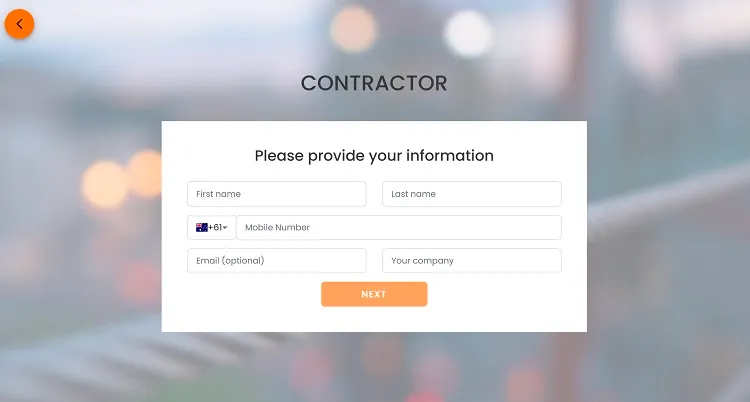
- digital visitor sign-in
- visitor sign-out records
- host details
- site-specific instructions
- emergency information
- visitor acknowledgements
- visitor history
- reporting
- multi-site visitor workflows
- records connected to broader induction processes
Induct For Work also supports online induction, contractor induction, staff training and compliance records, giving organisations a practical way to manage different user groups without relying on scattered paper records.
The main solution page is visitor management.
Build stronger emergency readiness with visitor records
Visitor records matter because emergencies do not wait for perfect conditions.
A visitor may be onsite for five minutes or several hours. They may be in reception, a meeting room, a school office, a depot, a warehouse, an aged care facility, a farm office or a site area. If something happens, the workplace should know who they are, who they came to see and whether they have left.
Strong visitor records support evacuation checks, host accountability, incident follow-up, privacy, reporting and workplace confidence.
Induct For Work helps organisations move from paper visitor books and inconsistent local processes to clearer visitor management with digital records and site instructions.
Visit visitor management to see how your workplace can improve visitor records, emergency readiness and site visibility.
Frequently asked questions
Visitor records help workplaces know who is onsite, who may need to be accounted for and which host may have responsibility for a visitor during an emergency.
Useful records may include the visitor’s name, organisation, arrival time, sign-out time, host, purpose of visit, site location and instructions acknowledged.
Sign-out helps confirm whether a visitor has left. Without it, staff may waste time looking for someone who is no longer onsite.
Paper books may work in very small workplaces, but they can create problems with handwriting, missing details, privacy, sign-out and access during evacuations.
Visitor records can help wardens and emergency coordinators understand who arrived, who signed out and which host may know where the visitor is.
Yes. Offices may still experience fire alarms, evacuations, medical incidents or security issues, so visitor visibility remains important.
Schools may have parents, volunteers, service providers and other visitors onsite. Accurate visitor records help staff manage safety, privacy and emergency accountability.
Visitor records can help confirm who was onsite, who may have witnessed an event and which visitor details relate to an incident report.
Induct For Work supports visitor management through digital visitor sign-in, site instructions, visitor records, reporting and broader induction workflows.
Start a free trial or book a demo to see how INDUCT FOR WORK can support your workplace processes.
Author: Anna Milova
Published: 08/07/2026
Updated: 10/07/2026