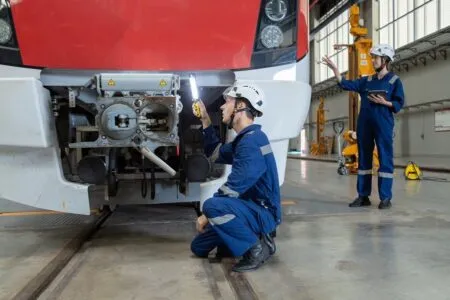
Maintenance Training for Safer Equipment, Assets and Workplaces
Maintenance keeps workplaces running.
It covers the checking, servicing, cleaning, repair and replacement work needed to keep equipment, buildings, infrastructure and systems in safe working order.
Poor maintenance can lead to breakdowns, injuries, fires, equipment damage, production delays, environmental problems and expensive emergency repairs.
That is why maintenance training matters.
Workers and contractors need to understand what they can maintain, what they must report, which tasks need authorisation, when isolation applies and how records should be completed.
INDUCT FOR WORK helps businesses deliver maintenance training through online induction, collect acknowledgements, manage forms, support incident reporting and keep records in one platform.
A clear maintenance process also supports a stronger safety culture because workers learn to report faults early and follow safe procedures before equipment fails. In addition, rapid induction setup can help businesses turn existing maintenance procedures, checklists, equipment instructions and contractor rules into online induction content sooner.
What is maintenance?
Maintenance is the planned or reactive work that keeps assets, equipment, buildings and systems safe, reliable and fit for use.
It may include:
- inspections
- cleaning
- lubrication
- servicing
- testing
- calibration
- repairs
- replacement of worn parts
- fault finding
- safety checks
- software or system updates
- building upkeep
- plant and machinery care
- emergency repairs
Maintenance applies to many assets, including machinery, vehicles, tools, buildings, fire systems, electrical equipment, HVAC systems, lifts, production lines, storage systems, roads, yards, fences and safety equipment.
The purpose is simple: keep things working safely and reduce avoidable failure.
Why maintenance training matters
Maintenance training matters because maintenance work often involves real risk.
A worker may open a guard, remove a panel, clean moving parts, check an electrical fault, inspect a roof, enter a plant room, use chemicals or work near stored energy.
Without clear training, people may take shortcuts.
Maintenance training helps businesses explain:
- who can perform maintenance work
- which tasks need authorisation
- when isolation or lockout applies
- how to report faults
- how to inspect equipment
- what forms workers must complete
- which PPE applies
- how contractors should access the site
- what to do when a task changes
- where records should go
As a result, maintenance becomes a controlled work process rather than a rushed response to breakdowns.

Who this is for
Workplaces that rely on equipment, buildings and systems staying safe
This page is useful for:
- manufacturers
- warehouses
- construction businesses
- transport operators
- schools
- councils
- healthcare facilities
- aged care providers
- farms
- waste facilities
- shopping centres
- offices
- laboratories
- event venues
- accommodation providers
- workshops
- logistics businesses
- facilities teams
- maintenance contractors
- asset managers
It also helps people responsible for plant reliability, contractor access, inspections, servicing, fault reporting, risk controls and maintenance records.
Any workplace with equipment or infrastructure needs a clear maintenance process.
Why maintenance processes may break down
Maintenance processes may break down when people rely on memory, paper forms or informal conversations.
A worker may notice a fault but mention it only verbally. A contractor may service equipment without seeing site rules. A supervisor may assume a checklist has been completed. An urgent repair may begin before workers confirm isolation. Records may sit across folders, spreadsheets and email trails.
INDUCT FOR WORK helps businesses create a more repeatable maintenance process.
It can help when:
- workers do not know how to report faults
- contractors miss site-specific rules
- maintenance checklists sit on paper
- equipment defects remain unresolved
- isolation steps rely on verbal instructions
- records sit across emails and folders
- PPE requirements vary between supervisors
- refresher training gets missed
- site access rules change during works
- managers cannot confirm who completed maintenance training
With online training and records, businesses can explain expectations earlier and track completion more clearly.
Maintenance training vs general workplace induction
Maintenance training and general workplace induction are connected, but they serve different purposes.
A general workplace induction introduces broad site rules, emergency procedures, reporting expectations and workplace responsibilities.
Maintenance training focuses on safe inspection, servicing, fault reporting, repair work and equipment care.
| Maintenance Training | General Workplace Induction |
|---|---|
| Focuses on equipment, assets and servicing | Covers broad workplace rules |
| Explains fault reporting and checks | Explains general reporting duties |
| Covers isolation and safe maintenance steps | Covers general safety expectations |
| Supports checklists and inspection forms | Supports overall workplace readiness |
| Helps manage maintenance records | Helps manage general induction records |
For broader safety training, see our online safety induction article.
Main types of maintenance
Workplaces commonly use several maintenance approaches.
Preventive maintenance
Preventive maintenance uses planned inspections and servicing to reduce the chance of breakdowns.
Examples include:
- scheduled servicing
- lubrication
- filter changes
- belt inspections
- safety device checks
- cleaning
- calibration
- routine replacement of worn parts
Preventive maintenance helps businesses act before equipment fails.
Corrective maintenance
Corrective maintenance happens after someone finds a fault.
A worker may report a damaged guard, leaking hose, broken switch, faulty sensor, worn cable or unsafe tool. Maintenance teams then repair or replace the affected item.
Corrective maintenance needs fast reporting and clear follow-up.
Predictive maintenance
Predictive maintenance uses data, monitoring or testing to predict when equipment may fail.
Examples include:
- vibration monitoring
- temperature checks
- oil analysis
- sensor data
- usage tracking
- condition monitoring
This approach helps businesses plan work before breakdowns cause damage or downtime.
Condition-based maintenance
Condition-based maintenance triggers action when equipment reaches a set condition.
For example, a business may service equipment when vibration increases, a filter becomes restricted or operating temperature rises above a limit.
This approach can reduce unnecessary servicing while still keeping risk under control.
Maintenance and workplace hazards
Maintenance work can expose people to hazards that do not appear during normal operation.
Hazards may include:
- moving parts
- stored energy
- electricity
- pressure
- heat
- sharp edges
- chemicals
- confined spaces
- working at height
- noise
- dust
- falling objects
- manual handling
- plant movement
- poor lighting
- wet or slippery surfaces
For a broader hazard guide, see our workplace hazards article.
Maintenance teams should look for hazards before the task begins and when site conditions change.
A simple repair can become dangerous when workers rush, use the wrong tool or work around live systems without suitable controls.
Machine safety, guarding and isolation
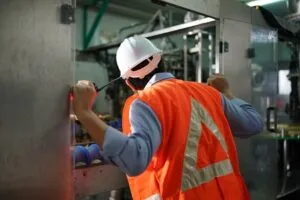
Machinery maintenance deserves special attention.
Workers may need to clean, inspect, unblock, adjust, lubricate or repair equipment that can move unexpectedly.
Maintenance training should explain:
- when equipment must stop
- who can remove guards
- when lockout or isolation applies
- how workers control stored energy
- why emergency stops do not replace isolation
- who can restart equipment
- how workers report missing or damaged guards
- what to do when a task changes
For more detail, see our machine safety and guarding article.
That supporting article fits this page because guarding, isolation and maintenance activities often overlap.
Maintenance and 6S workplace organisation
Good maintenance depends on orderly work areas.
A messy maintenance area can hide faults, delay repairs and create new hazards.
6S can support maintenance by improving:
- tool storage
- spare parts organisation
- cleaning routines
- inspection discipline
- visual standards
- access to equipment
- housekeeping
- PPE station control
- fault visibility
For more detail, see our 6S methodology article.
A clean and organised workplace helps teams find tools faster, spot problems earlier and reduce avoidable delays.
Maintenance for contractors
Many businesses use contractors for maintenance work.
Contractors may service HVAC systems, electrical equipment, fire systems, lifts, plumbing, machinery, roofs, security systems, IT equipment, vehicles, doors, gates, landscaping or building assets.
A contractor induction can explain site-specific requirements before work begins.
Contractor maintenance induction may include:
- sign-in process
- site contacts
- access rules
- restricted areas
- permit requirements
- isolation procedures
- emergency information
- PPE requirements
- incident reporting
- document upload requirements
- work area controls
- completion acknowledgement
Contractors may understand their trade, but they still need the site’s rules.
A contractor who works near school grounds, plant rooms, rooftops, production lines or public areas needs clear instructions before the task starts.
Maintenance inspections and checklists
Inspection checklists help workers complete maintenance tasks consistently.
A checklist may cover:
- equipment condition
- guards and covers
- leaks
- electrical leads
- emergency stops
- warning signs
- lubrication points
- belt condition
- pressure readings
- unusual noise
- vibration
- cleanliness
- access issues
- housekeeping
- faults found
- action required
With custom forms, businesses can create online maintenance checklists, inspection forms and corrective action forms.
This helps teams avoid lost paper forms and gives managers a clearer record of completed checks.
Reporting faults, hazards and near misses
Fault reporting matters because small defects can become serious failures.
Workers and contractors should report:
- damaged guards
- loose parts
- leaking hoses
- frayed cables
- overheating equipment
- unusual vibration
- strange noise
- faulty controls
- blocked access
- failed safety devices
- chemical leaks
- unsafe tools
- damaged ladders
- poor lighting
- near misses during maintenance
INDUCT FOR WORK supports incident reporting so businesses can capture hazards, equipment faults, near misses and incidents online.
This helps managers review issues, assign follow-up and keep a clearer record of what happened.
For example, repeated reports about overheating equipment may show that maintenance intervals, ventilation or operating conditions need review.
PPE and maintenance work
Maintenance tasks often need task-specific PPE.
Depending on the job, workers may need:
- safety glasses
- gloves
- safety boots
- hard hats
- hearing protection
- respiratory protection
- face shields
- cut-resistant gloves
- chemical-resistant gloves
- high-visibility clothing
- coveralls
- fall protection
For more detail, see our PPE training article.
Maintenance training should explain which PPE applies, where workers can find it and how they should report damaged or unsuitable PPE.
Forms, acknowledgements and maintenance records
Maintenance work often needs supporting forms and acknowledgements.
These may include:
- maintenance checklists
- inspection forms
- contractor declarations
- permit forms
- equipment fault reports
- isolation acknowledgements
- PPE acknowledgements
- service records
- corrective action records
- completion certificates
- incident reports
- training confirmations
With digital signatures, businesses can capture confirmations and acknowledgements online where needed.
This helps keep maintenance records connected to the worker, contractor, site, asset or task.
Record keeping for maintenance training
Managers may need to confirm:
- who completed maintenance training
- when workers completed it
- which contractors acknowledged site rules
- which forms workers submitted
- which equipment faults workers reported
- which hazards managers reviewed
- which certificates the system issued
- which users need refresher training
- which maintenance records need follow-up
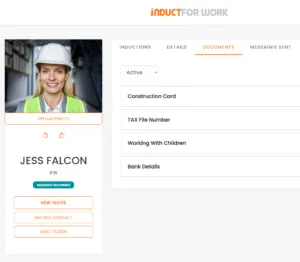
INDUCT FOR WORK helps improve record keeping by keeping training records, forms, certificates, reports and acknowledgements online.
In addition, reporting helps managers review completion status, fault reports and outstanding items.
This gives businesses better visibility than paper checklists, whiteboards, email trails or spreadsheets.
How INDUCT FOR WORK supports maintenance training
Maintenance works best when workers can complete training, submit forms and receive updates quickly.
Custom forms can support maintenance checklists, inspection forms, corrective action forms and contractor declarations.
Message broadcast can help managers send updates when equipment status, access rules, shutdown windows or urgent maintenance instructions change.
These features help businesses keep maintenance communication practical and easier to track.
Why use INDUCT FOR WORK for maintenance training and records?
Maintenance processes become harder to manage when training, contractor requirements, forms and fault reports sit in different places.
INDUCT FOR WORK helps businesses:
- deliver maintenance training online
- assign training by role, site or asset
- explain safe maintenance expectations
- collect acknowledgements
- create inspection forms
- manage contractor requirements
- support fault and incident reporting
- issue certificates
- track completion
- send updates
- assign refresher training
- keep records in one platform
This does not replace qualified trades, engineering advice, manufacturer instructions or legal maintenance obligations. Instead, it supports the training, communication and record-management side of maintenance work.
From reactive repairs to clearer maintenance records
| Weak Maintenance Process | INDUCT FOR WORK |
|---|---|
| Workers mention faults verbally | Workers can submit fault reports online |
| Contractors receive site rules at arrival | Contractors can complete induction before starting |
| Checklists sit on paper | Teams can collect inspection forms online |
| Safety steps depend on memory | Training can explain safe maintenance expectations |
| Equipment updates reach people late | Managers can send message broadcasts |
| Acknowledgements become hard to find | The system can capture acknowledgements |
| Records sit across folders and emails | Teams can keep records in one platform |
| Refresher training gets missed | Administrators can assign updated training |
| Managers chase completion manually | Reports show who needs follow-up |
| Small defects keep returning | Reports help managers identify patterns |
This gives businesses a more dependable way to manage maintenance training, forms and records.
Best practice tips for maintenance training
Train before maintenance begins
Workers and contractors should understand site rules before they open, inspect or repair equipment.
Use real equipment examples
Photos and site-specific examples help workers understand actual risks.
Explain isolation clearly
Workers should know when lockout, isolation or authorisation applies.
Include contractors
Maintenance contractors need site rules, access instructions and reporting steps before arrival.
Make fault reporting simple
Workers should know how to report damaged equipment or unsafe conditions.
Use checklists
Inspection forms help workers complete tasks consistently.
Review after breakdowns
Breakdowns and near misses should trigger review of training, servicing and controls.
Keep records together
Training, forms, reports and acknowledgements should stay easy to find.
Start improving maintenance training and records
Maintenance protects equipment, buildings, infrastructure and workers.
When people understand inspection, servicing, isolation, fault reporting and record keeping, the business can reduce breakdowns and respond to problems earlier.
INDUCT FOR WORK helps businesses deliver maintenance training online, collect acknowledgements, manage inspection forms, support incident reporting and keep records in one platform.
Whether your workplace manages machinery, vehicles, buildings, schools, farms, warehouses, waste facilities, offices or contractor maintenance work, INDUCT FOR WORK can help communicate maintenance expectations more clearly.
Give workers and contractors a better way to understand maintenance requirements before work begins.
Frequently asked questions
Maintenance training helps workers and contractors understand inspection, servicing, repair, fault reporting, isolation, PPE, site rules and record requirements.
Common maintenance types include preventive maintenance, corrective maintenance, predictive maintenance and condition-based maintenance.
Maintenance should form part of induction because workers and contractors need to understand safe work procedures, reporting steps, site rules and authorisation requirements before maintenance begins.
Yes. INDUCT FOR WORK can help businesses create online forms for inspections, maintenance checks, contractor declarations and corrective actions.
Yes. Maintenance contractors should receive site-specific induction before they access equipment, plant rooms, rooftops, work areas or restricted zones.
Yes. INDUCT FOR WORK can help workers and contractors report faults, hazards, near misses and incidents online.
Useful records may include training completion, inspection forms, service records, fault reports, incident reports, contractor declarations, acknowledgements and refresher training records.
Start a free trial or book a demo to see how INDUCT FOR WORK can support your workplace processes.
Author: Matt Tsashkuniats
Published: 11/02/2024
Last edited: 13/05/2026