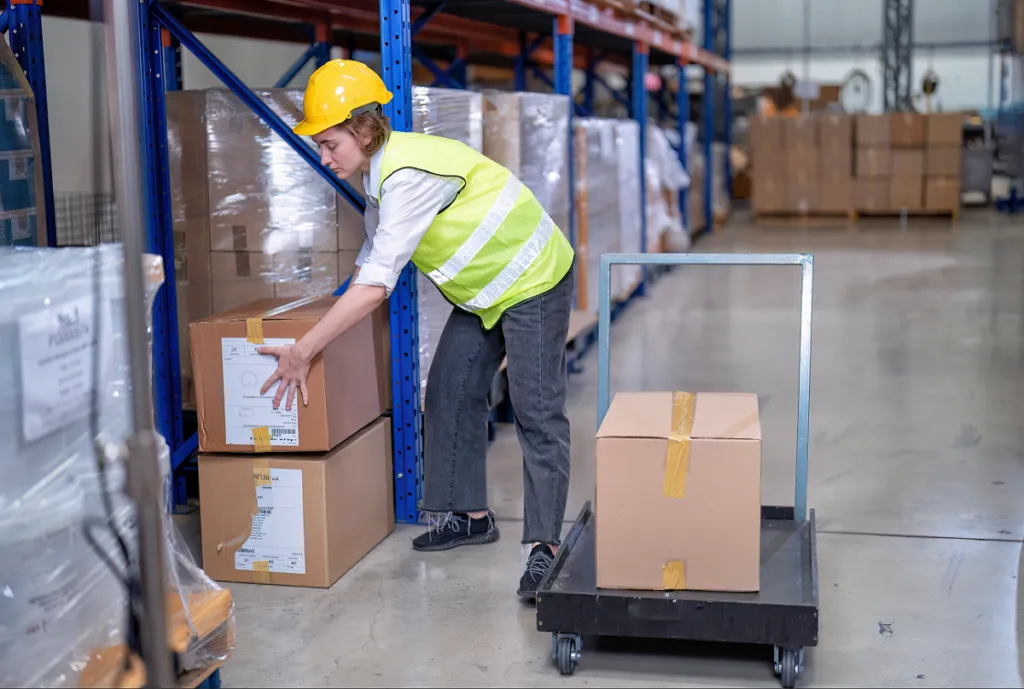
Manual Handling Online Induction for Safer Lifting, Carrying and Physical Work
Manual handling is part of everyday work in many industries.
Workers lift boxes, move equipment, carry tools, push trolleys, pull stock, stack shelves, handle materials, clean rooms, load vehicles, move furniture, care for patients, pack orders and repeat physical movements throughout the day.
Because these tasks feel routine, manual handling risks often get underestimated.
However, poor manual handling can lead to strains, sprains, back injuries, shoulder injuries, neck pain, repetitive strain problems and long-term musculoskeletal conditions.
A manual handling online induction helps workers and contractors understand these risks before they begin work. It gives them practical information about safer lifting, task planning, posture, load control, repetitive work, equipment use and when to ask for help.
INDUCT FOR WORK helps businesses deliver manual handling induction online, collect acknowledgements, use quizzes, manage forms, issue certificates and keep completion records in one platform.
A clear manual handling process also supports a better safety culture because workers understand that safe movement is part of everyday work, not a one-off training topic. In addition, rapid induction setup can help businesses turn existing manual handling procedures, videos, checklists and training material into online content sooner.
What is manual handling?
Manual handling means more than lifting heavy objects.
It includes any task where a person uses physical effort to lift, lower, push, pull, carry, move, hold, restrain or support something.
Manual handling may involve:
- lifting boxes
- carrying tools
- pushing trolleys
- pulling carts
- moving furniture
- loading vehicles
- stacking shelves
- handling stock
- transferring patients
- cleaning floors
- working in awkward postures
- repeating the same movement
- reaching above shoulder height
- bending or twisting
- holding a load for too long
- using force to move stuck or awkward objects
The current page already explains manual handling as work involving lifting, moving, pushing, pulling, carrying or holding an object. This rewritten version expands that idea into a broader workplace induction page focused on practical prevention and records.
In plain terms, manual handling is any physical work that can place strain on the body.
Why manual handling training matters
Manual handling training matters because injuries often happen during ordinary tasks.
A worker may lift something too quickly, twist while carrying a load, drag equipment across the floor, reach awkwardly into a storage area or repeat the same movement for several hours.
At first, the task may seem harmless. However, the risk can build when poor technique, fatigue, awkward layout, poor equipment or time pressure combine.
Manual handling injuries may affect:
- back
- shoulders
- neck
- wrists
- elbows
- knees
- hips
- muscles
- tendons
- ligaments
- joints
These injuries can be painful, costly and slow to recover from.
As a result, manual handling induction should not simply tell workers to “lift with your knees.” It should help them think about the task, the load, the work area, available equipment and whether the job should be changed before someone gets hurt.
Where manual handling risks are highest
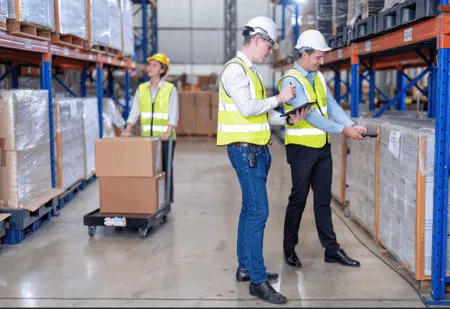
Manual handling risks appear in many workplaces.
They are especially common in:
- warehouses
- construction sites
- manufacturing
- aged care
- healthcare
- hospitality
- retail
- supermarkets
- cleaning
- transport and logistics
- farming
- schools
- councils
- offices during moves or storage tasks
- event setup
- maintenance work
- workshops
- food processing
- packing sheds
In these workplaces, workers may repeat the same physical tasks every day.
Because of this, manual handling induction should be practical and role-specific. A warehouse picker does not face the same manual handling risks as a cleaner, nurse, farm worker, delivery driver or maintenance contractor.
Therefore, training should reflect the tasks people actually perform.
Why manual handling issues often fall through the cracks
Manual handling risks often fall through the cracks because the tasks look simple.
A worker lifts a box. A cleaner moves equipment. A contractor carries tools. A staff member rearranges furniture. A warehouse team unloads stock.
Because these jobs appear familiar, managers may assume workers already know how to do them safely.
INDUCT FOR WORK helps businesses make manual handling expectations clearer and easier to record.
It can help when:
- workers start before receiving manual handling guidance
- contractors do physical work without site-specific instructions
- staff do not know when to ask for help
- lifting equipment is available but not used
- awkward storage areas keep creating strain
- workers repeat poor techniques because no one has corrected them
- injury reports are delayed or informal
- manual handling rules are explained verbally but not recorded
- refresher training is forgotten after a quiet period
- supervisors cannot confirm who completed training
- records are spread across emails, folders and spreadsheets
With online training and records, businesses can deliver the same core manual handling message and track who has completed it.
Manual handling online induction vs broader safety induction
Manual handling induction and broader online safety induction are connected, but they are not the same topic.
A general online safety induction may cover emergency procedures, PPE, incident reporting, site rules, hazard awareness and general workplace expectations.
A manual handling online induction focuses specifically on physical work and body strain.
| Manual Handling Online Induction | Broader Online Safety Induction |
|---|---|
| Focuses on lifting, carrying, pushing and pulling | Covers wider workplace safety topics |
| Explains awkward postures and repetitive tasks | Explains general site rules and procedures |
| Covers load assessment and task planning | Covers emergency procedures and reporting |
| Helps reduce strain and musculoskeletal injuries | Helps create broad safety awareness |
| Supports role-specific physical work training | Supports general worker readiness |
Common manual handling hazards
A good manual handling induction should help workers recognise risk before they start the task.
Heavy loads
A load does not need to be extremely heavy to create risk. Even moderately heavy items can cause injury when lifted repeatedly or handled in awkward conditions.
Awkward shapes
Some loads are difficult to grip or balance.
For example, large boxes, long panels, bags, drums, tools or irregular objects can be harder to control than their weight suggests.
Repetitive movements
Repeating the same movement over time can place strain on muscles, tendons and joints.
This may happen in packing, scanning, cleaning, assembly, sorting, food preparation or data entry tasks.
Awkward postures
Bending, twisting, reaching, kneeling or working above shoulder height can increase strain.
The risk becomes higher when awkward posture combines with force or repetition.
Poor workplace layout
Manual handling risk often comes from the way the work area has been set up.
Examples include low shelves, cramped walkways, poor bench height, distant storage areas or items placed where workers must twist to reach them.
Time pressure
Rushing increases risk because workers may skip equipment, lift alone or avoid asking for help.
Fatigue
Fatigue affects coordination, judgement and strength.
As a result, manual handling tasks may become riskier near the end of a long shift or during busy periods.
Safer manual handling starts with task planning
Manual handling safety starts before the lift.
Workers should be encouraged to stop and assess the task.
A simple planning process may include:
- check the weight of the load
- look at the shape and grip points
- check the path of travel
- remove trip hazards
- decide whether mechanical help is needed
- ask whether a team lift is required
- confirm where the item will be placed
- avoid twisting where possible
- keep the load close where practical
- break the load down if possible
- stop if the task feels unsafe
This process helps workers understand that safe manual handling is not only about body position.
It is also about changing the task so the body does not carry unnecessary strain.
Lifting and carrying basics
Manual handling induction should explain the basics of safer lifting and carrying.
Training may include:
- plan the lift first
- position the feet securely
- keep the load close where practical
- avoid twisting while lifting
- use a stable grip
- move smoothly
- keep the path clear
- avoid carrying loads that block vision
- put the load down carefully
- ask for help with awkward or heavy items
- use mechanical aids where available
However, training should avoid making technique the only control.
Even good lifting technique may not be enough if the load is too heavy, the task is repeated too often or the work area has been poorly designed.
Therefore, workers should also understand when the job needs to be changed.
Pushing, pulling and moving equipment
Pushing and pulling can create serious strain, especially when workers move trolleys, carts, cages, bins, beds, pallets or equipment.
Risks may increase when:
- wheels are damaged
- floors are uneven
- slopes are present
- loads are unstable
- visibility is poor
- equipment is too heavy
- handles are too low or too high
- workers need to twist while moving
- the path is crowded
- brakes are faulty
A manual handling induction should explain how to check equipment before use and when to report problems.
For example, a trolley with damaged wheels may turn a simple movement task into a high-strain job.
Repetitive work and awkward postures
Manual handling is not only about single lifts.
Many injuries develop through repeated movement or awkward posture over time.
This may occur when workers:
- pack items for long periods
- scan products repeatedly
- clean using awkward movements
- reach into deep bins
- use tools for long periods
- bend over low surfaces
- twist between workstations
- lift from floor level repeatedly
- carry items over long distances
- work in cramped spaces
Controls may include:
- rotating tasks
- changing bench heights
- using adjustable equipment
- reducing reach distances
- placing frequently used items closer
- using mechanical aids
- taking planned breaks
- redesigning workstations
- reducing repetition where possible
As a result, workers should understand that discomfort is not something to ignore.
Early reporting can help fix the task before an injury develops.
Manual handling for contractors
Contractors often perform manual handling tasks while working on unfamiliar sites.
They may bring tools, move equipment, carry materials, unload vehicles or complete repairs in awkward locations.
A contractor induction can help explain site-specific manual handling expectations before work begins.
This may include:
- site access rules
- loading and unloading locations
- restricted areas
- available equipment
- material storage rules
- waste handling
- stairs or access limitations
- who to contact for assistance
- reporting requirements
- incident and injury reporting
- task-specific safety instructions
Contractors may be experienced in their own work, but they may not understand your site layout, storage areas or available handling equipment.
Because of this, contractor induction should include relevant manual handling information where physical work is expected.
Manual handling in farming and outdoor work
Manual handling is common in farming, agriculture and outdoor work.
Workers may lift feed bags, move tools, handle animals, load equipment, carry fencing materials, move crates, pick produce, stack boxes or work in awkward weather conditions.
For broader farm induction planning, see our farm induction guide.
That supporting article is relevant because farm work often involves seasonal crews, machinery, manual handling, weather exposure and property-specific rules.
Manual handling training for farming should consider:
- uneven ground
- long distances
- heat and fatigue
- lifting from trailers or utes
- repetitive picking or packing
- animal handling
- awkward storage areas
- working alone
- limited access to lifting aids
- seasonal work pressure
Therefore, farm manual handling induction should be practical and tied to the property’s real tasks.
Manual handling in construction and high-risk tasks
Construction workers and contractors regularly lift, carry, push and pull materials.
This may include timber, plasterboard, tools, pipes, fixtures, tiles, formwork, panels, bags, equipment and waste.
Manual handling risk may increase when:
- work areas are crowded
- access is uneven
- materials are stored far from the work area
- workers carry items upstairs
- large sheets catch wind
- deadlines create pressure
- mechanical aids are not available
- tasks involve awkward reaches
- workers handle materials above shoulder height
For construction tasks, manual handling should also connect with task planning and SWMS review where needed.
Our Free SWMS Template article is a useful supporting resource for businesses planning higher-risk work where manual handling forms part of the task.
Forms, acknowledgements and manual handling records
Manual handling induction often needs supporting forms and acknowledgements.
These may include:
- training acknowledgements
- manual handling declarations
- injury history declarations where appropriate
- task risk assessment forms
- equipment inspection forms
- incident reports
- hazard reports
- contractor acknowledgements
- refresher training confirmations
- supervisor review forms
With custom forms, businesses can collect manual handling information online.
In addition, digital signatures can help collect acknowledgements that workers have received and understood manual handling procedures.
This helps reduce paper handling and keeps records linked to the person completing the induction.
Reporting manual handling hazards and injuries
Manual handling problems should be reported early.
Workers should report:
- pain or discomfort
- awkward tasks
- heavy or unstable loads
- faulty trolleys
- poor storage layout
- missing equipment
- blocked access
- unsafe lifting expectations
- repeated strain
- near misses
- injuries
- tasks that require review
INDUCT FOR WORK supports incident reporting so businesses can capture injuries, hazards and near misses online.
Early reporting matters because manual handling problems often start small.
For example, repeated complaints about a storage area may show that shelves, pathways or equipment need review before someone suffers a serious injury.
Record keeping for manual handling induction
Good records help businesses manage manual handling training more confidently.
Managers may need to check:
- who completed manual handling induction
- when training was completed
- which workers passed a quiz
- which contractors completed site induction
- which acknowledgements were signed
- which forms were submitted
- which incidents or hazards were reported
- whether refresher training is due
- whether a task review was completed
INDUCT FOR WORK helps improve record keeping by keeping training records, forms, certificates and acknowledgements online.
In addition, reporting helps managers see completion status and follow up where needed.
This is much easier than searching through paper folders, emails or spreadsheets after an injury or audit request.
Why use INDUCT FOR WORK for manual handling induction?
Manual handling training can be difficult to manage when workers start at different times, contractors arrive from outside the business or seasonal crews need training quickly.
A supervisor may explain lifting rules verbally. A worker may sign a paper form. A contractor may receive a short briefing at reception. Later, managers may struggle to confirm who completed training and what information they received.
INDUCT FOR WORK gives businesses a more organised way to manage manual handling induction and records.
It helps businesses:
- deliver manual handling induction online
- assign training by role or site
- include short videos and examples
- test understanding with quizzes
- collect acknowledgements
- manage contractor training
- collect forms online
- support injury and hazard reporting
- issue certificates
- track completion
- assign refresher training
- keep records in one platform
This does not replace practical supervision or task redesign. Instead, it supports those controls by making training, communication and records easier to manage.
From one-off lifting talks to a clearer manual handling process
| One-Off Manual Handling Talk | INDUCT FOR WORK |
|---|---|
| Manual handling is explained verbally | Training can be delivered online |
| Attendance sheets are filed manually | Completion records can stay online |
| Contractors receive site rules on arrival | Contractors can complete induction before work starts |
| Workers forget safe task planning steps | Short modules can reinforce key points |
| Acknowledgements are hard to track | Acknowledgements can be captured digitally |
| Hazards are reported informally | Reports can be submitted online |
| Refresher training is easy to forget | Updated training can be assigned when needed |
| Records sit across folders and emails | Records can stay in one platform |
| Managers chase completion manually | Reports show who needs follow-up |
| Different sites use different messages | Core content can be delivered consistently |
This gives businesses a more dependable way to manage manual handling training without relying only on one-off talks or paper records.
Best practice tips for manual handling online induction
A good manual handling induction should be practical, task-based and easy to understand.
Focus on real tasks
Use examples from the work people actually do, not generic lifting diagrams only.
Teach task planning
Workers should know how to assess the load, path, equipment and help needed before starting.
Encourage early reporting
Pain, discomfort, awkward tasks and faulty equipment should be reported before they become larger problems.
Include contractors
Contractors who perform physical work should understand site-specific manual handling rules.
Use quizzes
Short questions can help confirm that workers understand the key messages.
Add visual examples
Photos or videos can show good and poor task setup more clearly than text alone.
Review after injuries
Manual handling injuries and near misses should trigger a review of training, equipment and task design.
Keep records together
Training, acknowledgements, forms and incident reports should be easy to find later.
Start improving manual handling induction and records
Manual handling injuries can affect workers, productivity and business operations.
However, many risks can be reduced when workers understand how to plan tasks, use equipment, report discomfort early and avoid unnecessary strain.
INDUCT FOR WORK helps businesses deliver manual handling online induction, collect acknowledgements, manage forms, support incident reporting and keep records in one platform.
Whether your workplace manages warehouse teams, contractors, farm workers, healthcare staff, cleaners, construction crews or office workers, INDUCT FOR WORK can help you deliver manual handling information more consistently.
Give your workers and contractors a better way to understand manual handling safety before physical work begins.
Reporting platform issues during induction
Manual handling induction should be easy for workers and contractors to complete. However, if a user experiences a technical issue, broken link, access problem or form error, they should be able to report it quickly.
If something does not work as expected while using the platform, users can report a fault so the issue can be reviewed.
This helps keep the induction process reliable and reduces delays when workers need to complete training before starting work.
Frequently asked questions
Manual handling includes lifting, lowering, pushing, pulling, carrying, holding, moving or restraining a person, object or load.
A manual handling online induction is training that workers complete online to learn about safer lifting, carrying, pushing, pulling, repetitive work, task planning and injury prevention.
Workers, contractors, seasonal staff, cleaners, warehouse teams, healthcare workers, farm workers, retail staff and anyone who performs physical work may need manual handling induction.
Yes. Manual handling awareness and procedure training can be completed online. However, some roles may still need practical instruction, supervision or task-specific coaching.
Manual handling training should include task planning, safe lifting principles, pushing and pulling, repetitive work, awkward postures, equipment use, early reporting and site-specific procedures.
Yes. INDUCT FOR WORK helps businesses manage manual handling training records, acknowledgements, forms, certificates, incident reports and completion records online.
Manual handling induction should be refreshed when tasks, equipment, work areas or procedures change. It should also be reviewed after injuries, near misses or repeated discomfort reports.
Author: Anna Milova
Published: 15/07/2024
Last edited: 05/05/2026