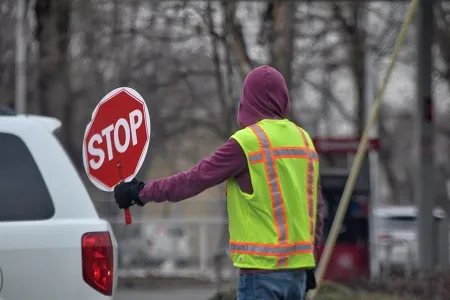
Risks Facing Traffic Controllers: Understanding Roadside Hazards Before Work Begins
Roadside hazards need clear training before the shift starts
Traffic controllers work close to moving vehicles, road plant, pedestrians, cyclists, changing weather, poor visibility and public behaviour that can be hard to predict.
A traffic controller may stand beside live traffic for hours. A driver may ignore a sign. A heavy vehicle may need extra stopping distance. A pedestrian may walk through a controlled area. A radio message may be missed during a busy traffic change.
These risks make traffic control work serious.
This page explains the main hazards traffic controllers face and why clear instruction is needed before work begins. For the main training guide, see road traffic controller safety training.
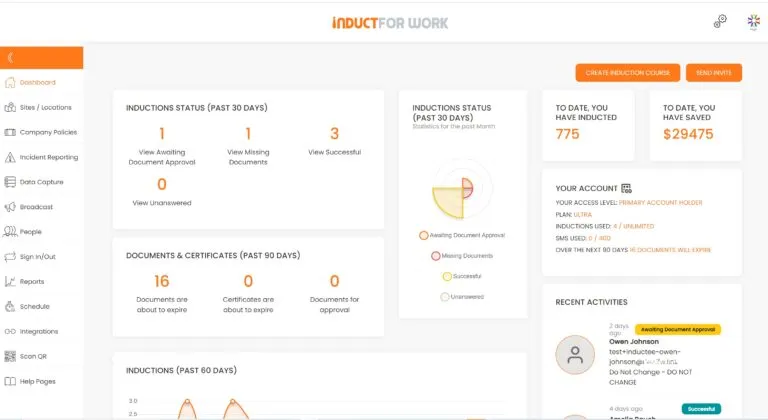
INDUCT FOR WORK helps organisations deliver online induction, traffic control awareness training, forms, acknowledgements, certificates, incident reporting and records in one platform. For broader training management, INDUCT FOR WORK can also support an LMS for workplace training structure where induction, refresher training, quizzes, certificates and records sit together.
For traffic control businesses that need online onboarding pathways, evidence collection and records, see road traffic controller online induction.
A structured training process also supports a stronger safety culture because workers receive clear instructions before standing near live traffic. In addition, rapid induction setup can help traffic control businesses turn site rules, traffic management procedures, maps, videos and checklists into online training sooner.
Why traffic controller risk is different
Traffic controller risk is different because many hazards come from outside the work crew.
A factory worker may work around controlled internal traffic. A warehouse worker may deal with forklifts inside a managed layout. A traffic controller may deal with members of the public who are distracted, tired, speeding, frustrated or unsure how to respond to changed road conditions.
The work environment can also change quickly.
A lane closure may move. Rain can reduce visibility. A truck may arrive early. Plant may cross the work zone. A cyclist may enter the area unexpectedly. A driver may fail to slow down.
Training should prepare traffic controllers for these changing conditions.
The worker needs to understand the task, the traffic management plan, communication method, emergency response, escape path and reporting steps before the shift begins.
Main risks facing traffic controllers
Traffic control work can involve several hazards at once.
Common risks include:
- moving vehicles
- distracted drivers
- speeding traffic
- aggressive road users
- heavy vehicles
- poor visibility
- night works
- wet roads
- changing traffic layouts
- roadworks plant
- fatigue
- weather exposure
- slips and trips
- noise
- dust
- manual handling
- poor communication
- unclear escape paths
- pedestrians and cyclists
- emergency vehicle access
- remote or isolated work
For a broader guide to hazard identification, see workplace hazards.
A traffic controller should understand which hazards apply to the actual site, shift and traffic arrangement.
Generic instructions are not enough.
Live traffic risk
Live traffic is the most obvious risk for traffic controllers.
A worker may be exposed to:
- vehicles travelling too fast
- drivers ignoring signs
- distracted drivers using phones
- impatient road users
- heavy vehicles with longer stopping distances
- vehicles entering closed lanes
- unclear driver behaviour
- vehicles passing too close
- emergency vehicles approaching quickly
- drivers confused by changed road conditions
A traffic controller needs to know where to stand, where not to stand and where to move if a vehicle enters the work zone.
Escape paths should be discussed before work begins.
A worker should not be placed where there is no practical way to avoid an approaching vehicle.
For the main training guide on safe positioning, communication and roadside controls, see road traffic controller safety training.
Poor visibility
Traffic controllers often work in conditions where drivers may not see them early enough.
Visibility can be reduced by:
- night works
- fog
- rain
- glare
- smoke
- dust
- sunrise or sunset
- poor lighting
- blind corners
- high-speed roads
- busy intersections
Poor visibility increases the chance that drivers may miss signs, cones, workers or traffic controllers.
Training should explain lighting, high-visibility clothing, sign placement, vehicle positioning, safe standing locations and escalation steps if conditions become unsafe.
Visibility should be reviewed throughout the shift.
A site that was clear at 3 pm may become harder to manage at dusk.
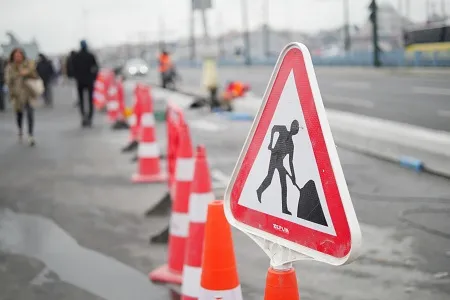
Aggressive or impatient road users
Traffic controllers often deal with people who are delayed, frustrated or confused.
Aggressive behaviour may include:
- verbal abuse
- threats
- refusal to follow directions
- vehicles driving through controls
- tailgating
- horn use
- intimidation
- unsafe vehicle movement
- objects thrown from vehicles
A traffic controller should not be expected to argue with an aggressive driver.
Training should explain when to step back, when to call a supervisor, how to report aggression and when emergency services may need to be contacted.
Aggressive behaviour should be reported because repeated incidents may show that signage, layout, traffic timing or public communication needs review.
Heavy vehicles and plant movement
Traffic controllers may work around trucks, excavators, rollers, loaders, graders, cranes, delivery vehicles and roadworks plant.
Heavy vehicles create risk because they:
- need more distance to stop
- have larger blind spots
- require wider turning areas
- may reverse near workers
- can block visibility
- create noise that affects communication
- may enter and exit the work zone repeatedly
Training should cover exclusion zones, radio communication, spotter use, vehicle routes and reversing procedures.
For external worker readiness where contractors are involved, see contractor induction.
Traffic controllers should understand how plant movement interacts with public traffic before the task begins.
Fatigue and long shifts
Fatigue affects attention, judgement and reaction time.
Traffic controllers may work early starts, night shifts, long shifts, split shifts, emergency works or remote locations.
Fatigue may appear as:
- slower reactions
- missed radio calls
- poor judgement
- irritability
- reduced concentration
- memory lapses
- slower movement
- difficulty reading traffic behaviour
Fatigue should be treated as a safety risk.
Workers should know how to raise fatigue concerns and supervisors should watch for signs of reduced alertness during the shift.
This is especially important during night works, hot weather and long traffic closures.
Weather exposure
Traffic controllers often work outdoors for long periods.
Weather risks may include:
- heat
- sun exposure
- dehydration
- cold
- wind
- rain
- lightning
- slippery ground
- reduced visibility
- longer vehicle stopping distance
- wet signs or equipment
- poor footing near road edges
Training should explain hydration, shade, wet weather gear, cold-weather clothing and weather-related escalation steps.
Hot weather can increase fatigue.
Wet roads can change driver behaviour and braking distance.
Weather should be part of the risk review before and during the shift.
Slips, trips and uneven ground
Traffic controllers may stand or walk on road shoulders, gravel, kerbs, uneven ground, wet surfaces, temporary work areas or poorly lit locations.
Common trip hazards include:
- loose gravel
- damaged road edges
- cones and bases
- cables
- signs
- tools
- barriers
- potholes
- wet grass
- muddy ground
- poor lighting
- roadside debris
A simple trip can become serious when it happens close to live traffic.
The work area should be checked before the shift starts and changes should be reported as the job progresses.
Manual handling risks
Traffic control work can involve lifting, carrying, dragging or positioning equipment.
Items may include:
- signs
- cones
- bollards
- barriers
- sandbags
- lighting
- radios
- stop-slow bats
- temporary fencing
- equipment boxes
- water barriers where relevant
Manual handling risk increases when workers are tired, rushed, exposed to poor weather or working near live traffic.
Training should explain safe lifting, team handling, mechanical aids where available and when to ask for help.
For more detail, see manual handling online induction.
Dust, fumes and other exposures
Traffic controllers may work near roadworks, excavation, resurfacing, demolition, construction or plant movement.
Possible exposures include:
- dust
- diesel fumes
- bitumen fumes
- smoke
- fuel vapours
- chemical exposure
- silica dust where relevant
- asbestos risk in some construction or demolition settings
The controls depend on the work activity and site conditions.
Training should explain how workers will be protected, which PPE applies, what symptoms or concerns should be reported and when work should stop.
Where specialist hazards exist, the business should use competent supervision and proper technical guidance.
Noise and communication failure
Traffic controllers may work around traffic, plant, tools, radios, reversing alarms and public noise.
Noise can make communication harder.
A missed instruction may lead to confusion about traffic movement, plant access or a change to the traffic management plan.
Training should cover:
- radio protocols
- hand signals
- call signs
- confirmation wording
- backup communication
- emergency signals
- supervisor contact details
- action if communication fails
Communication rules should be clear before the shift begins.
Workers should not have to invent a process while vehicles are moving.
Pedestrians, cyclists and vulnerable road users
Traffic control does not involve vehicles only.
Pedestrians, cyclists, mobility scooter users, school children and other vulnerable road users may pass through or near the work zone.
Risks can include:
- unclear pedestrian detours
- cyclists entering traffic changes unexpectedly
- people walking around barriers
- school-zone traffic
- mobility limitations
- poor lighting
- public confusion
- crowding near events
Training should explain how pedestrians and cyclists will be guided safely.
Signs, barriers and clear instructions matter because road users may not understand the temporary layout.
Emergency vehicle access
Emergency vehicles may need to move through or around traffic control zones quickly.
Traffic controllers should know the site procedure for police, ambulance, fire and emergency access.
Training should explain:
- decision-making during emergency access
- communication method
- routes that may be opened
- worker protection steps
- traffic-control changes
- post-event reporting
Emergency access should be considered before work starts, especially near hospitals, event precincts, major roads or areas with limited detour options.
Remote or isolated work
Some traffic control work occurs in remote, quiet or low-light locations.
Other tasks may happen at night with limited support nearby.
Risks can increase when workers are isolated.
Training should explain:
- check-in procedures
- communication equipment
- emergency contacts
- escalation steps
- fatigue concerns
- aggressive road user response
- weather monitoring
- location reporting
- supervisor contact times
A worker should not be left without a clear communication and emergency process.
Why site-specific training matters
Formal traffic control qualifications are important, but they do not explain every worksite.
Each site may have different:
- traffic speeds
- road layout
- lane closures
- pedestrian movement
- plant access
- worker locations
- escape paths
- emergency contacts
- signage requirements
- communication rules
- public interaction risks
- weather exposure
- client requirements
That is why site-specific training matters.
For the main guide on traffic-controller safety training, see road traffic controller safety training.
A site-specific online pathway can help workers review local rules, upload documents, acknowledge requirements and complete short quizzes before arrival.
Traffic management plan awareness
Traffic controllers need to understand the traffic management plan that applies to the work.
A briefing should explain:
- work zone layout
- sign placement
- cone layout
- stop-slow points
- traffic flow
- pedestrian routes
- plant movement
- access points
- speed changes
- staging
- emergency arrangements
- communication channels
- escalation steps
- supervisor contact
The plan should not sit only with one supervisor.
Workers who implement the controls need to understand the relevant parts before starting.
Incident and near miss reporting
Traffic control work can produce near misses that must not be ignored.
Reports may involve:
- vehicle entering a closed area
- driver ignoring directions
- cone or sign struck by a vehicle
- aggressive road user
- poor visibility
- communication failure
- plant entering the wrong zone
- pedestrian bypassing barriers
- damaged signs
- worker almost struck
- emergency vehicle access issue
- unsafe standing location
- equipment failure
INDUCT FOR WORK supports incident reporting so businesses can capture hazards, near misses and incidents online.
For examples of report types and structure, see incident report examples.
Near misses often show that a layout, control, communication step or work method needs review.
Evidence, certificates and training records
Traffic control businesses may need to confirm that workers have the right training, documents and site instructions before deployment.
Managers may need to track:
- formal training records
- competency evidence
- licences or tickets where relevant
- site induction completion
- project-specific modules
- PPE acknowledgements
- traffic management plan acknowledgements
- incident reports
- refresher training
- certificates
- worker contact details
- records needing follow-up
INDUCT FOR WORK helps improve record keeping by keeping training records, forms, certificates and acknowledgements online.
In addition, reporting helps administrators review completion status and follow up where needed.
Good records matter because traffic control businesses often work for councils, civil contractors, utilities, events and major projects that expect clear documentation.
Refresher training and site updates
Traffic control conditions can change quickly.
Refresher training may be needed when:
- traffic arrangements change
- workers move to a new site
- night works begin
- weather risk increases
- client requirements change
- new equipment is used
- incidents reveal gaps
- near misses repeat
- communication protocols change
- workers return after time away
Schedule can help organisations assign refresher training, repeat acknowledgements and updated modules.
Traffic controllers should receive updates before the next shift, not after a problem occurs.
From roadside risk to clearer worker readiness
| Common Traffic Control Risk | Stronger Readiness Step |
|---|---|
| Workers arrive without site details | Site-specific induction happens before arrival |
| Traffic arrangements change quickly | Updated modules or messages can be sent to workers |
| Near misses stay informal | Reports can capture vehicle and layout concerns |
| Contractor documents arrive by text | Files can be uploaded into the system |
| Supervisors repeat briefings manually | Online pathways deliver consistent information |
| Communication rules are missed | Training explains radio and escalation steps |
| PPE requirements vary by site | Acknowledgements confirm site-specific requirements |
| Fatigue builds during long shifts | Training explains fatigue reporting and break expectations |
| Records sit in spreadsheets | Completion and certificate records stay easier to find |
| Mobile workers miss email updates | SMS invitations can send links directly |
This gives traffic control businesses a more dependable way to prepare workers for roadside work.
Common traffic controller safety mistakes
Treating formal training as enough
Formal training matters, but workers still need site-specific training and current information.
Skipping escape path discussion
Workers should know where to move if a vehicle enters the work zone.
Ignoring near misses
Near misses involving traffic, signs or communication should trigger review.
Underestimating fatigue
Long shifts, night works and heat can reduce attention and decision-making.
Sending every worker the same briefing
Controllers, implementers, supervisors and contractors may need different information.
Letting documents sit in messages
Training records, certificates and acknowledgements should be easy to find.
Failing to update workers after changes
Traffic arrangements can change quickly. Workers need current instructions.
Treating aggression as normal
Abuse, threats and unsafe driver behaviour should be reported and reviewed.
Best practice tips for reducing traffic controller risks
Confirm formal requirements
Check state, road authority and project requirements before assigning traffic control duties.
Add site-specific instruction
Workers need local site rules, hazards, work zones and emergency contacts.
Discuss live traffic risk clearly
Traffic controllers should understand that road users may speed, ignore signs or act unpredictably.
Identify escape paths
Safe standing locations and movement options should be clear before work begins.
Train contractors before arrival
Contractors should receive site rules, document requests and reporting steps early.
Make near miss reporting simple
Vehicle movements, visibility problems and communication failures need fast reporting.
Send updates quickly
Traffic arrangements may change during a project, so workers need timely instructions.
Keep records together
Training, certificates, acknowledgements and reports should remain easy to review.
Start reducing risks facing traffic controllers
Traffic controllers work close to live traffic, changing road conditions and public behaviour that they cannot fully control.
Formal training, site-specific instruction, clear communication, PPE, reporting and records all matter.
INDUCT FOR WORK helps traffic control businesses deliver induction and safety awareness online, collect forms, capture acknowledgements, support incident reporting, send updates and keep records in one platform.
For the main traffic-controller training page, see road traffic controller safety training. For traffic control company onboarding and evidence collection, see road traffic controller online induction. For contractor readiness, see contractor induction.
Give traffic controllers clearer instructions before they stand near live traffic.
Frequently asked questions
The main risks include live traffic, speeding drivers, distracted road users, aggression, poor visibility, night works, heavy vehicles, plant movement, fatigue, weather exposure and communication failures.
Traffic controllers work near moving vehicles and changing road layouts. They often rely on drivers, pedestrians and site workers following instructions correctly.
Yes. Formal traffic control training does not explain every local work zone, traffic management plan, escape path, emergency contact or client requirement.
It should include site rules, hazards, traffic management plan awareness, communication methods, PPE, emergency procedures, escape paths, incident reporting and supervisor contacts.
Yes. INDUCT FOR WORK can help deliver online induction, collect forms, capture acknowledgements, support incident reporting, issue certificates and keep completion records.
Yes. Near misses involving vehicles, signs, pedestrians, plant, communication or visibility can reveal serious weaknesses before injury occurs.
Yes. SMS invitations can help send induction and refresher links directly to mobile workers and contractors.
How Induct for Work can help
Induct for Work is an online induction platform that helps contractors and employers develop traffic controller training course. Once the course is complete, you only need to send an invite link to your workers so that they can participate in the induction. Potential traffic controllers can access the content from devices such as personal computers, desktops, or even their platforms.
You can make the course as engaging as possible through the use of videos, audios, simulations and other visually engaging media. This helps the inductee retain as much information as possible. You can monitor the progress of the inductees and gauge their understanding through tests.
Once they complete the course, Induct for Work generates a certificate. The platform will alert you when these certificates, as well as other traffic controller documents, are due for renewal.
As the content is editable 24 X 7 you can update it at anytime to make sure that it is current. This also helps you stay compliant with local laws and regulations.
Use your own content to provide regular training to your traffic controllers by registering here for a free trial.
Start a free trial or book a demo to see how INDUCT FOR WORK can support your workplace processes.
Author: Anna Milova
Published: 11/08/2019
Updated: 25/05/2026